Northern Thailand Highlights
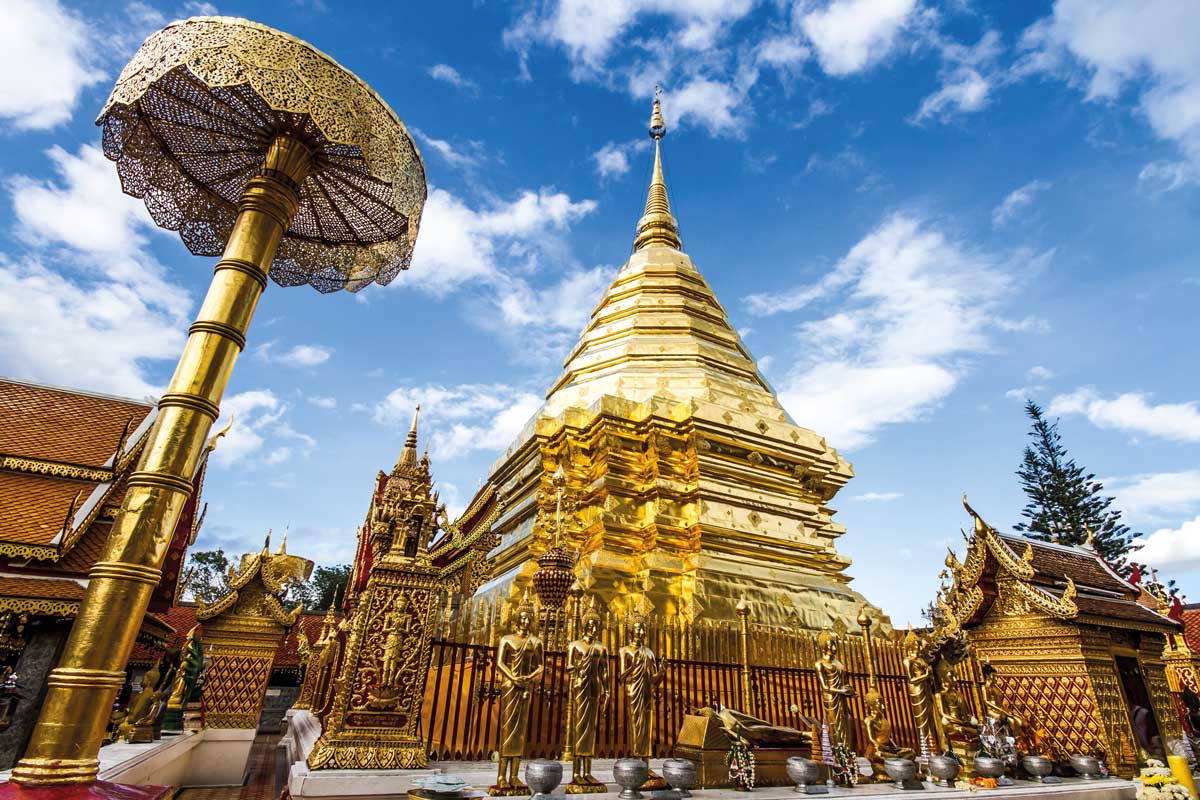
From USD per person
based on two persons travelling
$1,657
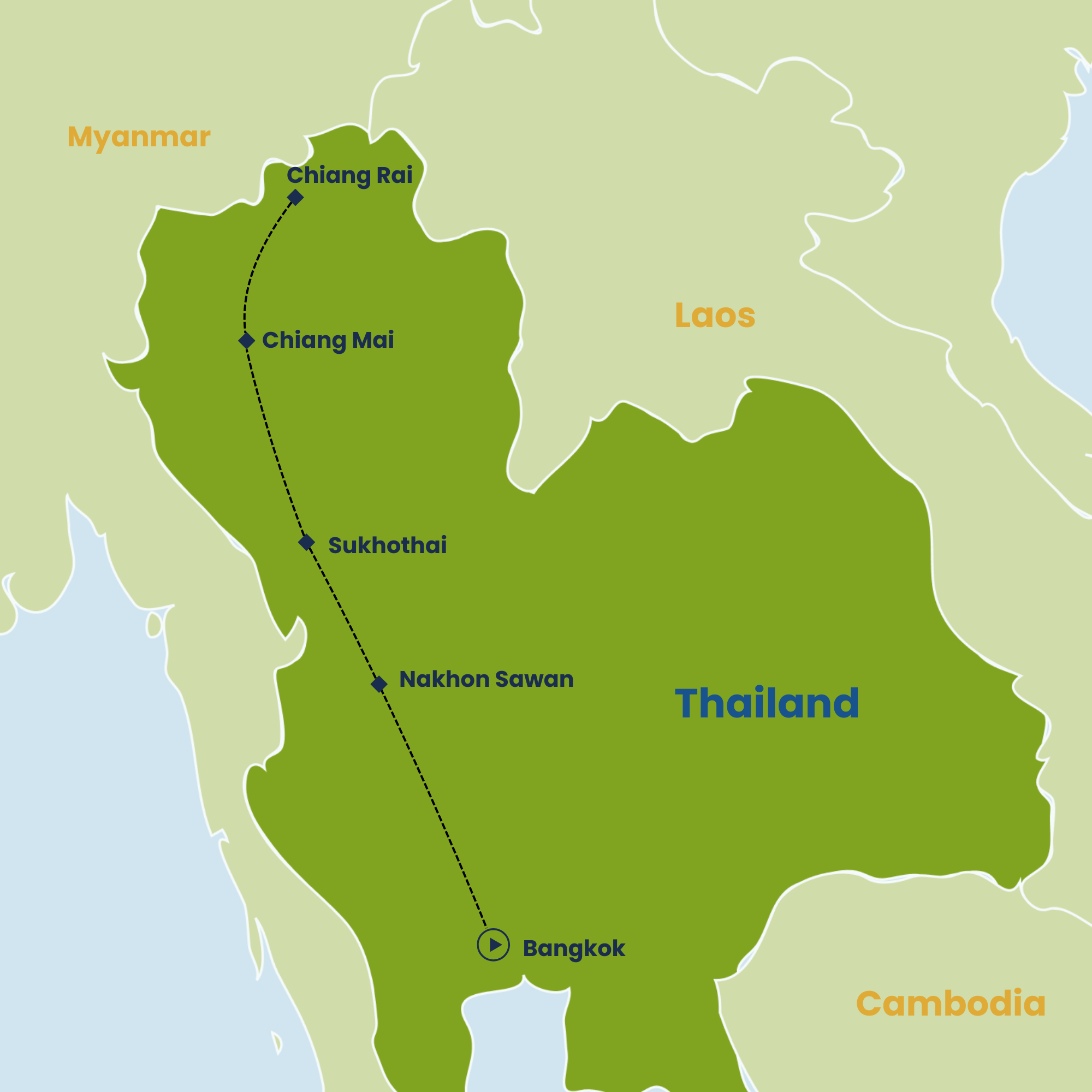
This Northern Thailand Highlights tour offers a comprehensive exploration of Thailand’s rich cultural heritage and historical landmarks, traveling from Bangkok through ancient capitals to the vibrant north. The journey begins with Ayutthaya and Wat Tha Sung before moving on to the historical parks of Kamphaeng Phet and Sukhothai. Subsequent days reveal Lampang’s exquisite temples and the dynamic cityscape of Chiang Mai, including its markets and renowned handicraft villages. The tour culminates in Chiang Rai, featuring the iconic White Temple and the Golden Triangle region. Combining guided excursions with immersive local experiences, this route balances cultural discovery with comfortable paced travel, ideal for agents seeking an insightful package that introduces clients to the diversity and depth of northern Thailand’s heritage and artistry.
Tour Highlights
- Discover the ancient charm of Ayutthaya and the tranquil spirituality at Wat Tha Sung, immersing clients in Thailand’s historical grandeur and serene sacred spaces early in their journey.
- Explore the UNESCO-listed Sukhothai Historical Park, where restored temples and Lanna architecture evoke the dawn of Thailand’s kingdom in a setting that resonates with cultural significance.
- Experience Chiang Mai’s vibrant old town atmosphere, sampling regional flavors at bustling markets and witnessing traditional craftsmanship in picturesque handicraft villages.
- Visit Chiang Rai’s visually stunning White Temple and traverse the mystical Golden Triangle, offering clients a compelling blend of contemporary artistry and geopolitically fascinating landscapes.
Costing Summary
| Validity | From 2 Pax |
| 01/01/2026 - 31/12/2026 | 1657 |
Itinerary Details
Pick up from your hotel and drive to Ayutthaya. Explore this UNESCO World Heritage ancient city, once the thriving capital of the Siamese Kingdom, and discover its historical temples and foreign trading settlements. Enjoy lunch at a local restaurant. Continue to Uthai Thani to visit Wat Tha Sung, renowned for its sparkling crystal hall and peaceful meditation center. Conclude the day with a drive to Nakhon Sawan. Check in to your hotel and enjoy dinner at a local restaurant.
Overnight in Good Nakhonsawan (4 Star) or similar.
After breakfast, drive to Kamphaeng Phet to visit Wat Pra Kaew, a royal temple used for city ceremonies. Continue to Sukhothai, known as the Dawn of Happiness and Thailand’s first independent kingdom. Explore the UNESCO-listed Sukhothai Historical Park, visiting iconic sites such as Wat Mahathat and Wat Sri Chum. Admire the restored temples, ancient murals, and distinctive Lanna architecture that mark the significance of this historic site.
Overnight in Sukhothai Heritage (4 Star) or similar.
Have breakfast at the hotel, then drive to Lampang to visit Wat Phra That Lampang Luang, noted for its golden chedi and exquisite murals. Continue to Chiang Mai and ascend to Wat Phra That Doi Suthep, a hilltop temple offering panoramic views of the city alongside a serene and sacred atmosphere. Return to your hotel for check-in.
Overnight in The Empress (4 Star) or similar.
After breakfast, explore Chiang Mai’s old town and the bustling Warorot Market, where you can sample local delicacies and shop for fresh produce. Visit Wat Phra Singh, housing the revered Phra Phuttha Sihing Buddha statue and featuring stunning northern-style murals. Drive to Sankampaeng to discover traditional handicrafts such as Thai silk, wood carvings, lacquerware, and paper umbrellas.
Overnight in The Empress (4 Star) or similar.
Check out after breakfast and drive to Chiang Rai. Visit the renowned Wat Rong Khun, also known as the White Temple. Continue to Chiang Saen, the ancient capital located on the Mekong River. Explore the Golden Triangle, the area where Thailand, Laos, and Myanmar converge, and visit the Opium Museum to gain insights into the region’s historical significance regarding opium cultivation and trade.
Overnight in Laluna Chiang Rai (4 Star) or similar.
Enjoy breakfast at the hotel and transfer to Chiang Rai Airport for your departure or continue with an optional extension program.
Travel Notes
Bangkok to Ayutthaya
Approx. 80 km / Approx. 1.5 hours by road.
Ayutthaya to Uthai Thani
Approx. 150 km / Approx. 3 hours by road.
Uthai Thani to Nakhon Sawan
Approx. 70 km / Approx. 1.5 hours by road.
Nakhon Sawan to Kamphaeng Phet
Approx. 130 km / Approx. 2.5 hours by road.
Kamphaeng Phet to Sukhothai
Approx. 90 km / Approx. 1.5 hours by road.
Sukhothai to Lampang
Approx. 160 km / Approx. 3 hours by road.
Lampang to Chiang Mai
Approx. 100 km / Approx. 1.5 hours by road.
Chiang Mai to Chiang Rai
Approx. 190 km / Approx. 3.5 hours by road.
Travel in Northern Thailand typically involves road transport on well-maintained highways and rural roads. Distances are moderate but travel times can vary due to traffic and local driving conditions. Some routes pass through remote areas where services may be limited, so plan transfers accordingly. Accommodation standards are generally good in major towns but can be more basic in smaller cities. The dry season, from November to February, offers the most comfortable travel conditions. Always allow buffer time for border-area driving near Chiang Rai.
All travel distances and times are indicative only and may vary depending on traffic, weather, routing and local conditions.
Destination Information
Bangkok
Bangkok presents a dense urban fabric where traditional and modern elements coexist along the banks of the Chao Phraya River, shaping the city’s distinctive character. The cityscape is marked by a mix of historic temples, ornate palaces, and contemporary commercial districts, reflecting layers of history embedded within everyday life. The Grand Palace complex exemplifies this blend, with its intricate architecture and ceremonial grounds offering insight into Thailand’s royal heritage. Nearby, Wat Arun’s riverside spires punctuate the skyline, providing a visual anchor that contrasts with the bustling street markets and the energetic flow of commerce in the Siam commercial district. The river itself remains a vital feature, threading through the city and influencing its spatial layout and daily rhythms. Bangkok’s streets pulse with activity, where local vendors, shoppers, and residents navigate narrow alleys and wide avenues, creating a dynamic environment that balances heritage with urban growth. This combination of historic landmarks, waterways, and vibrant street life defines Bangkok’s unique urban atmosphere and enduring appeal.
Chiang Mai
Chiang Mai is a city where centuries-old traditions coexist with a lively urban environment, set against the backdrop of northern Thailand’s mountainous landscape. Its compact historic centre, enclosed by remnants of ancient city walls and moats, reveals a network of narrow streets lined with teakwood houses, Buddhist temples, and local markets. The city’s character is shaped by its deep roots in Lanna culture, visible in the intricate wood carvings, temple architecture, and everyday crafts found throughout. At the edge of the city, Wat Phra That Doi Suthep rises on a forested hill, offering panoramic views and a tangible connection to the region’s spiritual heritage. Beyond the urban area, the surrounding natural environment, including Doi Inthanon National Park, provides a contrast of lush forests and mountain peaks, underscoring the city’s relationship with its landscape. The Night Bazaar Market exemplifies Chiang Mai’s blend of tradition and commerce, where locals and visitors mingle amid stalls selling textiles, food, and artisan goods. Together, these elements create a setting that balances historical depth, cultural expression, and the rhythms of daily life.
Ayutthaya
Ayutthaya presents a distinctive blend of historical grandeur and everyday life along the banks of the Chao Phraya River. Once the capital of a powerful Siamese kingdom, its landscape is marked by the ruins of ancient temples and palaces that reveal a past shaped by religious devotion and royal authority. The city’s layout, with its waterways and island-like setting, reflects a close relationship between urban development and the river, which continues to influence local commerce and culture. Visitors encounter a calm atmosphere where centuries-old brick structures and Buddha statues coexist with bustling floating markets and riverside communities. The remains of Wat Phra Si Sanphet, once a royal temple, stand as a testament to Ayutthaya’s architectural and spiritual heritage, while the nearby elephant sanctuary offers insight into traditional practices still alive in the region. This combination of monumental ruins, active waterways, and local markets creates a setting where history is embedded in the fabric of daily life, providing a tangible connection to Thailand’s past within a living environment.
Chiang Rai
Chiang Rai is set against a backdrop of lush hills and fertile plains in northern Thailand, offering a quieter and more contemplative atmosphere compared to the busier urban centres of the region. The city’s character is shaped by its blend of traditional northern Thai culture and the influences of diverse hill tribe communities that inhabit the surrounding highlands. Its streets reveal a mix of modest local markets, contemporary buildings, and temples that reflect both historical and modern architectural styles. The nearby landscape features rolling mountains and river valleys, which frame the city and support agricultural livelihoods. Among its distinctive landmarks, the White Temple stands out with its intricate white façade and unconventional artistic details, drawing visitors interested in contemporary religious art. The area around Chiang Rai also includes cultural sites like the Mae Fah Luang Art and Cultural Park and the Doi Tung Royal Villa, which showcase regional heritage and craftsmanship. The proximity to the Golden Triangle region further situates Chiang Rai within a unique geographical and historical context, where traditional lifestyles continue alongside evolving cultural expressions.
Sukhothai
Sukhothai presents a distinctive blend of historical depth and quiet rural surroundings in northern Thailand. The area is marked by the remains of an ancient city, where low-lying temples and monuments are set amid ponds, grassy expanses, and clusters of trees, creating a serene environment that contrasts with the busier urban centres of the region. The layout of the old city reveals a thoughtful urban design from the 13th century, with waterways and walls that once structured daily life and governance. Among the ruins, Wat Mahathat stands out with its elegant stone architecture, reflecting the spiritual and political heart of the early Sukhothai kingdom. Nearby, inscriptions carved into stone provide tangible records of the era’s language and laws, offering insight into the development of Thai script and governance. Beyond its archaeological sites, the surrounding community maintains traditional crafts, preserving skills passed down through generations. This combination of well-preserved historical structures, open landscapes, and living cultural practices gives Sukhothai a distinct identity rooted in its foundational role in Thailand’s history.
Nakhon Sawan
Nakhon Sawan is a city defined by its position at the confluence of the Ping and Nan rivers, where they merge to form the Chao Phraya River, shaping both its landscape and daily life. This meeting of waterways creates a distinctive environment marked by fertile plains and extensive wetlands, which support a range of agricultural activities visible throughout the surrounding countryside. The city’s built environment reflects a blend of traditional temples and practical urban spaces, with Wat Khao Sakae Krang rising on a hill to offer panoramic views over the river junction and the expanse of Bueng Boraphet, Thailand’s largest freshwater wetland nearby. This wetland is a crucial ecological area, attracting visitors interested in birdwatching and natural habitats. Alongside these natural and religious landmarks, the Nakhon Sawan Night Market provides insight into local commerce and cuisine, where residents gather in the evening to shop and socialize. The city’s atmosphere balances the rhythms of rural agricultural life with the steady pulse of urban activity, creating a setting where natural features and community traditions coexist closely.
Lampang
Lampang is distinguished by its blend of northern Thai traditions and a quieter, more provincial pace compared to larger cities in the region. The town’s streets are often lined with teak wood buildings, reflecting its historical ties to the timber trade, while horse-drawn carriages remain a common sight, offering a glimpse into its slower, more deliberate rhythm of life. The surrounding landscape features gentle hills and fertile plains, supporting both agricultural activity and artisanal crafts. Lampang’s cultural fabric is closely tied to its religious heritage, most notably visible in the well-preserved architecture of Wat Phra That Lampang Luang, which anchors the town with its centuries-old Buddhist artistry. Nearby, the Thai Elephant Conservation Center highlights the region’s longstanding relationship with elephants, emphasizing conservation and traditional elephant handling. Local industries such as ceramics and coal mining also shape the town’s economic and social environment, contributing to its distinct character. Together, these elements create a setting where historical depth, natural surroundings, and everyday local practices intersect, offering a grounded and tangible sense of place.
Kamphaeng Phet
Kamphaeng Phet presents a distinctive blend of historical depth and natural surroundings within central Thailand’s riverine landscape. The town unfolds along the Ping River, where waterways shape both the environment and local livelihoods, reflecting a slower pace of life grounded in agriculture and traditional practices. Its urban fabric is marked by remnants of ancient stone structures and temple ruins that reveal a past shaped by the Sukhothai and Ayutthaya periods, offering a tangible connection to Thailand’s early kingdoms. The Kamphaeng Phet Historical Park exemplifies this heritage, with well-preserved archaeological sites that sit amid green spaces, illustrating the coexistence of history and everyday life. Nearby, the Kamphaeng Phet National Museum provides context to the region’s cultural and historical development, complementing the experience of exploring the town’s architectural and natural features. The presence of Wat Phra Kaeo adds a spiritual dimension, while the surrounding agricultural fields and the Ping River ecosystem highlight the ongoing relationship between the community and its environment. Together, these elements create a setting where history, culture, and nature intersect in a measured, contemplative atmosphere.
Hotel Information
Accommodation throughout this journey is carefully selected to complement the overall travel experience and typically consists of comfortable 3 to 4-star hotels, resorts, lodges, or boutique properties, depending on the destination, routing, and local infrastructure.
All properties are chosen with care based on location, comfort, service standards, atmosphere, and suitability for the itinerary. Exact hotel names may vary depending on departure date, seasonality, group size, and availability at the time of booking.
Final hotel details will be provided with the confirmed travel documentation. In some cases, accommodations may be replaced by properties of a similar standard should operational reasons or availability require a change.
For specific accommodation requests or further questions regarding the hotels used on this journey, please contact our reservations team at reservation@kavaya.travel.
Inclusions & Exclusions
Included
Not Included
No widgets added. You can disable footer widget area in theme options - footer options