Essence of India & Nepal
From Price per person
based on two persons travelling
$3,302
Nepal
Nature
Next Available Departures
View all scheduled departures
October 2026
November 2026
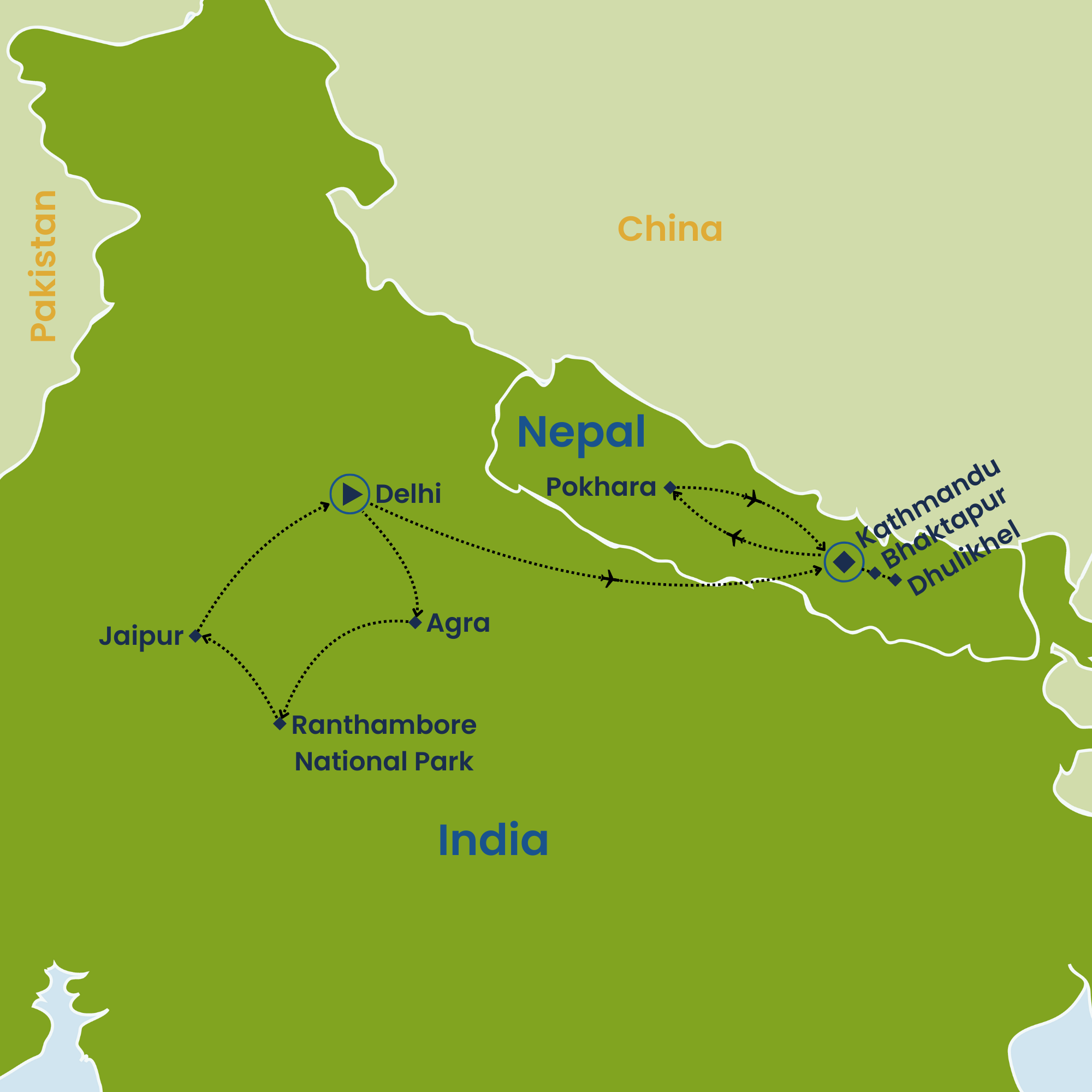
Experience a refined journey through the cultural and natural landscapes of India and Nepal, beginning in Delhi’s dynamic capital and exploring the iconic marvels of Agra and Jaipur. Traverse Rajasthan’s rich heritage and wilderness with immersive visits to Ranthambore National Park and traditional artisan communities. Transition to Nepal to discover Kathmandu’s spiritual heritage, the medieval artistry of Bhaktapur, and the serene beauty of Pokhara’s Himalayan vistas and lakes. Travel in comfort with thoughtfully paced sightseeing, blending historic sites, local cultural encounters, and natural panoramas for a comprehensive overview of these two distinctive countries.
Insider Experiences
- Explore the intricate artistry and historic grandeur of Mughal architecture in Delhi and Agra, culminating with the evocative twilight glow of the Taj Mahal’s marble facade.
- Delve into Rajasthan’s vibrant culture with a rickshaw ride through Jaipur’s Pink City, a jeep visit to Amber Fort, and engaging market experiences filled with local color and tradition.
- Immerse in the rich biodiversity of Ranthambore National Park with expert-guided safaris amid wildlife and ancient fort landscapes, complemented by meaningful community visits supporting artisans.
- Discover Nepal’s spiritual heartland with visits to Kathmandu’s UNESCO heritage sites, a tranquil hike with Himalayan panoramas, and reflective moments on Pokhara’s scenic lakeshore.
Itinerary Details
Welcome to India! Upon arrival in Delhi, you will be greeted by a representative and transferred to your hotel. This vibrant capital city is a living tapestry of empires, dynasties, and cultures, featuring bustling bazaars and historic lanes of Old Delhi alongside the grand boulevards and monuments of New Delhi. Your journey begins in a city that has witnessed centuries of history, innovation, and reinvention — setting the perfect stage for the adventure ahead.
Overnight in The Suryaa or similar.
After breakfast, begin your Delhi sightseeing adventure with a visit to the majestic Red Fort, renowned for its impressive red sandstone architecture and as a symbol of Mughal power. Continue with a rickshaw ride through the bustling streets of Old Delhi, stopping at Chandni Chowk market and Khari Baoli spice market to experience local flavors and the vibrant atmosphere. Visit the Sis Ganj Sahib Sikh Temple, where you can witness and participate in the community kitchen.
Your tour continues at Jama Masjid, India’s largest mosque noted for its grand architectural design. Then explore Humayun’s Tomb, an early and influential example of Mughal architecture. Drive past the grand government buildings of New Delhi, including the Parliament House and Rashtrapati Bhawan, and conclude with a photo stop at India Gate. Finish your day with a visit to the Lodhi Art District, known for its colorful and artistic street murals.
Overnight in The Suryaa or similar.
After breakfast, drive to Agra, a city renowned for the iconic Taj Mahal. Agra’s rich architectural heritage includes landmarks such as the Agra Fort, built in 1666 by Mughal Emperor Akbar, featuring ornate buildings like Moti Masjid and Diwan-I-Am. The city’s craftsmen, descendants of Mughal artisans, continue the tradition of detailed marble and soapstone inlay work. Upon arrival, transfer to your hotel before visiting a marble inlay factory to observe these traditional crafts. Later, enjoy a serene sunset visit to the Taj Mahal, where its white marble façade glows warmly beneath the colors of the Indian sky.
Overnight in Grand Mercure or similar.
After breakfast, depart for Ranthambore with a countryside excursion en route. Experience a ride on a village Mercedes locally called Jugaad, traveling through pastures and fields of wheat, mustard, coriander, and chilies. This offers opportunities to visit local homes and meet traditionally dressed villagers engaged in daily life.
Continue to Ranthambore, home to one of North India’s largest and most renowned national parks. Covering 392 sq km and dominated by the historic Ranthambore Fort, the park is known for its tiger population and diverse wildlife such as leopards, hyenas, deer, sloth bears, and wild boar. The landscape features the Banas and Chambal rivers as well as several lakes, supporting a rich variety of flora and fauna. Upon arrival, transfer to your hotel.
Overnight in Ranthambhore Kothi or similar.
Begin the day with an early morning safari in Ranthambore National Park, famous for its diverse wildlife including Bengal tigers. The park spans 392 sq km and is situated between the Banas and Chambal rivers, offering habitats for leopards, hyenas, deer, langurs, civets, macaques, and sloth bears. After the safari, return to the hotel for breakfast. Later, visit a women’s cooperative that produces handicrafts, supporting local artisans. In the afternoon, enjoy a second safari into the park to further explore its natural beauty.
Dinner at the hotel.
Overnight in Ranthambhore Kothi or similar.
After breakfast, visit the Dastkar Project, an initiative supporting local artisans and aiding communities displaced by the creation of Ranthambore National Park. Established in the late 1980s with the Ranthambore Foundation, the project empowers women and helps revive traditional crafts.
Afterward, drive to Jaipur, the capital of Rajasthan known as the Pink City for its distinctive architecture and rich heritage. Founded in 1727 by Maharaja Sawai Jai Singh II as one of India’s first planned cities, Jaipur offers a unique urban layout. On arrival, transfer to your hotel. Later, enjoy a Pink Rickshaw ride through the city and spend the remainder of the day exploring its bazaars. Optional evening activities include attending a Bollywood movie, palm reading, or receiving a henna tattoo.
Overnight in Alsisar Haveli or similar.
Start early with a visit to the bustling Doodh Mandi milk market at Subhash Chowk, where you can interact with farmers dressed in traditional attire. Make a photo stop at the iconic Hawa Mahal Palace, followed by a tea break at a popular chai shop in Jaipur. Then, take a jeep ride to Amber Fort, renowned for its blend of Hindu and Mughal architecture.
Spend the evening wandering through the Old Bazaar. Conclude the day with a farewell dinner at Suroth House with a local Indian family, offering insight into local culture and including one glass of rum with cola.
Overnight in Alsisar Haveli or similar.
After breakfast, drive from Jaipur to Delhi through Rajasthan’s countryside. On arrival in Delhi, transfer to your hotel and enjoy leisure time for the rest of the day.
Overnight in Holiday Inn or similar.
After a leisurely breakfast, transfer to Delhi airport to board your flight to Kathmandu. Upon arrival, you will be greeted and assisted before traveling to Dhulikhel. Kathmandu lies at 1,400 meters above sea level, surrounded by hills and home to seven UNESCO World Heritage Sites. The scenic drive to Dhulikhel, at 1,600 meters in Kavrepalanchowk District, offers panoramic views of Himalayan ranges stretching from Cho Oyu to Himalchuli, with spectacular sunrises and sunsets.
On arrival, transfer to your hotel and settle in. In the evening, enjoy a welcome dinner at the hotel accompanied by a pint of beer.
Overnight in Dhulikhel Mountain Resort or similar.
Begin with an early breakfast before a gentle 4 km walk to Kavre Village, a 1.5-hour easy-grade walk with slight altitude gain. Start with a 30-minute hike to Kali Temple, accessible via 1,000 stone steps or a forest trail, where you can enjoy expansive Himalayan views and pause for tea or coffee.
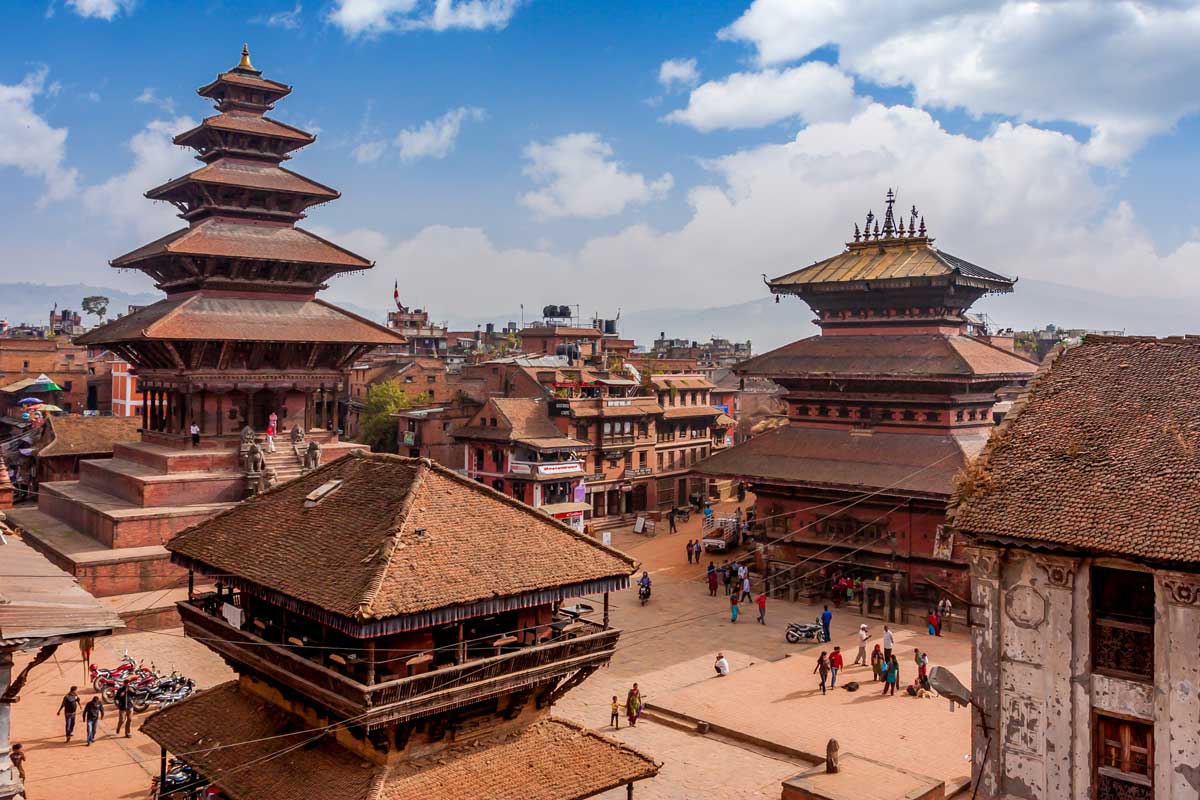
The walk continues for 45 minutes through plantations, village shops, and tea houses, providing an authentic rural experience. Return by vehicle to your hotel for a short rest prior to checkout. On the way to Kathmandu, stop at Bhaktapur, a UNESCO World Heritage Site noted for its medieval art, temples, and crafts. Explore Bhaktapur Durbar Square, including the 55-window palace, Nyatapola Temple, and Pottery Square.
After lunch, continue to Kathmandu for hotel check-in and overnight stay.
Overnight in Aloft by Marriott or similar.
Optionally begin the day with an early morning scenic flight over the Everest region, offering views of Mt. Everest and surrounding peaks from close range. After breakfast, explore Kathmandu Durbar Square, the former royal palace complex filled with temples, courtyards, and monuments. Visit Kumari Bahal, home to the Living Goddess, and see the striking idol of Kal Bhairava, a fierce representation of Lord Shiva carved from a single rock.
Continue to Patan Durbar Square, a UNESCO site known for its 17th-century temples, royal courtyards, and statues reflecting the city’s artistic heritage. Enjoy lunch at a local restaurant, followed by a cultural interaction with an Ex-Kumari, who shares her experience of being revered as a living goddess in Nepalese tradition.
Overnight in Aloft by Marriott or similar.
Visit Pashupatinath Temple, one of the holiest Hindu shrines dedicated to Lord Shiva, located 6 km from central Kathmandu on the banks of the Bagmati River. Admire its pagoda-style architecture with gilded roof and ornate silver doors, and observe rituals along the riverbanks as non-Hindus are not permitted inside.
Proceed to Boudhanath, one of the world’s largest stupas and a major Buddhist pilgrimage site, recognizable by its white dome, prayer wheels, and surrounding monasteries. Later, visit the Bamboo School, run by the Samta committee, to provide affordable education to underprivileged youth, where you can interact with children. The afternoon is at leisure, with an optional excursion to Swayambhunath, a 2,000-year-old Buddhist stupa perched on a hill offering panoramic views of Kathmandu Valley, known for its golden spire and the all-seeing eyes of the Buddha.
Overnight in Aloft by Marriott or similar.
After breakfast, transfer to the airport for your flight to Pokhara. The Pokhara valley, at an altitude between 780 and 1350 m, is known for its combination of snow-capped Himalayan peaks, serene lakes, and lush landscapes. Upon arrival, transfer to your hotel. In the evening, enjoy a boat ride on Phewa Lake, Nepal’s second largest lake. The tranquil waters offer reflective views of surrounding mountains, while the vibrant Lakeside area is lined with shops, restaurants, and handicraft stalls, providing a lively atmosphere.
Overnight in Atihti Resort or similar.
Enjoy a three-hour walk to the World Peace Pagoda, located atop a hill on the southern shore of Phewa Lake. The pagoda features four Buddha statues facing each cardinal direction and offers sweeping views of the Annapurna mountain range and Pokhara city. Next, visit Davis Falls, a dramatic waterfall plunging into a deep narrow canal, named after a tourist who tragically fell here.
Explore the Tibetan Refugee Camp to learn about Tibetan culture and history, browse handcrafted jewelry, ornaments, and carpets, and visit a local monastery. Conclude at the International Mountain Museum, which presents the region’s mountaineering history and provides detailed information about Mount Everest.
Overnight in Atihti Resort or similar.
After breakfast, transfer to the airport for your flight back to Kathmandu. Upon arrival, check in to your hotel and enjoy leisure time during the day. In the evening, attend a farewell dinner at a traditional restaurant, accompanied by a cultural performance and a pint of beer, concluding your journey with local atmosphere and cultural engagement.
Overnight in Aloft by Marriott or similar.
After breakfast, transfer to the airport for your onward flight, concluding your time in Nepal. Depart with memories of historic cities, diverse landscapes, and cultural encounters experienced during your journey.
Travel Notes
Delhi to Agra
Approx. 230 km / Approx. 4-5 hours by road.
Agra to Ranthambore
Approx. 260 km / Approx. 5-6 hours by road.
Ranthambore to Jaipur
Approx. 180 km / Approx. 4 hours by road.
Jaipur to Delhi
Approx. 280 km / Approx. 5-6 hours by road.
Delhi to Kathmandu
Approx. 820 km / Approx. 1.5-2 hours by flight.
Dhulikhel to Kathmandu
Approx. 30 km / Approx. 1 hour by road.
Kathmandu to Pokhara
Approx. 200 km / Approx. 30-40 minutes by flight.
Pokhara to Kathmandu
Approx. 200 km / Approx. 30-40 minutes by flight.
Road transfers in North India between major cities like Delhi, Agra, Jaipur, and Ranthambore typically cover moderate distances that can take 4 to 6 hours due to variable traffic and road conditions. Roads are generally paved but can be congested near urban centers. Flights connecting Delhi to Kathmandu and between Kathmandu and Pokhara provide a faster alternative, though weather can occasionally affect schedules. Transfers within Nepal, such as Dhulikhel to Kathmandu, involve shorter drives on hilly terrain with potential for scenic but winding routes. Basic to mid-range accommodation is standard, and travel itineraries accommodate transfer times to allow for local exploration.
All travel distances and times are indicative only and may vary depending on traffic, weather, routing and local conditions.
Destination Information
Delhi
Delhi presents a complex urban fabric where centuries of history coexist with the demands of a sprawling modern metropolis. Its streets reveal a blend of architectural styles, from the imposing red sandstone walls of the Red Fort Complex to the slender elegance of the Qutub Minar tower, reflecting the city’s layered past. The dense, bustling lanes of Chandni Chowk market offer a vivid glimpse into everyday life, where commerce and tradition intersect amid narrow alleys and vibrant street scenes. Beyond these historic sites, the city’s contemporary character is shaped by structures like the Lotus Temple, whose distinctive design contrasts with the older urban textures. The extensive Delhi Metro network weaves through the city, facilitating movement across diverse neighbourhoods and underscoring the scale and pace of urban life. Delhi’s atmosphere is marked by its contrasts—between old and new, sacred and secular, crowded markets and open spaces—making it a place where history remains tangible within the rhythms of daily activity. This interplay of heritage and modernity defines the city’s enduring appeal.
Jaipur
Jaipur unfolds as a city where the desert landscape of the Aravalli Hills meets a built environment shaped by centuries of royal ambition and craftsmanship. Its streets are lined with buildings in warm pink sandstone, reflecting the city’s historic role as a seat of power and culture in Rajasthan. The urban fabric blends grand palaces and forts with bustling markets where artisans continue traditional crafts, creating a tangible link between past and present. The Amber Fort, perched on rugged hills, exemplifies the blend of military architecture and ornamental design that defines much of Jaipur’s heritage. Nearby, the City Palace Complex offers insight into royal life through its courtyards and museums, while the Jantar Mantar Observatory reveals the scientific pursuits of the region’s rulers. Beyond the city limits, the surrounding Aravalli Hills provide a natural backdrop that contrasts with the dense urban core, inviting exploration of both landscape and local life. Jaipur’s atmosphere combines the energy of a living city with the presence of its architectural and historical landmarks, making it a place where history and everyday activity coexist.
Kathmandu
Kathmandu occupies a complex landscape within the Kathmandu Valley, where urban density meets the surrounding hills and rivers. The city’s compact streets and varied architecture reflect centuries of continuous habitation, blending traditional Newar craftsmanship with more recent developments. Its historic core is defined by intricately carved wooden buildings and courtyards, where daily life unfolds alongside religious and cultural practices. The presence of large stupas and temples, such as the Swayambhunath Stupa perched on a hilltop and the Pashupatinath Temple along the Bagmati River, anchors the city’s spiritual dimension within its urban fabric. Durbar Square’s open plazas and palatial structures reveal layers of political and artistic history that remain integral to community events and rituals. Meanwhile, the Thamel district offers a contrasting atmosphere with its concentration of shops, eateries, and narrow alleys bustling with both locals and visitors. The interplay between sacred sites, historic architecture, and lively neighborhoods gives Kathmandu a distinctive character, where the rhythms of everyday life coexist with enduring cultural traditions shaped by its unique valley setting.
Pokhara
Pokhara is set against a dramatic backdrop of the Annapurna mountain range, where the tranquil waters of Phewa Lake mirror snow-capped peaks and the surrounding hills. This city offers a distinctive blend of natural beauty and cultural depth, with its compact urban area interwoven with rivers, lakeside promenades, and traditional markets. The pace of life here is relaxed, reflecting the influence of both local communities and visitors drawn by the region’s outdoor opportunities. The Old Bazaar reveals layers of history through its narrow streets and traditional architecture, providing a glimpse into everyday commerce and craftsmanship. Elevated viewpoints like Sarangkot offer expansive panoramas that highlight the city’s unique position between water and mountains. Nearby, the International Mountain Museum presents the region’s mountaineering heritage and natural environment in a structured setting. Waterfalls such as Devis Fall punctuate the landscape, adding to the area’s varied natural attractions. Together, these elements create a place where the interaction between natural features and human activity defines the experience, making Pokhara a distinctive destination within Nepal’s diverse geography.
Ranthambore
Ranthambore is a landscape where dense dry deciduous forest meets rugged rocky outcrops, creating a distinctive environment in northern India’s semi-arid region. The area is marked by a mix of open grasslands and thick vegetation that supports a diverse range of wildlife, most notably Bengal tigers, which draw visitors seeking close encounters with India’s natural heritage. The imposing Ranthambore Fort rises from the forested hills, its sandstone walls and ancient structures reflecting centuries of history amid the wilderness. Local tribal communities maintain traditional ways of life here, contributing to the region’s cultural fabric and offering insight into rural livelihoods shaped by the surrounding environment. Seasonal shifts bring marked changes to the landscape, with monsoon rains transforming the terrain and influencing animal movements, which in turn shape the rhythms of safari tours. The combination of natural habitats, historical architecture, and living traditions creates a setting where the interaction between wildlife, heritage, and local life defines the experience of Ranthambore beyond its individual landmarks.
Agra
Agra presents a distinctive blend of historical grandeur and everyday urban life along the banks of the Yamuna River. The city’s landscape is marked by expansive Mughal-era structures crafted from red sandstone and white marble, reflecting centuries of imperial ambition and architectural innovation. Streets near the river reveal a mix of bustling markets where local artisans produce intricate handicrafts, offering a glimpse into traditional craftsmanship that persists amid the city’s evolving pace. The imposing Agra Fort, with its layered walls and courtyards, stands as a testament to the city’s strategic and cultural importance during the Mughal period. Nearby, the Taj Mahal’s marble silhouette rises with refined symmetry, drawing attention to Agra’s role as a centre of monumental design and artistic achievement. This combination of monumental architecture, riverfront setting, and active local communities creates an environment where history is tangible, and the city’s heritage remains integrated with contemporary life. Agra’s character emerges from this dialogue between its monumental past and the rhythms of its present-day streets.
Dhulikhel
Dhulikhel is a town set against the eastern rim of the Kathmandu Valley, where traditional Newari architecture lines narrow streets and everyday life unfolds amid centuries-old temples and courtyards. Its elevated position offers expansive views of the Himalayan range, creating a striking contrast between the built environment and the natural landscape. The town’s compact scale and slower pace provide a quieter alternative to the nearby urban centers, allowing visitors to observe local customs and community rhythms in a setting that remains deeply connected to its cultural heritage. Surrounding Dhulikhel, a network of hiking trails weaves through forested hills and rural villages, inviting exploration of the region’s natural environment beyond the town’s core. This blend of accessible outdoor activity and preserved architectural character reflects the town’s ongoing relationship with both its historical roots and the mountain environment that frames it. The proximity to Kathmandu Valley situates Dhulikhel within a broader cultural and geographic context, yet its distinct atmosphere and landscape mark it as a place where traditional life and panoramic Himalayan vistas converge.
Hotel Information
Accommodation throughout this journey is carefully selected to complement the overall travel experience and typically consists of comfortable 3 to 4-star hotels, resorts, lodges, or boutique properties, depending on the destination, routing, and local infrastructure.
All properties are chosen with care based on location, comfort, service standards, atmosphere, and suitability for the itinerary. Exact hotel names may vary depending on departure date, seasonality, group size, and availability at the time of booking.
Final hotel details will be provided with the confirmed travel documentation. In some cases, accommodations may be replaced by properties of a similar standard should operational reasons or availability require a change.
For specific accommodation requests or further questions regarding the hotels used on this journey, please contact our reservations team at reservation@kavaya.travel.
Inclusions & Exclusions
Included
Not Included
| Date | Start Date | End Date | TWN/DBL Share | SGL Room |
|---|---|---|---|---|
| 04/10/2026 | Sunday, 04 October 2026 | Monday, 19 October 2026 | 3302 | 4434 |
| 01/11/2026 | Sunday, 01 November 2026 | Monday, 16 November 2026 | 3302 | 4434 |
| 29/11/2026 | Sunday, 29 November 2026 | Monday, 14 December 2026 | 3302 | 4434 |
No widgets added. You can disable footer widget area in theme options - footer options