Bohol, Cebu, And Coron Explorer
From USD per person
based on two persons travelling
$1,812
Discover the natural and cultural treasures of the Philippines on this carefully curated itinerary through Bohol, Cebu, and Coron. Begin with historical exploration in Manila before moving to Bohol’s scenic countryside featuring the iconic Chocolate Hills and the unique Tarsier Sanctuary. Immerse in marine biodiversity with island hopping and snorkeling around Balicasag Island. Continue with Cebu’s vibrant city sights and an exhilarating encounter with whale sharks paired with a canyoning adventure. Conclude with the breathtaking island landscapes of Coron, including pristine lakes, lagoons, and coral gardens. This tour blends cultural heritage, wildlife encounters, and adventure amidst stunning tropical environments, designed for discerning travelers who appreciate thoughtful exploration with comfortable travel arrangements.
Tour Highlights
- Experience the enchanting Chocolate Hills and intimate wildlife moments at the Tarsier Sanctuary, framed by the lush countryside and river vistas of Bohol.
- Embark on a tranquil river cruise aboard the Loboc River, combining serene natural beauty with delicious local cuisine in an elegant setting.
- Engage with majestic whale sharks in Oslob and navigate through dramatic canyon landscapes in Badian, blending wildlife encounter with thrilling adventure.
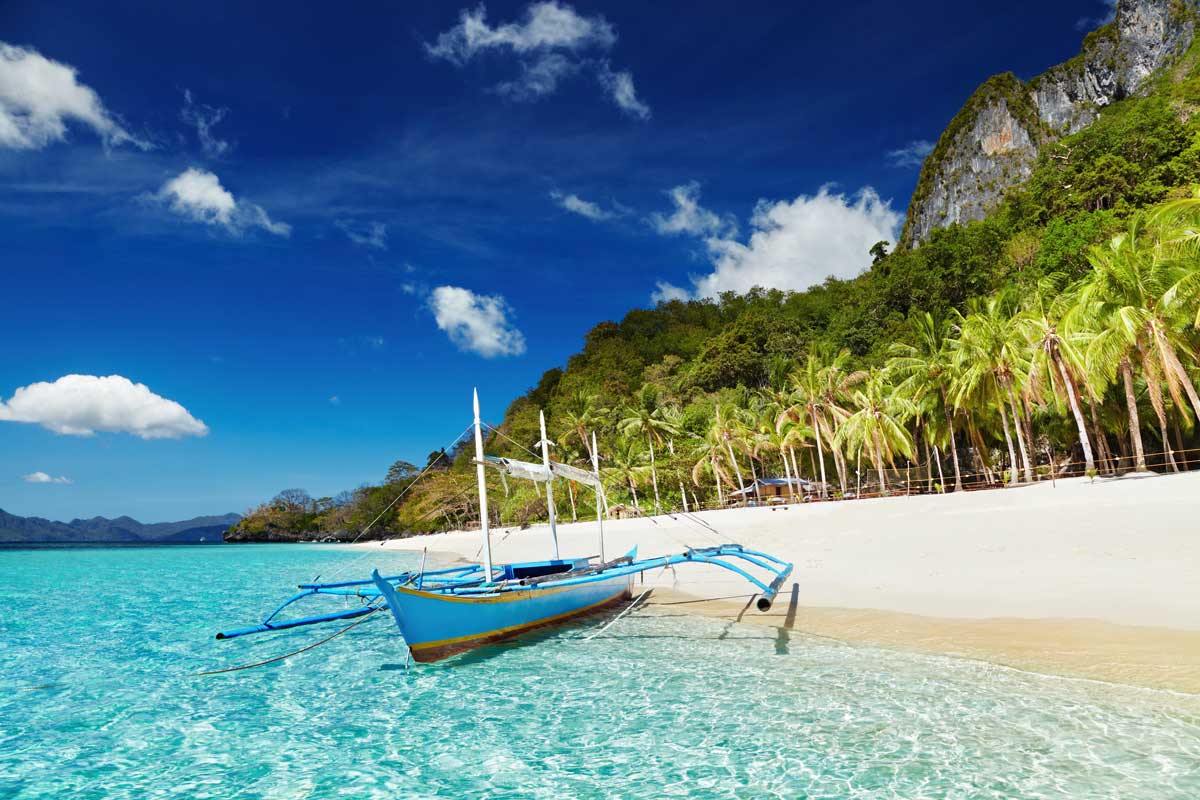
- Explore Coron’s ethereal island waters with visits to crystal-clear lakes, vibrant coral reefs, and serene lagoons, offering a premium tropical marine sanctuary experience.
Costing Summary
| Validity | From 2 Pax |
| 01/01/2026 - 31/12/2026 | 1812 |
Option 1 – Philippine Airlines
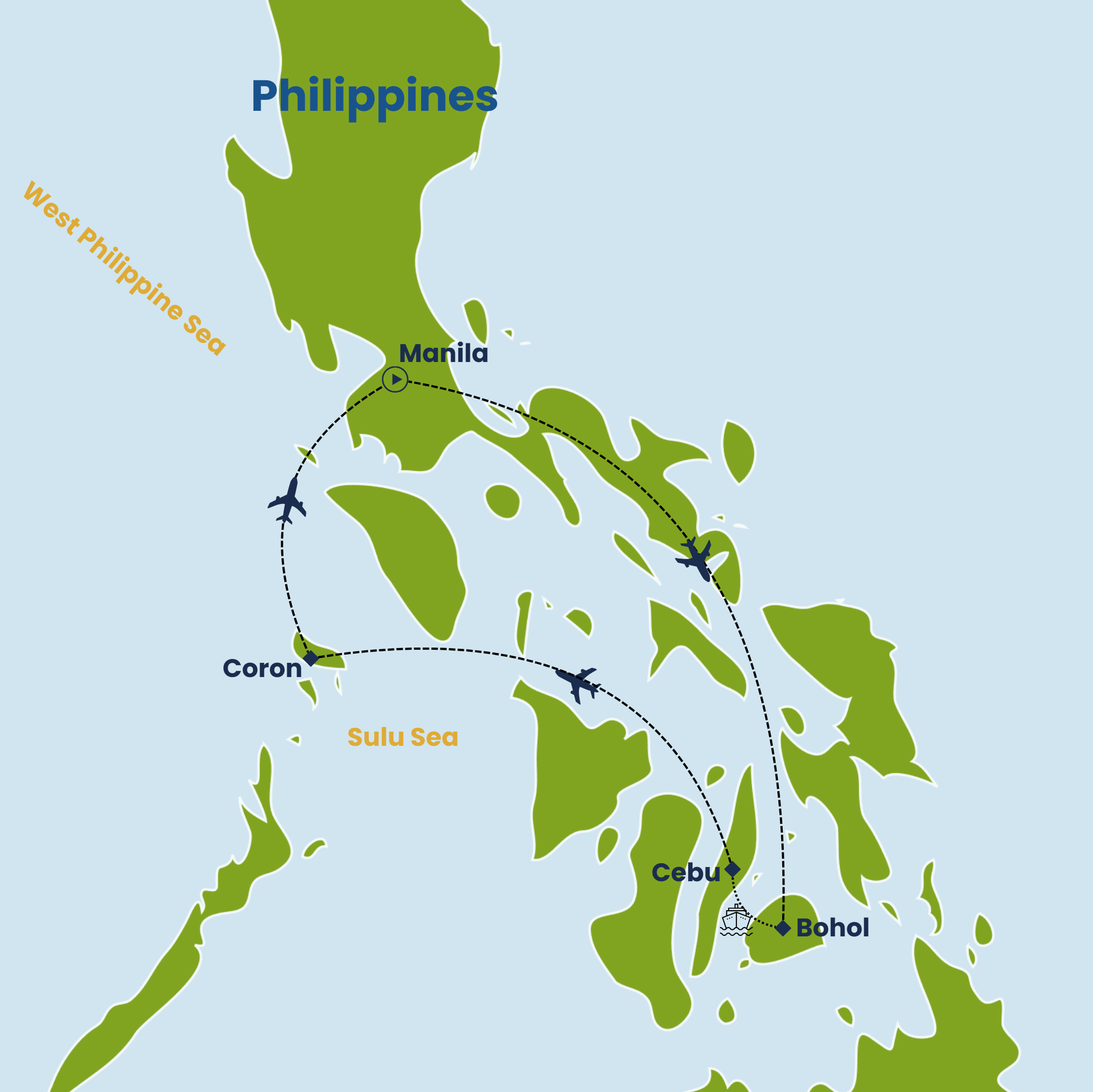
Flights included: Manila to Tagbilaran (Bohol), Cebu to Busuanga (Coron), Busuanga (Coron) to Manila
Price per person: USD 672
Option 2 – Cebu Pacific Air
Flights included: Manila to Tagbilaran (Bohol), Cebu to Busuanga (Coron), Busuanga (Coron) to Manila
Price per person: USD 482
Itinerary Details
Upon arrival at Ninoy Aquino International Airport, transfer directly to Seda Manila Bay for check-in. In the afternoon, undertake a guided exploration of historic Intramuros, visiting Fort Santiago, San Agustin Church, Manila Cathedral, and the Rizal Shrine at Plaza de Roma. The evening is at leisure for relaxation or independent exploration of the surrounding area.
Overnight in Seda Manila Bay (4 Star) or similar.
After breakfast, transfer to Ninoy Aquino International Airport for your flight to Tagbilaran, Bohol. Begin the Bohol Countryside Tour with visits to the Chocolate Hills, a remarkable geological formation, and the Tarsier Sanctuary, home to one of the world's smallest primates. Enjoy a scenic Loboc River Cruise accompanied by lunch before proceeding to your hotel for check-in.
Overnight in Bohol Beach Club, Panglao (4 Star) or similar.
After breakfast, depart for Balicasag Island Hopping and Snorkeling. Explore vibrant marine sites known for their coral reefs and diverse aquatic life, with lunch provided during the tour. Return to the hotel in the afternoon and enjoy free time for beach relaxation or personal activities.
Overnight in Bohol Beach Club, Panglao (4 Star) or similar.
After breakfast, transfer to Tagbilaran Pier for a fast ferry ride to Cebu. Upon arrival, check in at Bluewater Maribago. In the afternoon, take a Half-Day Cebu City Tour visiting significant landmarks including Magellan’s Cross, the Basilica del Santo Niño, Fort San Pedro, and the Taoist Temple. The evening is free at leisure.
Overnight in Bluewater Maribago (4 Star) or similar.
Enjoy a packed breakfast before an early departure for a full-day adventure. Begin with the Oslob Whale Shark Encounter, observing these gentle giants in their natural habitat, followed by an adrenaline-filled canyoneering experience in Badian. Lunch is included. Return to the hotel in the late afternoon and enjoy free time in the evening.
Overnight in Bluewater Maribago (4 Star) or similar.
After breakfast, transfer to Cebu Airport for your flight to Busuanga, Coron. Check in at your hotel then explore Coron Town. Highlights include the panoramic Mt. Tapyas View Deck, relaxing Maquinit Hot Spring, Town Plaza, Lualhati Park, local souvenir shops, St. Augustine Church, Harbour Center, and the Cashew Store. The afternoon is at leisure.
Overnight in The Funny Lion Coron (4 Star) or similar.
After breakfast, embark on the Full-Day Coron Island Super Ultimate Tour. Visit a series of renowned sites including Kayangan Lake, Twin Lagoon, Barracuda Lake, Beach 91, Balinsasayaw Reef and Coral Garden, Twin Peaks Reef, and CYC Beach. Lunch is provided during the tour. Return to the hotel in the late afternoon.
Overnight in The Funny Lion Coron (4 Star) or similar.
After breakfast, transfer to Busuanga Airport for your flight to Manila. Proceed for your onward international departure.
Travel Notes
Manila to Tagbilaran
Approx. 630 km / Approx. 1.5 hours by flight.
Tagbilaran to Cebu
Approx. 70 km / Approx. 2 hours by boat.
Cebu to Busuanga (Coron)
Approx. 600 km / Approx. 1.5 hours by flight.
Busuanga to Manila
Approx. 520 km / Approx. 1.5 hours by flight.
Intercity travel in this itinerary relies primarily on flights between major hubs alongside a key ferry connection between Bohol and Cebu. Flights are short but frequent, though schedules can be affected by seasonal weather patterns, particularly during the rainy season. The ferry crossing between Tagbilaran and Cebu is subject to sea conditions and typically takes around two hours. Roads on the islands can vary from well-paved highways to rural routes, so allow extra time for local transfers. Accommodation is generally comfortable and well-located near transfer points.
All travel distances and times are indicative only and may vary depending on traffic, weather, routing and local conditions.
Destination Information
Manila
Manila presents a dense urban fabric where historical layers coexist with the rhythms of a sprawling metropolis. The city’s character is shaped by its coastal location along Manila Bay, offering wide waterfront views that frame daily life and leisure, particularly as the sun sets over the water. Within the city, the Intramuros district preserves a compact, fortified core of Spanish colonial architecture, contrasting with the bustling streets of Binondo, the oldest Chinatown in the world, where commerce and tradition blend in narrow alleys and vibrant markets. Open green spaces like Rizal Park provide a respite from the urban intensity, reflecting the city’s role in national history and public gatherings. Cultural institutions such as the Cultural Center of the Philippines contribute to Manila’s artistic scene, showcasing performances and exhibitions that engage with the country’s diverse heritage. The city’s scale is marked by a mix of low-rise historic buildings and modern developments, creating a layered environment where everyday activities unfold amid reminders of its colonial past and evolving present.
Bali
Bali presents a diverse landscape where coastal cliffs meet lush inland valleys, offering a distinct blend of natural beauty and cultural depth within Indonesia. The island’s terrain varies from terraced rice fields sculpted into hillsides to the imposing silhouette of Mount Agung, an active volcano that shapes both the environment and local spiritual practices. Along the southern coast, the Uluwatu Temple perches dramatically on a limestone promontory, its traditional architecture and ocean views reflecting Bali’s enduring religious heritage. Cultural expression remains integral to daily life, with traditional Balinese dance performances illustrating stories passed through generations. In contrast, areas like Seminyak reveal a more contemporary side of Bali, where a concentrated business district reflects the island’s evolving economic landscape amid its natural surroundings. The combination of rural landscapes, volcanic landmarks, and pockets of urban development creates a multifaceted atmosphere where visitors can engage with both the island’s longstanding traditions and its modern rhythms. This interplay between environment, culture, and commerce defines Bali’s unique character as a place of ongoing cultural vitality and striking physical presence.
Cebu
Cebu is a city where historical depth and natural beauty coexist within a compact urban landscape framed by the surrounding sea. Its streets reveal layers of colonial architecture alongside modern development, reflecting centuries of cultural exchange and local life. The city’s atmosphere is marked by a steady rhythm of daily markets, street vendors, and community gatherings, offering a tangible sense of its vibrant urban culture. Visitors often explore landmarks such as Magellan’s Cross and Fort San Pedro, which stand as reminders of Cebu’s early encounters with European explorers and its role in Philippine history. Nearby, the Taoist Temple introduces a contrasting architectural style and spiritual dimension, while natural attractions like Kawasan Falls provide a lush, refreshing escape from the city’s bustle. The annual Sinulog Festival further animates the city with street processions and traditional dances, highlighting Cebu’s enduring cultural traditions. Together, these elements shape a destination where history, nature, and contemporary life intersect, giving a clear impression of Cebu’s unique place within the region.
Bohol
Bohol is a province defined by its distinctive natural formations and a blend of rural and coastal environments that shape everyday life. The landscape is marked by rolling limestone hills covered in grass, creating a unique terrain that contrasts with the lush tropical forests and clear waterways threading through the region. Small villages and towns are interspersed with historic stone churches and traditional houses, reflecting centuries of local heritage. The area’s waterways, including the calm Loboc River, support both community activities and tourism, offering a glimpse into the local pace of life. Wildlife conservation efforts coexist alongside agricultural practices, highlighting a balance between nature and human presence. Along the coast, sandy beaches on Panglao Island provide a quieter, more relaxed atmosphere compared to the inland areas. The combination of geological features, preserved wildlife habitats, and historical architecture gives Bohol a distinctive character within the Philippines, inviting visitors to explore its varied landscapes and cultural layers while observing how these elements remain integral to the daily rhythms of its residents.
Coron
Coron is a coastal town set amid the rugged limestone cliffs and clear waters of northern Palawan, Philippines. Its landscape is marked by dramatic karst formations and a network of sheltered bays that shape both the natural environment and local livelihoods. The town itself retains a modest scale, with a market at its heart where daily life unfolds amid stalls selling fresh seafood and local produce. Beyond the shoreline, Coron’s surrounding islands offer a distinctive mix of natural and historical features, including underwater wrecks from World War II that attract divers seeking to explore sunken ships encrusted with coral. Inland, freshwater lakes framed by steep rock faces provide serene spots for swimming and reflection, while nearby hot springs offer a quiet contrast to the coastal scenery. The area also supports conservation efforts visible in a nearby wildlife sanctuary that preserves species uncommon elsewhere in the Philippines. Together, these elements create a destination where the interplay of marine and terrestrial environments shapes a unique setting, inviting visitors to engage with both the natural world and the rhythms of small-town life.
Balicasag Island
Balicasag Island is a small, low-lying island distinguished by its clear turquoise waters and vibrant coral reefs that extend close to its shores. The island’s landscape is marked by sandy beaches and patches of coastal vegetation, creating a tranquil environment where the pace of life is slow and closely tied to the sea. The surrounding marine environment is a focal point, with underwater visibility that attracts divers eager to explore diverse coral formations and abundant marine life. Local fishermen maintain traditional practices, contributing to a community rhythm that reflects a deep connection with the ocean. Conservation efforts are evident in the protection of sea turtles, which nest along the island’s shores, highlighting a commitment to preserving its natural heritage. Positioned near Panglao Island, Balicasag offers a more intimate setting where the marine sanctuary status helps safeguard its underwater ecosystems, setting it apart from more developed neighboring areas. The island’s appeal lies in its combination of natural beauty, ecological significance, and the quiet presence of a fishing community living in harmony with the surrounding sea.
Hotel Information
Bluewater Maribago
Located on the eastern shore of Mactan Island in Maribago Bay, Bluewater Maribago Beach Resort sits along a scenic coastline known for its clear waters and proximity to the Hilutungan Channel, a popular site for diving and snorkeling. Established in 1989, it is the flagship property of the wholly Filipino-owned Bluewater Resorts group, reflecting Filipino culture with a focus on warmth and attentiveness. This four-star beach resort offers accommodations designed to evoke a sense of “amuma,” a Filipino concept of care and belonging, providing guests with a comfortable and welcoming atmosphere. The resort’s setting provides easy access to aquatic activities and the natural beauty of the island, making it suitable for travelers seeking a balance of relaxation and water-based leisure. Bluewater Maribago’s location also connects guests to Mactan’s historical significance, near sites commemorating local heritage. The property appeals to guests looking for a traditional beachfront experience with a cultural touch, supported by spacious rooms and suites that range from deluxe to beachfront bungalows. Its combination of natural surroundings, cultural resonance, and focus on genuine hospitality distinguishes it as a choice for travelers interested in an authentic Filipino coastal stay on Mactan Island.
Inclusions & Exclusions
Included
Not Included
No widgets added. You can disable footer widget area in theme options - footer options