Travel Notes
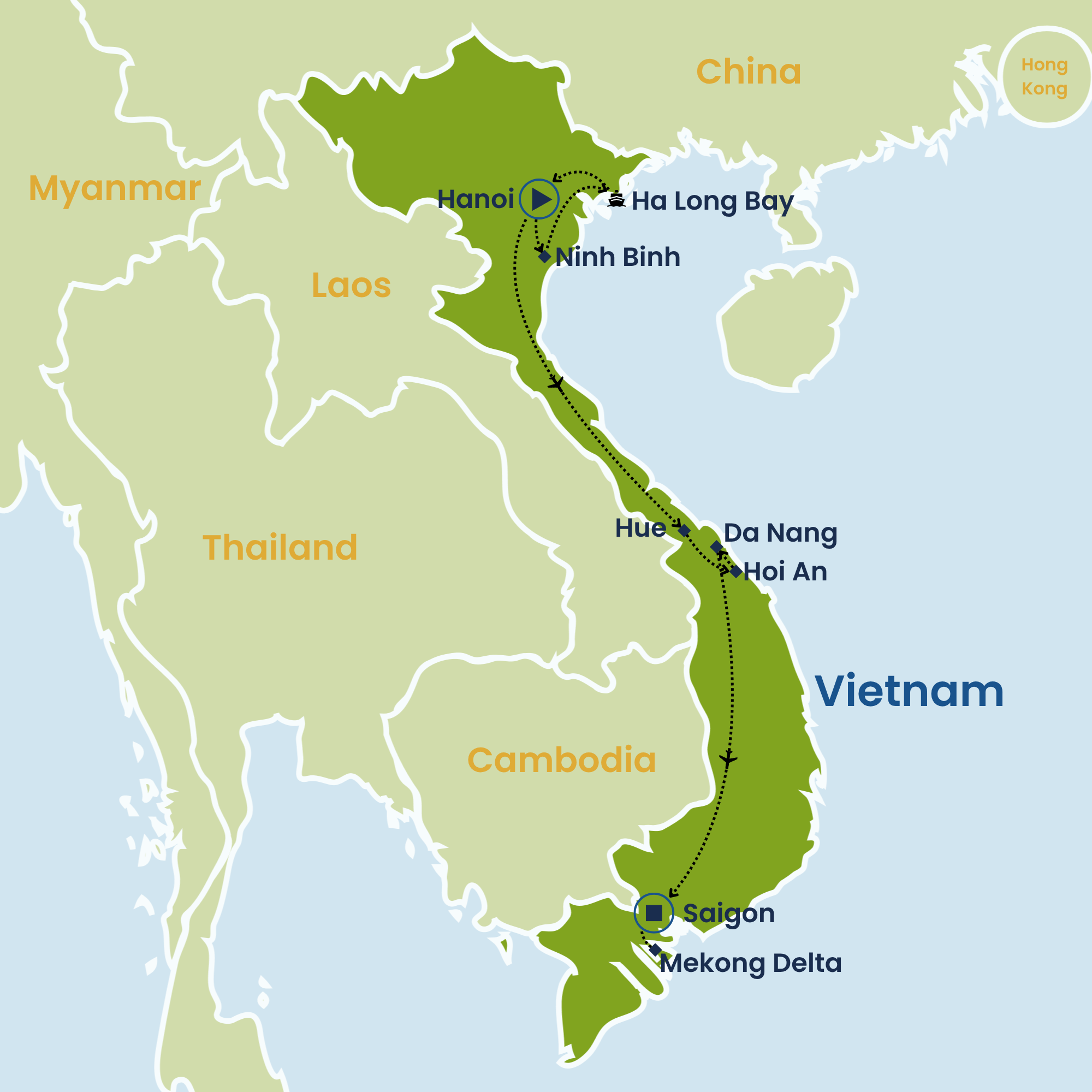
Hanoi to Ninh Binh
Approx. 90 km / Approx. 2 hours by road.
Ninh Binh to Ha Long Bay
Approx. 160 km / Approx. 3.5 to 4 hours by road.
Ha Long Bay to Hanoi
Approx. 160 km / Approx. 3.5 to 4 hours by road.
Hanoi to Hue
Approx. 630 km / Approx. 1.5 hours by flight.
Hue to Hoi An
Approx. 145 km / Approx. 3.5 to 4 hours by road.
Hoi An to Danang
Approx. 30 km / Approx. 45 minutes by road.
Danang to Saigon
Approx. 850 km / Approx. 1.5 to 2 hours by flight.
Saigon to Can Tho
Approx. 170 km / Approx. 3.5 to 4 hours by road.
Can Tho to Saigon
Approx. 170 km / Approx. 3.5 to 4 hours by road.
Road travel in northern Vietnam often involves rural highways with varying conditions, especially around limestone karsts and rural areas like Ninh Binh. Traffic congestion may occur around cities. Flights between Hanoi, Hue, Danang, and Saigon provide efficient alternatives to long road journeys, though domestic airports tend to be small with basic facilities. In southern regions like the Mekong Delta, roads can be narrow and subject to seasonal weather changes, affecting travel times. Transfers within cities and between airports typically require at least 30 minutes to allow for traffic and check-in.
All travel distances and times are indicative only and may vary depending on traffic, weather, routing and local conditions.
Destination Information
Hanoi
Hanoi presents a distinctive blend of historical depth and urban vitality set along the banks of the Red River in northern Vietnam. The city’s compact core features narrow streets lined with low-rise buildings that reflect centuries of architectural influence, from traditional Vietnamese to French colonial styles. At its heart, a tranquil lake punctuates the dense urban fabric, offering a quiet contrast to the surrounding bustle. Hanoi’s streets bustle with a mix of motorbikes, street vendors, and local commerce, creating a textured everyday scene that reveals the city’s ongoing evolution. Cultural landmarks are woven into the urban landscape, with a temple dedicated to Confucian learning standing amid busy neighborhoods, and a solemn mausoleum commemorating a key figure in Vietnam’s modern history. The city’s location within the fertile Red River Delta shapes its character, linking it to a wider agricultural region while maintaining a distinctly urban pace. This combination of water, history, and active street life defines Hanoi as a place where tradition and contemporary life coexist visibly and tangibly.
Saigon
Saigon presents a dense urban fabric where colonial-era architecture and modern developments coexist along the banks of the Saigon River. The city’s streets pulse with a mix of motorbikes, street vendors, and markets, reflecting its role as a commercial and cultural center in southern Vietnam. Its layered past is visible in landmarks such as the Notre-Dame Cathedral Basilica, built with red bricks imported from France, which contrasts with the nearby War Remnants Museum that documents the impact of conflict on the region. The bustling Ben Thanh Market offers a window into everyday life, with stalls selling local produce, textiles, and street food amid a lively atmosphere. Beyond the city’s core, the Cu Chi Tunnels extend the historical narrative into the surrounding countryside, revealing the intricate underground network used during wartime. Saigon’s combination of waterways, historic sites, and vibrant street scenes creates a setting that captures both the resilience and complexity of Vietnam’s urban experience.
Hoi An
Hoi An is a compact town set along the gentle curves of the Thu Bon River in Vietnam’s central coastal region, where narrow streets and low-rise buildings create an intimate urban fabric shaped by centuries of trade and cultural exchange. Its architecture reflects a blend of local and foreign influences, with wooden shop houses and tiled roofs lining quiet lanes that invite slow exploration. The town’s scale and layout encourage a pedestrian pace, fostering a close connection between everyday life and the preserved historic environment. Traditional crafts remain part of daily activity, visible in workshops where artisans shape lanterns that light the streets after dusk, adding a warm, tangible element to the town’s atmosphere. The Japanese Covered Bridge, a distinctive structure linking parts of the old quarter, exemplifies the layering of cultural influences and the integration of functional design with aesthetic detail. Beyond the built environment, the nearby river and coastal landscape contribute to Hoi An’s character, grounding it in a region known for its fertile plains and maritime heritage. This combination of architectural heritage, artisanal practice, and natural setting defines Hoi An’s appeal as a place where history and local life coexist closely.
Danang
Danang is a coastal city where urban development meets natural landscapes, offering a distinctive blend of modernity and tradition along Vietnam’s central coastline. Its broad sandy shores, exemplified by My Khe Beach, provide a relaxed environment that contrasts with the city’s growing skyline and bustling streets. The nearby Marble Mountains rise sharply from the flat coastal plain, their limestone peaks dotted with caves and pagodas that reflect centuries of spiritual and cultural activity. The Han River flows through the city, with the Han River Bridge serving as a functional and visual landmark that connects different parts of Danang while illuminating the cityscape after dark. The Cham Museum houses an extensive collection of sculptures and artifacts from the ancient Champa civilization, anchoring Danang’s historical significance amid its contemporary urban fabric. The city’s layout balances waterways, open spaces, and dense residential areas, creating a setting where everyday life unfolds alongside historical sites and natural features. Danang’s atmosphere is defined by this coexistence of coastal leisure, cultural heritage, and ongoing urban growth, making it a place where visitors can engage with both Vietnam’s past and present.
Hue
Hue, situated on the banks of the Perfume River in central Vietnam, serves as a pivotal cultural waypoint on many travel routes through the country’s historical heartland. The city’s layout reveals a deliberate symmetry with its expansive Citadel, constructed from laterite and brick, anchoring the urban fabric. Surrounding the fortified imperial complex, narrow streets bustle with everyday markets, where locals trade fresh produce and traditional crafts, highlighting a contrast between the city’s monumental past and its present-day rhythms. Beyond the urban core, the surrounding plains and nearby Annamite Mountains frame Hue within a diverse landscape that underscores its enduring role as a former imperial capital and a living community shaped by both tradition and the natural environment.
Can Tho
Can Tho lies at the heart of the Mekong Delta, where a network of rivers and canals shapes both the landscape and daily life. The city’s low-rise buildings and tree-lined streets unfold alongside waterways that remain central to local commerce and community interaction. Life here moves at a measured pace, marked by the steady flow of boats and the exchange of goods on the water. The Cai Rang Floating Market exemplifies this aquatic rhythm, offering a glimpse into the region’s agricultural abundance and traditional trade practices. Nearby, the Binh Thuy Ancient House reflects the architectural heritage and historical layers embedded in Can Tho’s urban fabric. The Can Tho Museum provides context to the city’s development and cultural roots, while Ninh Kieu Wharf serves as a focal point where residents gather and river traffic converges. Surrounding the city, fertile fields and orchards underscore Can Tho’s role in sustaining the Mekong Delta’s agricultural economy. Together, these elements create a setting where history, environment, and everyday activity intertwine, giving Can Tho a distinct character shaped by its waterways and rural connections.
Halong City
Halong City occupies a distinctive coastal landscape where limestone karsts rise sharply from emerald waters, shaping a setting that blends natural grandeur with local livelihoods. The city’s character is deeply influenced by its proximity to Halong Bay, whose dramatic seascape of towering islands and hidden inlets extends into the surrounding waters. Along the shoreline, small fishing villages maintain traditional practices, offering a glimpse into daily life shaped by the sea. Inland, the Quang Ninh Museum provides a structured narrative of the region’s cultural and geological heritage, complementing the natural environment with historical context. The area’s cave systems add another layer of geological interest, with intricate formations that reveal the slow processes shaping the landscape over millennia. Nearby coastal wetlands support diverse ecosystems, reflecting the balance between human activity and nature. Together, these elements create a place where the physical environment and community coexist, marked by a measured pace and a focus on maritime culture rather than urban bustle. This combination of striking natural features and enduring local traditions defines the experience of Halong City.
Halong Bay
Halong Bay presents a striking seascape where towering limestone karst formations rise sharply from emerald waters, creating a rugged and sculptural horizon unique within the region. This coastal area extends across a vast expanse of sea dotted with thousands of islands and islets, many cloaked in dense vegetation, offering a complex natural environment shaped by millennia of geological activity. The bay’s calm waters are home to diverse marine ecosystems, supporting a range of fish and coral species that sustain local fishing communities. These communities maintain traditional ways of life, including floating villages where houses and markets rest on wooden platforms, blending human activity seamlessly with the aquatic landscape. The area’s cultural fabric is enriched by local legends and historical narratives tied to the karsts and the sea, reflecting a deep connection between people and place. Recognized for its geological and ecological value, this UNESCO World Heritage Site combines natural grandeur with ongoing human presence, creating a living environment where nature and culture coexist visibly and continuously.
Mekong Delta
The Mekong Delta unfolds as a vast, intricate landscape where waterways carve through fertile plains, shaping both the environment and the livelihoods of its inhabitants. This region is distinguished by its extensive network of rivers and canals, which sustain a rich agricultural system dominated by rice cultivation. The slow-moving waters foster diverse wetlands that support a variety of plant and animal species, creating a distinctive ecosystem within the tropical climate. Along these waterways, communities engage in traditional practices such as floating markets, where commerce and daily life merge on boats laden with local produce and goods. The built environment reflects practical adaptation to the waterborne setting, with stilted houses and open-air workshops producing handicrafts rooted in local materials and techniques. The interplay between natural abundance and human activity defines the Delta’s character, offering insight into a way of life closely tied to the rhythms of the river and the land. This combination of ecological richness and cultural tradition makes the Mekong Delta a place where the landscape and its people are inseparable.
Hotel Information
Le Jardin Hotel and Spa Hanoi
Le Jardin Hotel and Spa Hanoi presents a refined sanctuary in the heart of Vietnam’s vibrant capital. This four-star retreat harmoniously blends contemporary comfort with a subtle nod to local charm, offering a serene atmosphere that invites quiet indulgence. Guests are welcomed into meticulously designed spaces that balance natural light and elegant finishes, reflecting a thoughtful attention to detail. The hotel’s spa provides a tranquil escape, where bespoke treatments draw from regional traditions to refresh body and mind. Le Jardin’s dedication to personalized service and intimate ambiance distinguishes it as a refined choice for discerning travelers seeking both cultural immersion and modern tranquility. Here, each stay is crafted to offer understated luxury amid the dynamic pulse of Hanoi.
Pilgrimage Village
Pilgrimage Village Resort & Spa is situated in the tranquil countryside near Hue, Vietnam, offering a rustic village setting surrounded by lush gardens while remaining close to the city’s renowned historical landmarks. This 5-star beach resort combines traditional Vietnamese architecture with modern comfort, featuring intricately carved woodwork, ceramic tiles, and luxurious textiles that reflect the country’s cultural heritage. Accommodations range from garden-view rooms to spacious family villas and pool villas, all designed with premium natural materials and traditional elements to create a serene and private atmosphere.
The resort emphasizes a connection to local culture and wellness, with a well-regarded spa that focuses on sustainable, health-conscious treatments. Guests can enjoy a range of activities including yoga, cooking classes showcasing Vietnamese cuisine, and guided local tours exploring Hue’s royal city, nearby beaches, and national parks. Pilgrimage Village also offers facilities for meetings and events in a peaceful setting, suitable for weddings and celebrations.
This property appeals to travelers seeking a culturally immersive and tranquil retreat near Hue’s heritage sites, blending rustic charm with refined comfort in a peaceful village environment. It is particularly suited for those interested in exploring Central Vietnam’s history while enjoying a garden-focused, traditional-style resort experience.
Saigon Prince Hotel
Saigon Prince Hotel is a 4-star property prominently located on Nguyen Hue Boulevard in central Ho Chi Minh City. Positioned within walking distance of key city landmarks—including Ben Thanh Market, the Opera House, museums, Notre Dame Cathedral, and the Saigon River—the hotel serves as a convenient base for both business and leisure travelers seeking to explore the vibrant city.
The hotel offers a variety of guest accommodations tailored to diverse needs, supported by amenities such as indoor and outdoor gymnasiums, a swimming pool, and an all-day dining restaurant. Business travelers benefit from a fully equipped business center and upscale meeting and event spaces, while the Club Lounge provides exclusive access and privileges. The design and facilities strive to balance comfort and practicality, catering to guests who value a well-rounded urban stay.
With its central location and comprehensive facilities, Saigon Prince Hotel appeals to travelers looking for easy access to Ho Chi Minh City’s cultural and commercial highlights alongside functional amenities for work or relaxation. The atmosphere is professional and accommodating, making it suitable for visitors seeking convenience and a comprehensive range of services in the heart of the city.
TTC Hotel Can Tho
TTC Hotel Can Tho is a 4-star property situated in the heart of Can Tho city, directly adjacent to the iconic Ninh Kieu Wharf. Its central location offers convenient access to the vibrant riverfront, local markets, and nightlife, making it suitable for both leisure and business travelers seeking to explore the Mekong Delta’s main urban hub. The hotel features over 100 rooms, predominantly designed with private balconies that provide panoramic views of the scenic Ninh Kieu waterfront, the expansive Can Tho Bridge, and the bustling city center, enhancing the guest experience with a strong sense of place.
The property combines modern design with practical amenities, including a rooftop restaurant and café on the eighth floor, where guests can dine while overlooking key city landmarks. An outdoor swimming pool set amidst green spaces offers daily water filtration and kids’ flotation aids, catering to families and guests seeking relaxation. Complimentary fitness facilities with up-to-date equipment are available for guests’ convenience.
TTC Hotel Can Tho appeals to travelers valuing location and scenic views in a full-service urban hotel. Its proximity to major city attractions paired with spacious, well-equipped accommodation and riverside vistas marks it as a practical choice for visitors to Can Tho looking for comfort and accessibility within the city center.