Travel Notes
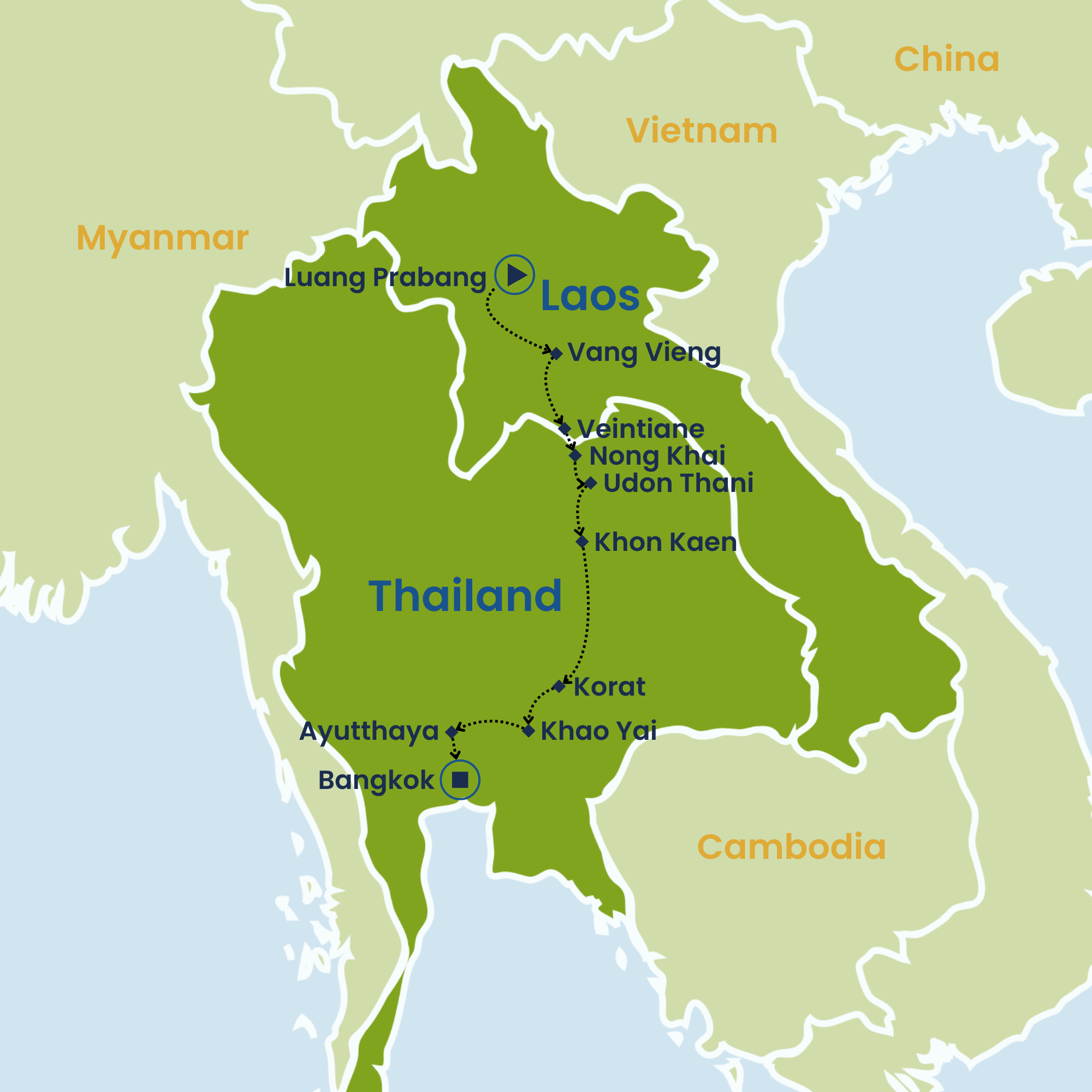
Luang Prabang to Vang Vieng
Approx. 160 km / Approx. 3.5 to 4 hours by road.
Vang Vieng to Vientiane
Approx. 155 km / Approx. 3 to 3.5 hours by road.
Vientiane to Udon Thani
Approx. 80 km / Approx. 2 hours by road.
Udon Thani to Korat
Approx. 320 km / Approx. 4.5 to 5 hours by road.
Korat to Khao Yai
Approx. 90 km / Approx. 1.5 to 2 hours by road.
Khao Yai to Ayutthaya
Approx. 150 km / Approx. 3 hours by road.
Ayutthaya to Bangkok
Approx. 80 km / Approx. 1.5 to 2 hours by road.
Travel between Laos and Thailand on this route mainly involves road travel over varied terrain, including mountainous areas and rural highways. Road conditions are generally good on main routes but can be slower in remote sections, especially during the rainy season (May to October). The border crossing at the Thai-Laos Friendship Bridge requires immigration formalities, which may affect timing. Transfers typically involve private vehicles with local guides, ensuring smooth transitions despite occasional traffic congestion near major cities. Accommodation along the route ranges from basic to comfortable, suitable for professional travelers.
All travel distances and times are indicative only and may vary depending on traffic, weather, routing and local conditions.
Destination Information
Bangkok
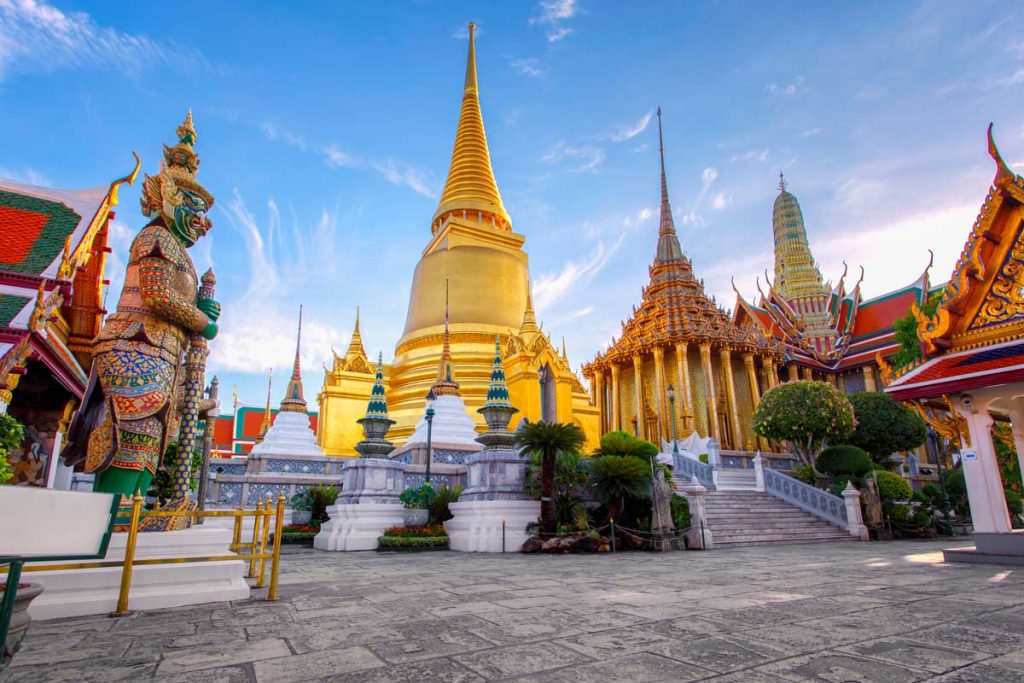
Bangkok presents a dense urban fabric where traditional and modern elements coexist along the banks of the Chao Phraya River, shaping the city’s distinctive character. The cityscape is marked by a mix of historic temples, ornate palaces, and contemporary commercial districts, reflecting layers of history embedded within everyday life. The Grand Palace complex exemplifies this blend, with its intricate architecture and ceremonial grounds offering insight into Thailand’s royal heritage. Nearby, Wat Arun’s riverside spires punctuate the skyline, providing a visual anchor that contrasts with the bustling street markets and the energetic flow of commerce in the Siam commercial district. The river itself remains a vital feature, threading through the city and influencing its spatial layout and daily rhythms. Bangkok’s streets pulse with activity, where local vendors, shoppers, and residents navigate narrow alleys and wide avenues, creating a dynamic environment that balances heritage with urban growth. This combination of historic landmarks, waterways, and vibrant street life defines Bangkok’s unique urban atmosphere and enduring appeal.
Luang Prabang
Luang Prabang is a city where the flow of the Mekong and Nam Khan rivers shapes both its physical layout and daily life, creating a tranquil environment marked by traditional wooden houses and French colonial architecture. This former royal capital retains a quiet pace, with narrow streets lined by Buddhist temples and markets that reflect its blend of spiritual and cultural heritage. The city’s compact scale encourages exploration on foot, revealing layers of history visible in its well-preserved temples and the Royal Palace Museum, which offers insight into its monarchical past. The surrounding landscape, including nearby waterfalls and forested hills, provides a natural contrast to the urban calm. Early mornings bring a unique local rhythm as monks participate in the alms ceremony, a practice deeply woven into community life. Luang Prabang’s appeal lies in this combination of serene river settings, historical architecture, and ongoing religious traditions, offering a setting where visitors can observe the coexistence of everyday activity and enduring cultural practices.
Vientiane
Vientiane unfolds along the banks of the Mekong River, where low-rise buildings and wide boulevards create a calm urban environment distinct from the busier capitals of Southeast Asia. The city’s scale and pace reflect a blend of French colonial architecture and traditional Lao design, with quiet streets that invite exploration on foot. Central to Vientiane’s character is its integration of spiritual and civic life, visible in the golden Pha That Luang stupa, which dominates the skyline and serves as a national symbol. Nearby, Wat Si Saket offers a glimpse into the city’s religious heritage through its preserved cloistered galleries and Buddha images. The riverfront promenade provides a public space where locals gather, balancing the city’s historical sites with everyday activity. Markets like Talat Sao bring a practical vibrancy, showcasing local crafts and commerce amid the city’s measured rhythm. Institutions such as the Lao National Museum further anchor Vientiane’s role in preserving and presenting the country’s cultural and historical narratives within a setting defined by openness and understated urban charm.
Vang Vieng
Vang Vieng is a town set amid a striking landscape of limestone karst mountains that rise sharply from the surrounding plains, creating a distinctive and rugged backdrop. The Nam Song River threads through the area, shaping both the natural environment and local life with its calm waters and occasional rapids. This setting fosters a blend of outdoor activity and quiet rural rhythms, where agricultural fields stretch along the riverbanks and small villages maintain traditional farming practices. The town’s local markets offer a glimpse into everyday commerce, where fresh produce and handcrafted goods reflect the agricultural lifestyle of the region. Nearby, Tham Phu Kham Cave provides a notable natural feature, its interior contrasting with the open landscape outside. Vang Vieng’s appeal lies in this combination of dramatic natural formations, a slow-paced rural atmosphere, and the visible integration of natural and human elements, offering visitors a chance to observe how the environment shapes both the physical and cultural fabric of the community.
Khao Yai
Khao Yai is a region defined by its expansive natural landscapes and a blend of rural and protected environments that contrast with Thailand’s more urbanized areas. The area is dominated by dense forests and rolling hills, where a network of trails weaves through the terrain, leading to cascading waterfalls and vantage points for observing native wildlife. This setting offers a quieter, more immersive experience of Thailand’s natural heritage, where the rhythms of local agricultural life unfold alongside preserved ecosystems. Traditional farming practices remain visible in the surrounding villages, reflecting a connection to the land that has persisted amid conservation efforts. Scattered cultural heritage sites add layers of historical context, revealing the interplay between human settlement and the natural environment over time. The atmosphere here is calm and measured, inviting visitors to engage with the landscape through outdoor activities and quiet observation rather than urban bustle. Khao Yai’s defining feature is its extensive national park, which serves as a living repository of biodiversity and a window into the region’s ecological and cultural fabric.
Udon Thani
Udon Thani occupies a distinctive place in northeastern Thailand, where urban development meets the gentle rise of the Phu Phan Mountains to the south. The city’s layout blends open green spaces with pockets of commercial and residential areas, reflecting a balance between modern life and natural surroundings. Nong Prajak Public Park offers a central gathering spot where locals engage in exercise and social activities beside a large lake, illustrating the city’s relaxed daily rhythm. Beyond the urban core, the nearby Ban Chiang Archaeological Site reveals a deep historical layer, showcasing one of Southeast Asia’s earliest Bronze Age cultures and connecting visitors to the region’s ancient past. The Udon Thani Regional Museum further contextualizes this heritage, presenting artifacts that trace local development through centuries. The city’s atmosphere is grounded in everyday activity, with markets and eateries serving traditional Isan cuisine that highlights local ingredients and flavors. Together, these elements form a setting where history, nature, and contemporary life coexist, offering insight into the cultural and environmental fabric of this part of Thailand.
Korat
Korat, officially known as Nakhon Ratchasima, occupies a distinctive place in Thailand’s northeastern region, blending urban development with rich historical and natural surroundings. The city’s layout combines a dense commercial core with quieter residential areas, reflecting a balance between modern life and traditional roots. Its streets reveal a practical, everyday atmosphere where local markets and street vendors coexist alongside administrative buildings and contemporary shops. Beyond the urban center, the nearby Phimai Historical Park offers a glimpse into the Khmer architectural heritage with its well-preserved stone temples, illustrating the area’s historical depth. The surrounding landscape transitions into the forested hills of Khao Yai National Park, providing a contrast of natural wilderness to the city’s more structured environment. Local craftsmanship thrives in places like Dan Kwian Pottery Village, where traditional techniques continue alongside daily life. Throughout Korat, elements of Isan culture remain visible in food, language, and community practices, grounding the city in its regional identity while presenting a multifaceted experience that combines history, nature, and contemporary Thai life.
Ayutthaya
Ayutthaya presents a distinctive blend of historical grandeur and everyday life along the banks of the Chao Phraya River. Once the capital of a powerful Siamese kingdom, its landscape is marked by the ruins of ancient temples and palaces that reveal a past shaped by religious devotion and royal authority. The city’s layout, with its waterways and island-like setting, reflects a close relationship between urban development and the river, which continues to influence local commerce and culture. Visitors encounter a calm atmosphere where centuries-old brick structures and Buddha statues coexist with bustling floating markets and riverside communities. The remains of Wat Phra Si Sanphet, once a royal temple, stand as a testament to Ayutthaya’s architectural and spiritual heritage, while the nearby elephant sanctuary offers insight into traditional practices still alive in the region. This combination of monumental ruins, active waterways, and local markets creates a setting where history is embedded in the fabric of daily life, providing a tangible connection to Thailand’s past within a living environment.
Saraburi
Saraburi is a province marked by a blend of natural landscapes and cultural heritage nestled in central Thailand’s fertile plains. Its terrain features limestone hills that rise sharply from the surrounding agricultural fields, creating a distinctive backdrop where rural life unfolds amid expansive farmland. The local economy is deeply rooted in agriculture, with vast sunflower fields painting the countryside in vibrant yellow during the blooming season, reflecting the region’s farming traditions. The area’s limestone caves, such as those in Kaeng Khoi, offer a striking contrast to the open fields, providing geological interest alongside spiritual significance. At the heart of Saraburi’s cultural fabric is Wat Phra Phutthabat Temple, a site of religious importance that draws visitors to its revered Buddha footprint and intricate temple architecture. Throughout the year, cultural festivals enliven the province, showcasing local customs and community gatherings that highlight the enduring connection between Saraburi’s residents and their environment. The province’s combination of rural landscapes, historical sites, and active cultural life presents a setting where natural features and human activity coexist visibly and meaningfully.
Khon Kaen
Khon Kaen is a city that blends urban development with a strong connection to its cultural and natural surroundings in northeastern Thailand. Its layout features a mix of modern buildings and traditional structures, reflecting both growth and heritage. The city’s atmosphere is shaped by everyday markets, local eateries, and green spaces where residents gather, creating a balanced pace of life. Central to Khon Kaen’s identity is the Phra Mahathat Kaen Nakhon, a multi-tiered Buddhist temple that rises prominently with intricate architecture, symbolizing the city’s spiritual roots. Nearby, the Khon Kaen National Museum offers insight into the region’s history and archaeological finds, grounding the city in its past. The presence of the Ubolratana Dam to the northwest introduces a significant water landscape that supports local agriculture and recreation. Traditional silk weaving remains an active craft, visible in workshops and markets, connecting visitors to the area’s artisanal heritage. Nong Prajak Public Park provides a green retreat within the urban environment, where locals engage in exercise and social activities, highlighting the city’s integration of natural and social spaces.
Hotel Information
Accommodation throughout this journey is carefully selected to complement the overall travel experience and typically consists of comfortable 3 to 4-star hotels, resorts, lodges, or boutique properties, depending on the destination, routing, and local infrastructure.
All properties are chosen with care based on location, comfort, service standards, atmosphere, and suitability for the itinerary. Exact hotel names may vary depending on departure date, seasonality, group size, and availability at the time of booking.
Final hotel details will be provided with the confirmed travel documentation. In some cases, accommodations may be replaced by properties of a similar standard should operational reasons or availability require a change.
For specific accommodation requests or further questions regarding the hotels used on this journey, please contact our reservations team at reservation@kavaya.travel.