Travel Notes
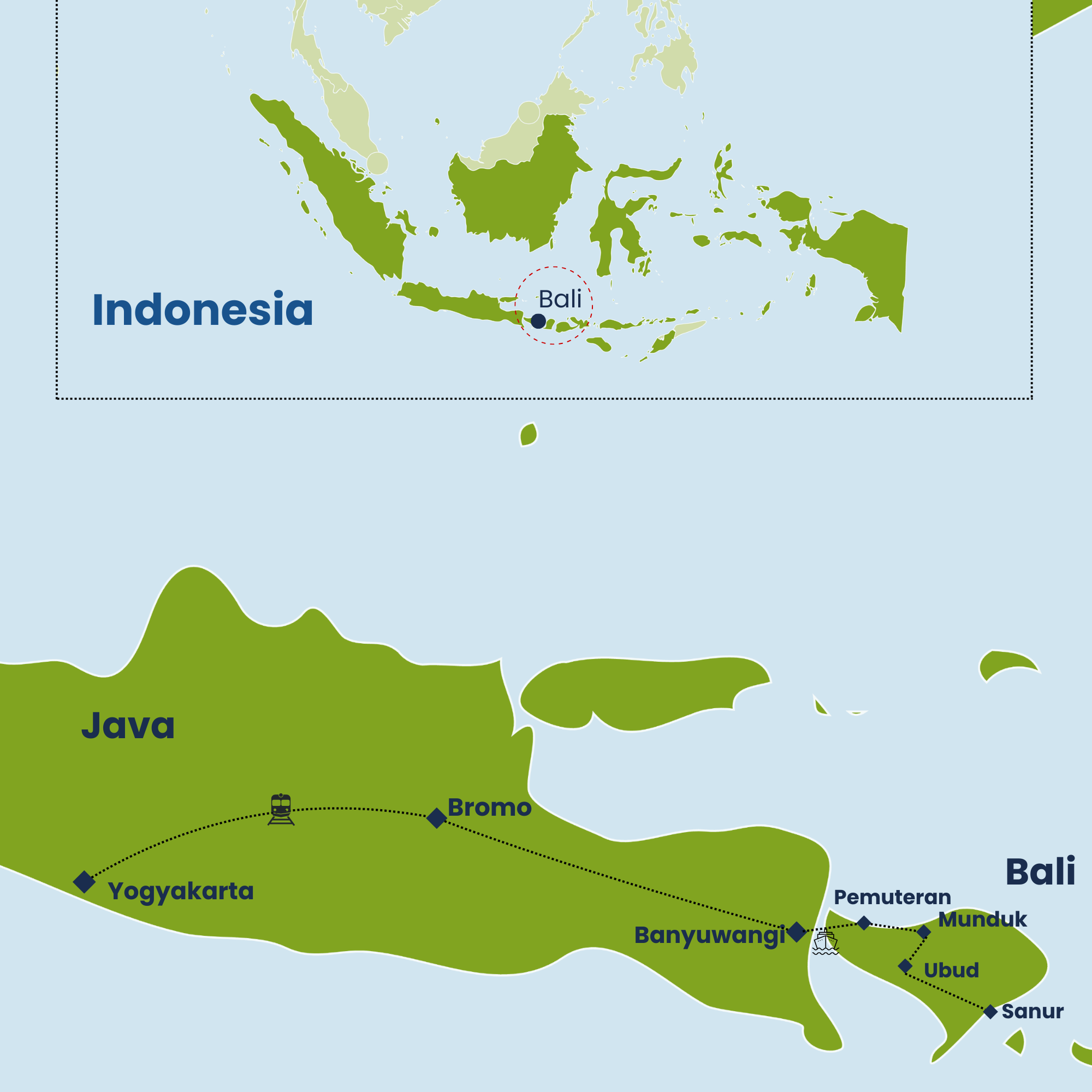
Yogyakarta to Mojokerto
Approx. 200 km / Approx. 4 hours by train.
Cemoro Lawang to Banyuwangi
Approx. 180 km / Approx. 5 hours by road.
Banyuwangi to Ketapang Harbor
Approx. 30 km / Approx. 1 hour by road.
Ketapang Harbor to Pemuteran (Bali)
Approx. 40 km sea crossing / Approx. 1 hour by boat/ferry.
Pemuteran to Munduk
Approx. 45 km / Approx. 1.5 hours by road.
Munduk to Ubud
Approx. 60 km / Approx. 2 hours by road.
Ubud to Sanur
Approx. 25 km / Approx. 1 hour by road.
Travel routes feature a mix of road, train, and ferry segments connecting Java with Bali. Road journeys often traverse rural or mountainous terrain, and travel times can be affected by seasonal traffic or weather conditions, especially during the rainy season. The train ride offers a comfortable alternative to road travel on Java. Ferry crossings are frequent but schedules can vary, so timely coordination is essential. Accommodations along the route range from basic in remote areas like Cemoro Lawang to comfortable resorts in Bali, supporting a balanced travel flow.
All travel distances and times are indicative only and may vary depending on traffic, weather, routing and local conditions.
Destination Information
Bromo
Bromo is a distinctive highland area defined by its vast volcanic landscape and the enduring presence of local Tenggerese communities. The terrain is dominated by expansive volcanic plains, where the Sea of Sand—a wide expanse of fine volcanic ash—stretches beneath the towering caldera walls. This stark environment contrasts with the surrounding rugged peaks, including the active Mount Bromo, whose smoking crater punctuates the horizon. The nearby Semeru volcano, the highest peak in the region, adds to the dramatic natural setting. Beyond its geological features, Bromo is shaped by the Tenggerese people, whose traditional practices and rituals remain integral to daily life, reflecting a deep connection to the land and its volcanic forces. The national park encompassing this area preserves both the unique ecosystem and cultural heritage, offering a landscape where natural phenomena and human presence coexist. The atmosphere here is quiet and elemental, marked by open skies, shifting sands, and the steady rhythm of local customs that continue amid the volcanic terrain.
Yogyakarta
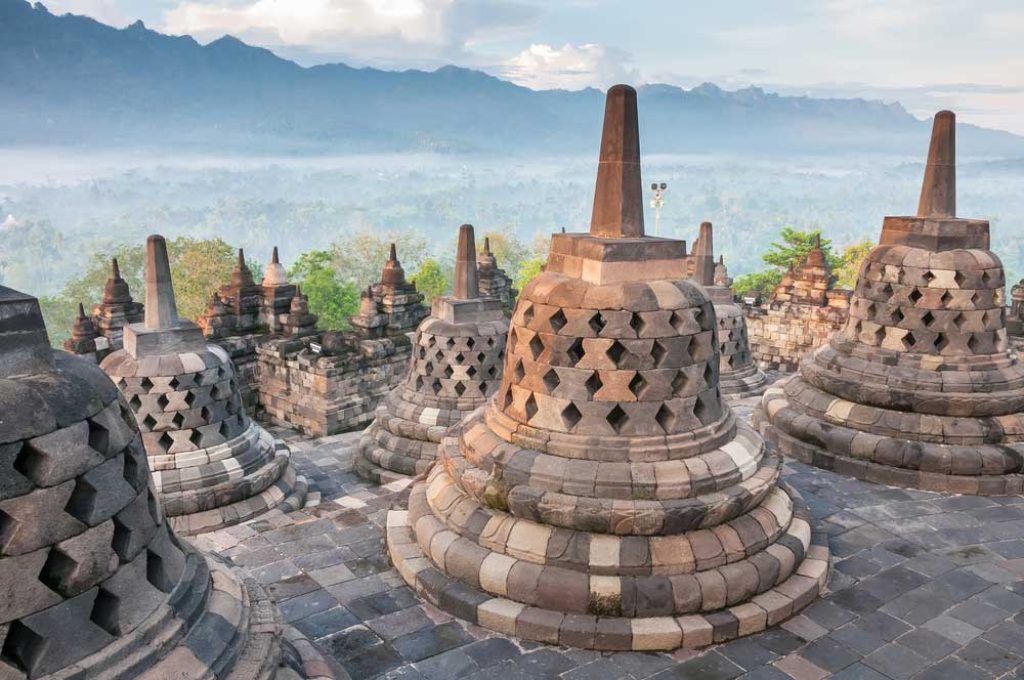
Yogyakarta is a city where cultural heritage and everyday life intertwine amid a setting of volcanic plains and lush tropical greenery. Its compact urban fabric blends traditional Javanese architecture with colonial influences, creating a distinctive streetscape that supports a lively mix of markets, workshops, and royal palaces. The city’s atmosphere is shaped by the presence of the Kraton, a royal palace complex that remains a center of Javanese culture and ceremony, while nearby streets bustle with vendors selling batik textiles and local crafts. Beyond the urban core, the silhouette of Mount Merapi rises sharply, a constant natural presence that influences both the landscape and local livelihoods. The surrounding region holds one of the largest Buddhist monuments in the world, the Borobudur Temple Complex, which reflects the area’s deep historical layers and religious traditions. Yogyakarta’s streets, markets, and artisan workshops offer insight into the rhythms of daily life, where traditional practices continue alongside modern activity, providing a tangible connection to the city’s cultural roots and its evolving identity.
Banyuwangi
Banyuwangi occupies the easternmost tip of Java, where volcanic landscapes meet the Indian Ocean, creating a diverse environment that shapes local life and culture. The area is marked by rugged terrain, including the striking Ijen Crater, whose sulphur mines and rare blue flames draw attention to the region’s volcanic activity. Surrounding this natural landmark, the land transitions into coastal villages where fishing remains a daily occupation, and traditional rhythms persist alongside agricultural practices such as coffee cultivation. The nearby Baluran National Park offers a contrasting savannah landscape, home to wildlife that reflects the region’s ecological variety. Within Banyuwangi town, cultural expression remains tangible, with traditional dance performances that maintain local heritage and community identity. The combination of active volcanic features, coastal livelihoods, protected natural reserves, and enduring cultural practices gives Banyuwangi a distinctive character that reflects both its natural forces and human adaptation to them. This blend of environments and traditions provides insight into a part of Java where nature and culture coexist in a setting defined by both its physical contours and the everyday lives of its inhabitants.
Bali
Bali presents a diverse landscape where coastal cliffs meet lush inland valleys, offering a distinct blend of natural beauty and cultural depth within Indonesia. The island’s terrain varies from terraced rice fields sculpted into hillsides to the imposing silhouette of Mount Agung, an active volcano that shapes both the environment and local spiritual practices. Along the southern coast, the Uluwatu Temple perches dramatically on a limestone promontory, its traditional architecture and ocean views reflecting Bali’s enduring religious heritage. Cultural expression remains integral to daily life, with traditional Balinese dance performances illustrating stories passed through generations. In contrast, areas like Seminyak reveal a more contemporary side of Bali, where a concentrated business district reflects the island’s evolving economic landscape amid its natural surroundings. The combination of rural landscapes, volcanic landmarks, and pockets of urban development creates a multifaceted atmosphere where visitors can engage with both the island’s longstanding traditions and its modern rhythms. This interplay between environment, culture, and commerce defines Bali’s unique character as a place of ongoing cultural vitality and striking physical presence.
Ubud
Ubud is a town set amid the lush, undulating landscape of central Bali, where dense tropical forests and terraced rice paddies shape the surrounding environment. Its compact streets reveal a blend of traditional Balinese architecture and artisan workshops, reflecting a community deeply engaged with its cultural heritage. The presence of sacred sites, such as intricately carved temples with lotus ponds, integrates spiritual practice into daily life, while markets offer a glimpse into local crafts and produce. The nearby rice terraces exemplify the region’s agricultural rhythms, carved into the hillsides in patterns that have sustained generations. Wildlife, including the long-tailed macaques inhabiting the forested sanctuary, adds a natural dimension to the town’s atmosphere. Ubud’s scale and pace encourage exploration on foot, where visitors encounter a balance of artistic expression, religious tradition, and rural landscape, creating a setting that is both serene and culturally rich. This combination of natural beauty, cultural depth, and everyday activity distinguishes Ubud within Bali’s diverse island environment.
Pemuteran
Pemuteran is a coastal village set along the northwestern shore of Bali, distinguished by its quiet, low-key atmosphere and close relationship with the surrounding marine environment. The village’s modest scale and traditional Balinese architecture blend with the natural landscape, where fishing boats and small homes line the shoreline. The nearby coral reefs, part of a broader effort in marine conservation, offer a vivid underwater world that contrasts with the calm village life. Innovative coral restoration projects use local techniques to rebuild damaged reefs, reflecting the community’s commitment to preserving its marine resources. Beyond the water, the proximity of West Bali National Park introduces a patch of protected rainforest and wildlife, adding a layer of biodiversity to the area. Daily life in Pemuteran unfolds with a steady rhythm, shaped by fishing, small-scale agriculture, and cultural traditions that remain visible in village ceremonies and crafts. This blend of natural beauty, conservation efforts, and enduring local customs defines Pemuteran as a place where environmental stewardship and traditional living coexist.
Munduk
Munduk is a highland village set amid the lush, mountainous terrain of northern Bali, distinguished by its cooler climate and verdant landscapes. The area’s elevated position creates a refreshing contrast to the island’s coastal heat, fostering a landscape rich with dense forests, terraced fields, and winding streams. Local life here remains closely tied to the land, with traditional Balinese villages preserving age-old customs and architecture, where wooden homes and temples blend seamlessly into the natural surroundings. The village’s environment supports extensive coffee plantations, where cultivation and processing continue to be an integral part of daily routines. Nearby, a series of waterfalls punctuate the forested hillsides, offering both natural beauty and a glimpse into the region’s ecological diversity. Proximity to Bali Barat National Park further emphasizes the area’s connection to conservation and biodiversity. Munduk’s appeal lies in its tranquil atmosphere, where the rhythms of rural life unfold against a backdrop of striking natural features, inviting visitors to experience a quieter, more contemplative side of Bali.
Mojokerto
Mojokerto presents a distinctive blend of historical depth and everyday life set along the fertile banks of the Brantas River in East Java. The town’s landscape is marked by the remnants of ancient stone structures and scattered ruins that speak to its past as the centre of the Majapahit Empire, one of Indonesia’s most influential kingdoms. Within the urban fabric, local markets bustle with activity, offering a glimpse into contemporary Javanese commerce and social interaction. The surrounding environment combines agricultural fields and riverine scenery, providing a quiet contrast to the town’s historical sites. Traditional Javanese cultural practices remain visible in daily routines and community events, reinforcing a connection between the present and the region’s rich heritage. The Trowulan Archaeological Site, located nearby, anchors Mojokerto’s identity, revealing layers of architectural and artistic achievement that continue to draw interest. Together, these elements create a setting where history and modern life coexist, offering insight into the enduring legacy of Java’s past within a living, working community.
Hotel Information
Accommodation throughout this journey is carefully selected to complement the overall travel experience and typically consists of comfortable 3 to 4-star hotels, resorts, lodges, or boutique properties, depending on the destination, routing, and local infrastructure.
All properties are chosen with care based on location, comfort, service standards, atmosphere, and suitability for the itinerary. Exact hotel names may vary depending on departure date, seasonality, group size, and availability at the time of booking.
Final hotel details will be provided with the confirmed travel documentation. In some cases, accommodations may be replaced by properties of a similar standard should operational reasons or availability require a change.
For specific accommodation requests or further questions regarding the hotels used on this journey, please contact our reservations team at reservation@kavaya.travel.