Travel Notes
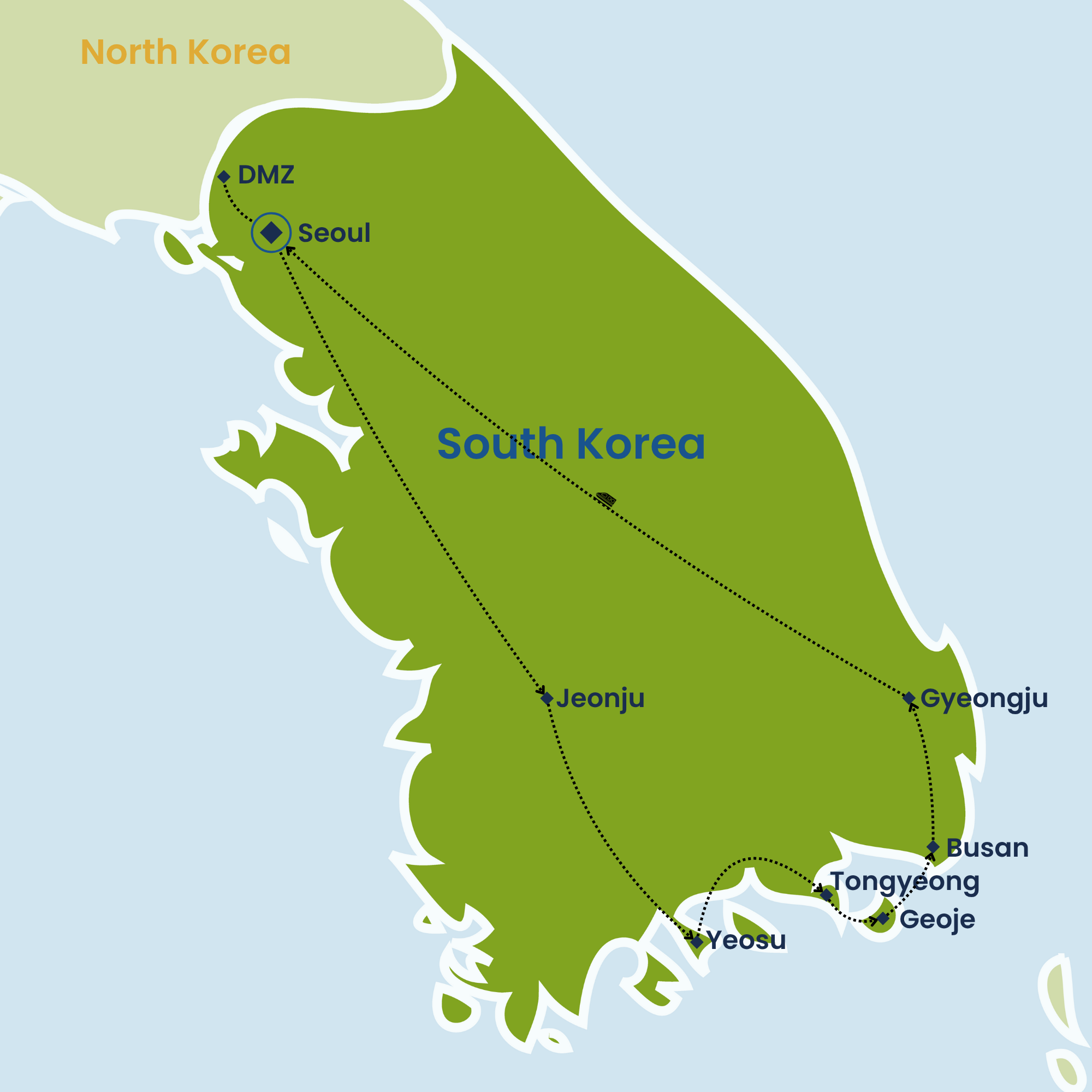
Seoul to Jeonju
Approx. 200 km / Approx. 3.5 hours by road.
Jeonju to Tongyeong
Approx. 190 km / Approx. 4 hours by road.
Tongyeong to Busan
Approx. 130 km / Approx. 3 hours by road.
Busan to Gyeongju
Approx. 80 km / Approx. 1.5 hours by road.
Gyeongju to Seoul
Approx. 370 km / Approx. 2 hours by train.
Intercity travel routes in South Korea benefit from excellent infrastructure, including well-maintained highways and high-speed KTX trains. Road transfers, while generally comfortable, may vary in duration due to urban traffic around major hubs like Seoul and Busan. The KTX provides a reliable and efficient connection between Gyeongju and Seoul, ideal for saving time. Accommodation along routes ranges from traditional guesthouses in smaller towns to modern hotels in cities. Seasonal weather can affect travel comfort, especially in winter, so prepare accordingly.
All travel distances and times are indicative only and may vary depending on traffic, weather, routing and local conditions.
Destination Information
Busan
Busan is a coastal city where the meeting of sea and urban life shapes its distinctive character. Its extensive shoreline features sandy beaches that draw both locals and visitors, offering a relaxed contrast to the city’s bustling commercial districts. The city’s maritime heritage is evident in its active fish markets and busy port, where fishing vessels and cargo ships operate alongside seafood vendors and waterfront eateries. Narrow streets climb from the harbor into hillside neighbourhoods, where colourful houses and public art create a textured urban landscape that reflects everyday life and creative expression. Historic temples nestled in forested hills provide quiet spaces that contrast with the city’s energetic waterfront and market scenes. The combination of natural coastal features, working harbour, vibrant street life, and pockets of cultural heritage gives Busan a layered and tangible sense of place, where the rhythms of trade, tradition, and leisure coexist within a compact and visually varied environment.
Gyeongju
Gyeongju occupies a distinctive place in South Korea’s cultural and historical landscape, where the remnants of an ancient kingdom shape the city’s physical and social fabric. The terrain blends gentle hills with pockets of urban development, creating a setting where historic sites and everyday life coexist closely. Stone pagodas and temple complexes emerge amid modern streets, reflecting centuries of architectural tradition rooted in local materials and craftsmanship. The city’s layout reveals a careful integration of natural features, such as ponds and burial mounds, which are interwoven with public spaces and residential areas. This environment offers a tangible connection to Korea’s Silla dynasty, visible in the preserved Buddhist temples and grottoes that punctuate the landscape. Museums and parks provide context for the extensive archaeological finds, while the quiet presence of ancient tombs and water gardens invites reflection on the city’s long history. Gyeongju’s atmosphere is measured and contemplative, shaped by its role as a custodian of heritage where cultural memory remains embedded in the everyday streets and surroundings.
Jeonju
Jeonju presents a distinctive blend of traditional architecture and contemporary cultural life, set within a landscape of gentle hills and waterways in South Korea’s North Jeolla Province. The city’s compact scale and low-rise buildings create an intimate urban environment where historic hanok houses cluster alongside modern streets. This close relationship between past and present is visible in the everyday rhythms of local markets, cafes, and workshops. The preserved hanok village offers a tangible connection to Korea’s architectural heritage, with wooden structures and tiled roofs that contrast with the city’s more recent developments. Culinary traditions also shape the city’s character, with the local style of bibimbap reflecting regional ingredients and cooking methods. Seasonal festivals, including an international film event, bring a creative energy that complements the city’s quieter, reflective spaces such as Deokjin Park, known for its ponds and green areas. Jeonju’s atmosphere balances cultural preservation with contemporary life, providing an environment where visitors can engage with both historical craftsmanship and current artistic expression.
Tongyeong
Tongyeong is a coastal city distinguished by its blend of maritime landscapes and urban life along South Korea’s southern shore. The city’s layout follows the contours of its natural harbor, where fishing boats and small vessels gather, reflecting a community deeply connected to the sea. Narrow streets wind through residential areas and traditional markets, where local commerce thrives amid everyday routines. Tongyeong’s character is shaped by its seaside setting and historical ties to naval defense, visible in parks and monuments dedicated to figures like Admiral Yi Sun-sin. The city’s hillsides are punctuated by colorful murals that animate older neighborhoods, while the nearby cable car offers panoramic views of the archipelago and surrounding waters, highlighting the interaction between land and sea. Nearby islands, including a sea park with diverse plant collections, extend the city’s maritime environment into natural preserves. Tongyeong’s atmosphere balances the practical rhythms of fishing and market life with opportunities for outdoor exploration, providing a tangible sense of place rooted in its coastal geography and cultural heritage.
Yeosu
Yeosu is a coastal city where the meeting of sea and land shapes both its landscape and lifestyle. Its shoreline is marked by a mix of rugged cliffs and sheltered bays, giving way to urban areas that blend modern infrastructure with traditional Korean architecture. The city’s maritime character is evident in the everyday presence of fishing boats and seafood markets, reflecting a community closely tied to the ocean. Among its features, the Dolsan Bridge stretches across the water, linking parts of the city while offering expansive views of the harbor. The Yeosu Maritime Cable Car provides a unique vantage point, crossing over the sea and islands, highlighting the city’s integration with its natural surroundings. Historical layers are visible in structures like Jinnamgwan Hall, which recalls Yeosu’s role in regional defense and governance. Nearby, Odongdo Island offers a green retreat with coastal walking paths and seasonal blooms, contrasting with the urban waterfront. The site of the Yeosu Expo 2012 remains a reminder of the city’s engagement with marine science and international exchange, contributing to its evolving urban fabric. Together, these elements define Yeosu as a place where maritime heritage and modern life coexist along a distinctive coastal setting.
Geoje
Geoje is a coastal city defined by its rugged shoreline and maritime heritage, where industrial activity and natural landscapes coexist. The city’s extensive shipyards shape much of its urban fabric, with large-scale shipbuilding facilities occupying significant waterfront areas, reflecting Geoje’s role in South Korea’s heavy industry. Beyond the industrial zones, the environment shifts to quieter, scenic coastal stretches marked by steep hills and open sea views. This contrast is evident in places like Windy Hill, where visitors can experience expansive vistas of the surrounding waters and islands. Geoje’s history is visible in sites such as the former prisoner-of-war camp, which offers insight into the region’s mid-20th-century past and its impact on local communities. Nearby islands, including Jisimdo, provide opportunities to explore less developed natural settings, while Oedo Botania Marine Park showcases cultivated gardens set against a marine backdrop, blending horticulture with the coastal environment. The city’s atmosphere balances the rhythm of industrial work with pockets of tranquility, where everyday life unfolds amid a landscape shaped by both human enterprise and the sea.
Hotel Information
Accommodation throughout this journey is carefully selected to complement the overall travel experience and typically consists of comfortable 3 to 4-star hotels, resorts, lodges, or boutique properties, depending on the destination, routing, and local infrastructure.
All properties are chosen with care based on location, comfort, service standards, atmosphere, and suitability for the itinerary. Exact hotel names may vary depending on departure date, seasonality, group size, and availability at the time of booking.
Final hotel details will be provided with the confirmed travel documentation. In some cases, accommodations may be replaced by properties of a similar standard should operational reasons or availability require a change.
For specific accommodation requests or further questions regarding the hotels used on this journey, please contact our reservations team at reservation@kavaya.travel.