Travel Notes
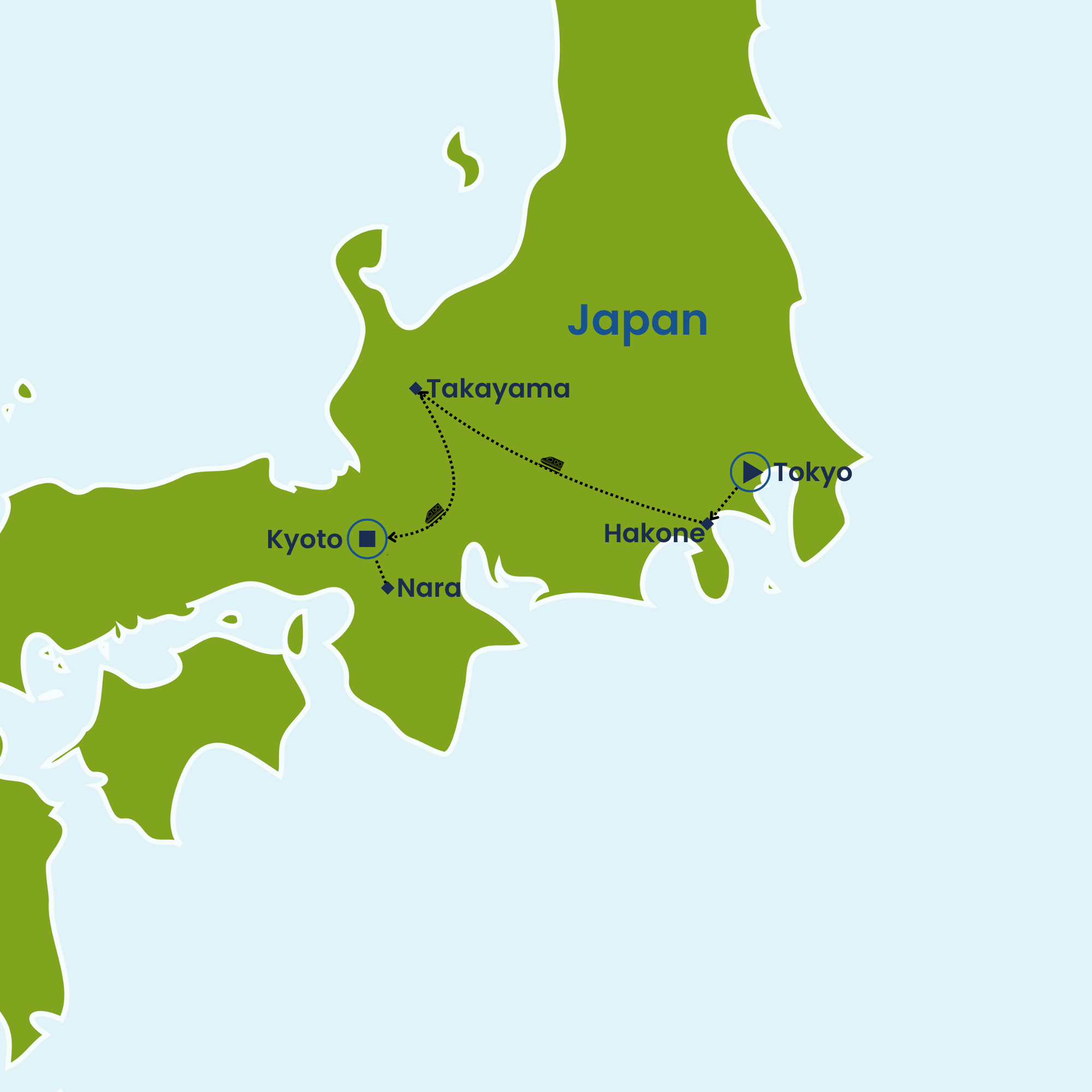
Tokyo to Hakone
Approx. 85 km / Approx. 2.5 to 3 hours by train and cable car.
Hakone to Takayama
Approx. 300 km / Approx. 4.5 to 5 hours by train.
Takayama to Kyoto
Approx. 225 km / Approx. 3.5 to 4 hours by train.
Kyoto to Nara
Approx. 40 km / Approx. 45 minutes to 1 hour by train.
Travel across Japan is generally efficient with extensive rail networks, particularly bullet trains offering speed and comfort between major cities. Regional routes such as Hakone involve multiple transfer modes including cable cars and local trains, which may require short walking transfers. Seasonal travel, especially in winter, can affect some mountain-area services. Accommodation en route ranges from modern hotels to traditional ryokans, so luggage forwarding services are often used for convenience over multi-day trips. Local transport in cities usually includes short walking or public transit connections.
All travel distances and times are indicative only and may vary depending on traffic, weather, routing and local conditions.
Destination Information
Tokyo
Tokyo presents a dense urban environment where towering modern structures coexist with pockets of traditional architecture and green spaces. The city’s sprawling layout is marked by a mix of commercial districts, residential neighborhoods, and cultural sites, reflecting its role as Japan’s political, economic, and cultural center. Visitors encounter a variety of experiences, from the orderly tranquility of the Imperial Palace Gardens to the bustling energy of busy intersections like Shibuya Crossing, where streams of pedestrians move in all directions. Tokyo’s streets reveal layers of history alongside contemporary life, with places such as Meiji Shrine offering a quiet retreat amid the city’s fast pace. Markets like Tsukiji Outer Market provide insight into local food culture and daily commerce, while landmarks such as Tokyo Tower punctuate the skyline with their distinctive presence. The city’s blend of glass, steel, and natural elements creates a complex urban fabric that supports both tradition and innovation, making Tokyo a place where the everyday and the extraordinary coexist seamlessly.
Kyoto
Kyoto presents a distinctive blend of historical depth and natural beauty, nestled within a basin surrounded by forested hills in Japan’s Kansai region. The city’s layout reflects its ancient role as an imperial capital, with carefully preserved wooden structures and tranquil gardens interspersed among narrow streets and waterways. Kyoto’s atmosphere balances quiet reverence with everyday urban life, where traditional wooden machiya townhouses stand alongside modern shops and cafes. Visitors encounter a city where centuries-old temples and palaces coexist with neighbourhoods that maintain a slower, more contemplative pace compared to Japan’s larger metropolitan centres. The reflective waters and gold-leaf exterior of Kinkaku-ji Temple exemplify the city’s architectural elegance, while the winding lanes of the Gion district reveal a living connection to cultural practices such as geisha traditions and tea ceremonies. The Arashiyama Bamboo Grove offers a striking natural contrast to the city’s built environment, providing a serene setting that complements Kyoto’s emphasis on harmony between nature and human craftsmanship. The Kyoto Imperial Palace further anchors the city’s historical significance, embodying its enduring role in Japan’s cultural heritage.
Hakone
Nestled within the mountainous terrain of Japan’s Kanagawa Prefecture, Hakone offers a distinctive blend of natural beauty and cultural heritage shaped by its volcanic landscape. The area’s steaming hot springs have long drawn visitors seeking relaxation amid pine forests and rugged hillsides. Around Lake Ashi, the calm waters reflect the surrounding peaks, providing a serene backdrop that contrasts with the energetic flow of the nearby volcanic activity. The landscape is punctuated by open-air spaces where art and nature intersect, inviting exploration beyond traditional museum walls. Historic sites, such as the remnants of a former checkpoint, reveal Hakone’s role in regional travel and security during earlier periods, grounding the destination in a tangible past. Elevated viewpoints accessible by aerial cable cars afford expansive views of the lake and mountains, highlighting the varied topography. Throughout Hakone, the balance between natural elements, cultural landmarks, and everyday local life creates a setting where visitors can engage with both the environment and the enduring traditions of the region.
Takayama
Takayama is a city where traditional architecture and mountainous surroundings combine to create a distinctive atmosphere rooted in Japan’s Edo period. Its compact old town features wooden merchant houses and narrow streets that preserve a sense of historical continuity, reflecting the city’s past as a prosperous center of commerce and craftsmanship. The nearby Hida Folk Village offers insight into rural life through carefully relocated farmhouses and workshops, illustrating regional building techniques and customs. Throughout the year, Takayama’s cultural calendar is marked by the Takayama Festival, a seasonal event that highlights intricate floats and local craftsmanship, underscoring the city’s strong community traditions. The Miyagawa Morning Market runs along the riverbank, where vendors sell local produce and handmade goods, providing a glimpse into daily life and local commerce. Beyond the urban area, access to Mount Norikura offers opportunities to experience the natural landscape of the Northern Japan Alps, contrasting the city’s historic streets with expansive alpine scenery. Together, these elements shape Takayama as a place where history, culture, and nature intersect in a setting that remains closely connected to its regional roots.
Nara
Nara presents a distinctive blend of historical depth and natural openness within Japan’s Kansai region, where ancient temples and shrines coexist with expansive parkland and quiet residential streets. The city’s layout integrates broad green spaces, most notably a park where deer roam freely, reflecting a longstanding cultural relationship between nature and spirituality. Architectural elements crafted from wood and stone reveal Nara’s early role as a center of Japanese Buddhism, with large-scale temple complexes set amid tranquil gardens and shaded paths. Narrow lanes in the old merchant district preserve a sense of everyday life from centuries past, offering a contrast to the grand religious sites. Museums housed in traditional buildings display artifacts that connect visitors to the city’s formative periods. The atmosphere is calm and measured, inviting reflection amid a setting where historical structures and living traditions remain part of the urban fabric. This combination of open landscapes, religious heritage, and preserved neighborhoods defines Nara’s appeal as a place where history is tangible and integrated into daily rhythms.
Hotel Information
Accommodation throughout this journey is carefully selected to complement the overall travel experience and typically consists of comfortable 3 to 4-star hotels, resorts, lodges, or boutique properties, depending on the destination, routing, and local infrastructure.
All properties are chosen with care based on location, comfort, service standards, atmosphere, and suitability for the itinerary. Exact hotel names may vary depending on departure date, seasonality, group size, and availability at the time of booking.
Final hotel details will be provided with the confirmed travel documentation. In some cases, accommodations may be replaced by properties of a similar standard should operational reasons or availability require a change.
For specific accommodation requests or further questions regarding the hotels used on this journey, please contact our reservations team at reservation@kavaya.travel.