Travel Notes
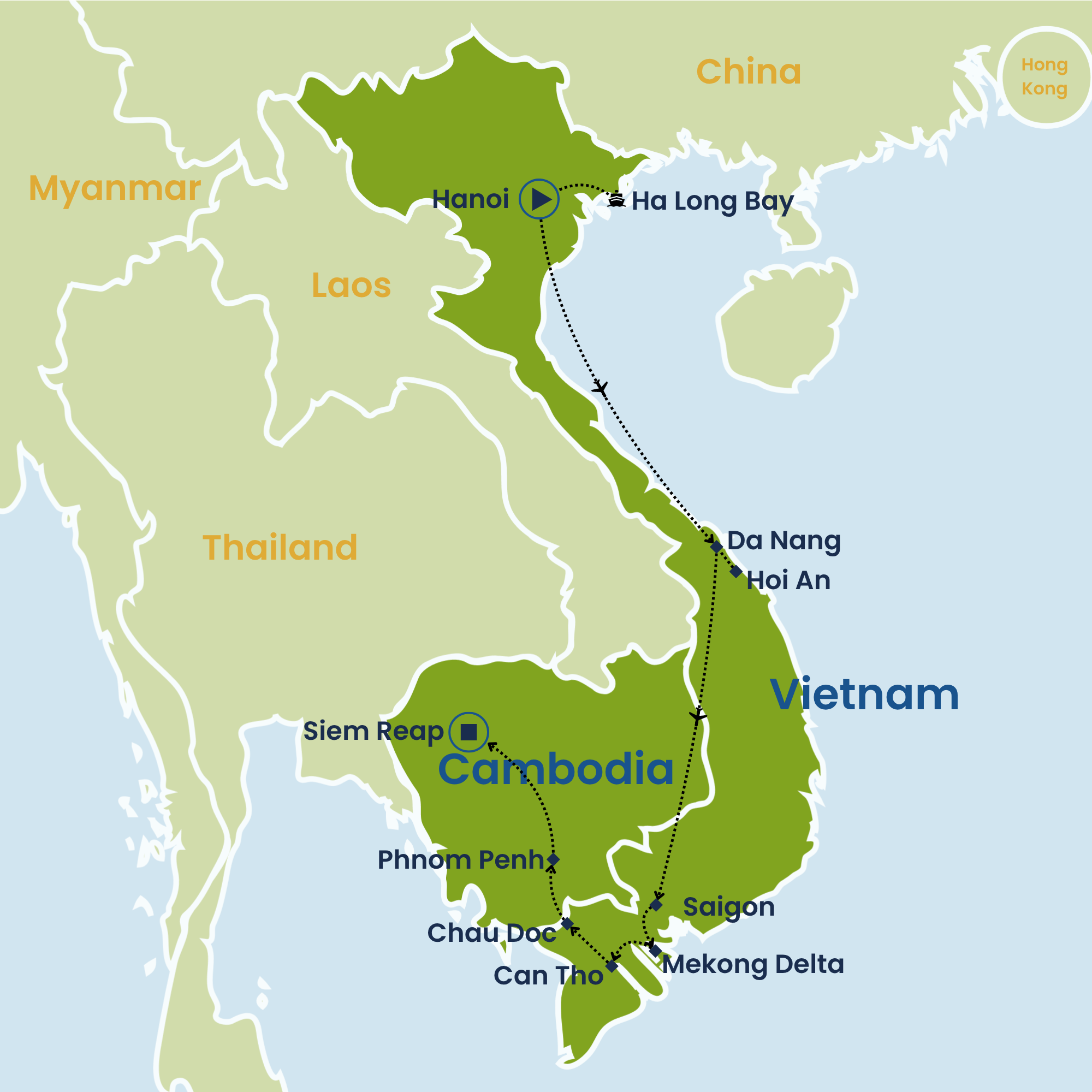
Hanoi to Ha Long Bay
Approx. 160 km / Approx. 3.5 to 4 hours by road.
Ha Long Bay to Hoi An
Approx. 550 km (road to Hanoi) + flight distance / Approx. 4 hours (road) + 1.5 hours (flight) by road and flight.
Hoi An to Saigon
Approx. 700 km / Approx. 1.5 hours by flight.
Saigon to Mekong Delta (Can Tho)
Approx. 170 km / Approx. 3.5 to 4 hours by road.
Mekong Delta (Can Tho) to Chau Doc
Approx. 130 km / Approx. 3 hours by road.
Chau Doc to Phnom Penh
Approx. 130 km on Mekong River / Approx. 5.5 hours by boat.
Phnom Penh to Siem Reap
Approx. 320 km / Approx. 6 hours by road.
Intercity travel in Vietnam and Cambodia involves varied transportation modes including road, flight, and riverboat, which are subject to local traffic conditions and seasonal weather. Roads linking major cities are generally paved but travel times can be extended during peak periods or rainy season. Riverboat journeys, especially from Chau Doc to Phnom Penh, traverse border areas with open boats, requiring casual attire and preparation for limited amenities. Transfers between flights and other local transport usually involve short drives through city traffic. Accommodation along routes is typically basic to mid-range outside major cities.
All travel distances and times are indicative only and may vary depending on traffic, weather, routing and local conditions.
Destination Information
Hanoi
Hanoi presents a distinctive blend of historical depth and urban vitality set along the banks of the Red River in northern Vietnam. The city’s compact core features narrow streets lined with low-rise buildings that reflect centuries of architectural influence, from traditional Vietnamese to French colonial styles. At its heart, a tranquil lake punctuates the dense urban fabric, offering a quiet contrast to the surrounding bustle. Hanoi’s streets bustle with a mix of motorbikes, street vendors, and local commerce, creating a textured everyday scene that reveals the city’s ongoing evolution. Cultural landmarks are woven into the urban landscape, with a temple dedicated to Confucian learning standing amid busy neighborhoods, and a solemn mausoleum commemorating a key figure in Vietnam’s modern history. The city’s location within the fertile Red River Delta shapes its character, linking it to a wider agricultural region while maintaining a distinctly urban pace. This combination of water, history, and active street life defines Hanoi as a place where tradition and contemporary life coexist visibly and tangibly.
Saigon
Saigon presents a dense urban fabric where colonial-era architecture and modern developments coexist along the banks of the Saigon River. The city’s streets pulse with a mix of motorbikes, street vendors, and markets, reflecting its role as a commercial and cultural center in southern Vietnam. Its layered past is visible in landmarks such as the Notre-Dame Cathedral Basilica, built with red bricks imported from France, which contrasts with the nearby War Remnants Museum that documents the impact of conflict on the region. The bustling Ben Thanh Market offers a window into everyday life, with stalls selling local produce, textiles, and street food amid a lively atmosphere. Beyond the city’s core, the Cu Chi Tunnels extend the historical narrative into the surrounding countryside, revealing the intricate underground network used during wartime. Saigon’s combination of waterways, historic sites, and vibrant street scenes creates a setting that captures both the resilience and complexity of Vietnam’s urban experience.
Hoi An
Hoi An is a compact town set along the gentle curves of the Thu Bon River in Vietnam’s central coastal region, where narrow streets and low-rise buildings create an intimate urban fabric shaped by centuries of trade and cultural exchange. Its architecture reflects a blend of local and foreign influences, with wooden shop houses and tiled roofs lining quiet lanes that invite slow exploration. The town’s scale and layout encourage a pedestrian pace, fostering a close connection between everyday life and the preserved historic environment. Traditional crafts remain part of daily activity, visible in workshops where artisans shape lanterns that light the streets after dusk, adding a warm, tangible element to the town’s atmosphere. The Japanese Covered Bridge, a distinctive structure linking parts of the old quarter, exemplifies the layering of cultural influences and the integration of functional design with aesthetic detail. Beyond the built environment, the nearby river and coastal landscape contribute to Hoi An’s character, grounding it in a region known for its fertile plains and maritime heritage. This combination of architectural heritage, artisanal practice, and natural setting defines Hoi An’s appeal as a place where history and local life coexist closely.
Danang
Danang is a coastal city where urban development meets natural landscapes, offering a distinctive blend of modernity and tradition along Vietnam’s central coastline. Its broad sandy shores, exemplified by My Khe Beach, provide a relaxed environment that contrasts with the city’s growing skyline and bustling streets. The nearby Marble Mountains rise sharply from the flat coastal plain, their limestone peaks dotted with caves and pagodas that reflect centuries of spiritual and cultural activity. The Han River flows through the city, with the Han River Bridge serving as a functional and visual landmark that connects different parts of Danang while illuminating the cityscape after dark. The Cham Museum houses an extensive collection of sculptures and artifacts from the ancient Champa civilization, anchoring Danang’s historical significance amid its contemporary urban fabric. The city’s layout balances waterways, open spaces, and dense residential areas, creating a setting where everyday life unfolds alongside historical sites and natural features. Danang’s atmosphere is defined by this coexistence of coastal leisure, cultural heritage, and ongoing urban growth, making it a place where visitors can engage with both Vietnam’s past and present.
Can Tho
Can Tho lies at the heart of the Mekong Delta, where a network of rivers and canals shapes both the landscape and daily life. The city’s low-rise buildings and tree-lined streets unfold alongside waterways that remain central to local commerce and community interaction. Life here moves at a measured pace, marked by the steady flow of boats and the exchange of goods on the water. The Cai Rang Floating Market exemplifies this aquatic rhythm, offering a glimpse into the region’s agricultural abundance and traditional trade practices. Nearby, the Binh Thuy Ancient House reflects the architectural heritage and historical layers embedded in Can Tho’s urban fabric. The Can Tho Museum provides context to the city’s development and cultural roots, while Ninh Kieu Wharf serves as a focal point where residents gather and river traffic converges. Surrounding the city, fertile fields and orchards underscore Can Tho’s role in sustaining the Mekong Delta’s agricultural economy. Together, these elements create a setting where history, environment, and everyday activity intertwine, giving Can Tho a distinct character shaped by its waterways and rural connections.
Halong City
Halong City occupies a distinctive coastal landscape where limestone karsts rise sharply from emerald waters, shaping a setting that blends natural grandeur with local livelihoods. The city’s character is deeply influenced by its proximity to Halong Bay, whose dramatic seascape of towering islands and hidden inlets extends into the surrounding waters. Along the shoreline, small fishing villages maintain traditional practices, offering a glimpse into daily life shaped by the sea. Inland, the Quang Ninh Museum provides a structured narrative of the region’s cultural and geological heritage, complementing the natural environment with historical context. The area’s cave systems add another layer of geological interest, with intricate formations that reveal the slow processes shaping the landscape over millennia. Nearby coastal wetlands support diverse ecosystems, reflecting the balance between human activity and nature. Together, these elements create a place where the physical environment and community coexist, marked by a measured pace and a focus on maritime culture rather than urban bustle. This combination of striking natural features and enduring local traditions defines the experience of Halong City.
Halong Bay
Halong Bay presents a striking seascape where towering limestone karst formations rise sharply from emerald waters, creating a rugged and sculptural horizon unique within the region. This coastal area extends across a vast expanse of sea dotted with thousands of islands and islets, many cloaked in dense vegetation, offering a complex natural environment shaped by millennia of geological activity. The bay’s calm waters are home to diverse marine ecosystems, supporting a range of fish and coral species that sustain local fishing communities. These communities maintain traditional ways of life, including floating villages where houses and markets rest on wooden platforms, blending human activity seamlessly with the aquatic landscape. The area’s cultural fabric is enriched by local legends and historical narratives tied to the karsts and the sea, reflecting a deep connection between people and place. Recognized for its geological and ecological value, this UNESCO World Heritage Site combines natural grandeur with ongoing human presence, creating a living environment where nature and culture coexist visibly and continuously.
Phnom Penh
Phnom Penh unfolds along the banks of the Mekong River, where wide boulevards and colonial-era buildings meet bustling markets and riverside promenades. The city’s urban fabric reflects its complex history, with grand structures like the Royal Palace Complex standing amid lively neighborhoods where daily commerce and street life thrive. Phnom Penh’s streets reveal layers of the past, from the ornate spires of Wat Phnom Temple to the sobering exhibits of the Tuol Sleng Genocide Museum, which confront visitors with the city’s difficult twentieth-century history. The Central Market Building anchors a vibrant commercial district, its distinctive art deco architecture framing a maze of stalls selling everything from fresh produce to textiles. Along the riverfront, locals gather to socialize and relax, creating a dynamic public space that contrasts with the city’s more formal landmarks. This blend of historical depth, architectural variety, and active urban life gives Phnom Penh a distinctive character within Cambodia, inviting visitors to engage with both its cultural heritage and contemporary rhythms.
Siem Reap
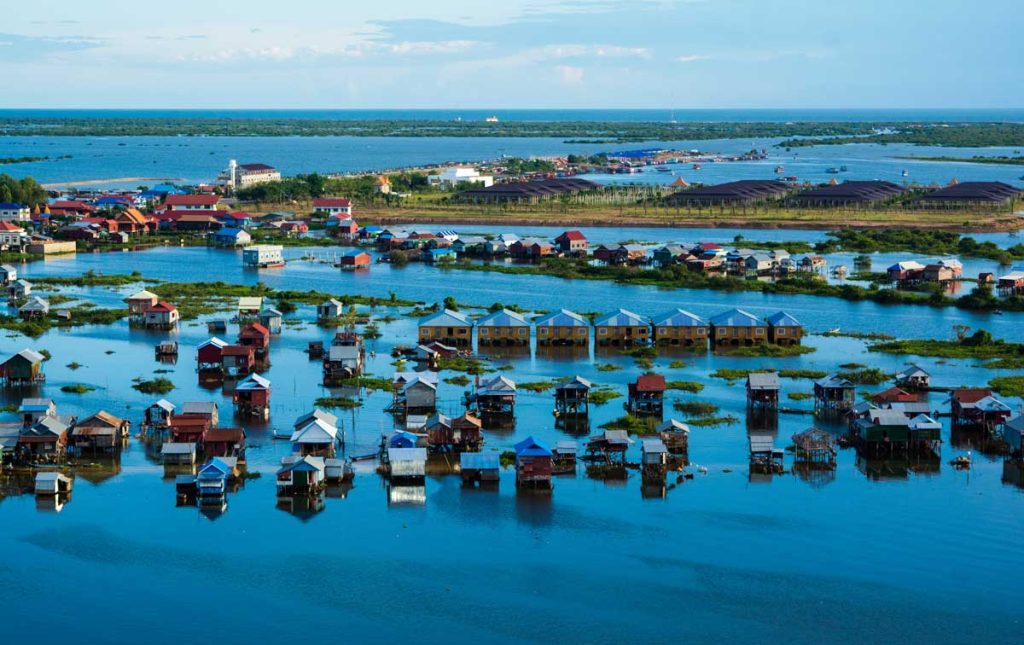
Siem Reap is a city where ancient history and everyday life coexist amid a landscape shaped by waterways and lush greenery. Its streets reveal a blend of traditional Khmer architecture and modest urban development, reflecting a community rooted in local customs while engaging with growing tourism. The city’s proximity to the vast Tonle Sap Lake influences both its economy and atmosphere, with floating villages and fishing activities visible beyond the urban edges. Central to Siem Reap’s identity is the nearby Angkor Archaeological Park, where temple ruins rise from dense forest, offering insight into the grandeur of the Khmer Empire. This historical presence contrasts with the lively Old Market area, where vendors sell local crafts and produce, providing a glimpse into contemporary daily life. Beyond the city limits, Phnom Kulen National Park offers natural landscapes and spiritual sites, reinforcing the region’s connection to Cambodia’s cultural heritage. Together, these elements create a destination that balances the weight of its past with the rhythms of present-day community life.
Chau Doc
Chau Doc is a riverside town set along the Mekong Delta’s intricate network of waterways, where the slow pace of life reflects the rhythms of the river and surrounding wetlands. Its landscape is defined by lush greenery and water channels that shape both daily routines and local commerce. The town’s character emerges through its blend of natural and built environments, from traditional wooden houses to colonial-era architecture, offering a tangible sense of history. The nearby Sam Mountain rises gently above the flat delta, providing a natural landmark that contrasts with the low-lying terrain. Floating villages on the water illustrate how communities adapt to the river’s presence, while the nearby Tra Su Cajuput Forest showcases the region’s rich biodiversity. Historical sites like the Binh Thuy Ancient House reveal layers of cultural heritage, reflecting the town’s longstanding settlement and cross-border influences. The proximity to Cambodia also shapes local trade and social interactions, adding complexity to Chau Doc’s everyday life. Together, these elements create a setting where nature, history, and local livelihoods intersect in a distinctive Mekong Delta environment.
Hotel Information
Victory Star Cruise
Victory Star Cruise offers an immersive journey along the Mekong River, blending refined comfort with authentic cultural encounters. This intimate vessel features elegantly appointed cabins and a welcoming atmosphere that reflects the region’s rich heritage. Guests are invited to explore vibrant local markets, timeless temples, and traditional villages, all curated to provide meaningful connections beyond typical sightseeing. Onboard, expert guides and attentive service create a seamless experience, balancing relaxation with enriching exploration. Every detail, from the carefully crafted cuisine to the thoughtfully designed public spaces, emphasizes a harmonious blend of luxury and authenticity, setting Victory Star Cruise apart as a distinctive passage through Southeast Asia’s heart.
Luxcity Hotel & Apartment
Luxcity Hotel & Apartment offers a sophisticated urban retreat designed for discerning travelers seeking both comfort and convenience in the heart of the city. This four-star property seamlessly blends modern elegance with practical functionality, featuring thoughtfully appointed rooms and spacious apartments that cater to extended stays and business visits alike. Guests enjoy access to well-curated amenities that enhance the experience without excess, including a serene rooftop terrace and fully equipped fitness center. The hotel’s strategic location provides effortless access to key cultural sites and vibrant dining districts, allowing guests to immerse themselves in the city’s dynamic rhythm. At Luxcity, attention to detail and personalized service create an inviting atmosphere where professionalism meets understated luxury, making every stay both productive and restful.
Angkor Paradise Hotel
Nestled in the heart of Siem Reap, Angkor Paradise Hotel offers an elevated sanctuary that blends refined comfort with authentic Khmer charm. This four-star retreat stands out for its seamless balance of modern luxury and cultural heritage, providing travelers with an immersive experience steps away from the Angkor temples. The hotel’s tranquil ambiance is carefully curated through elegant design, inviting natural light and spacious layouts. Guests enjoy refined amenities, including a pristine swimming pool, lush gardens, and attentive service that anticipates every need. Whether exploring iconic ruins or seeking a serene escape, Angkor Paradise Hotel delivers an intimate and sophisticated stay that reflects the spirit of Cambodia’s timeless allure.