Travel Notes
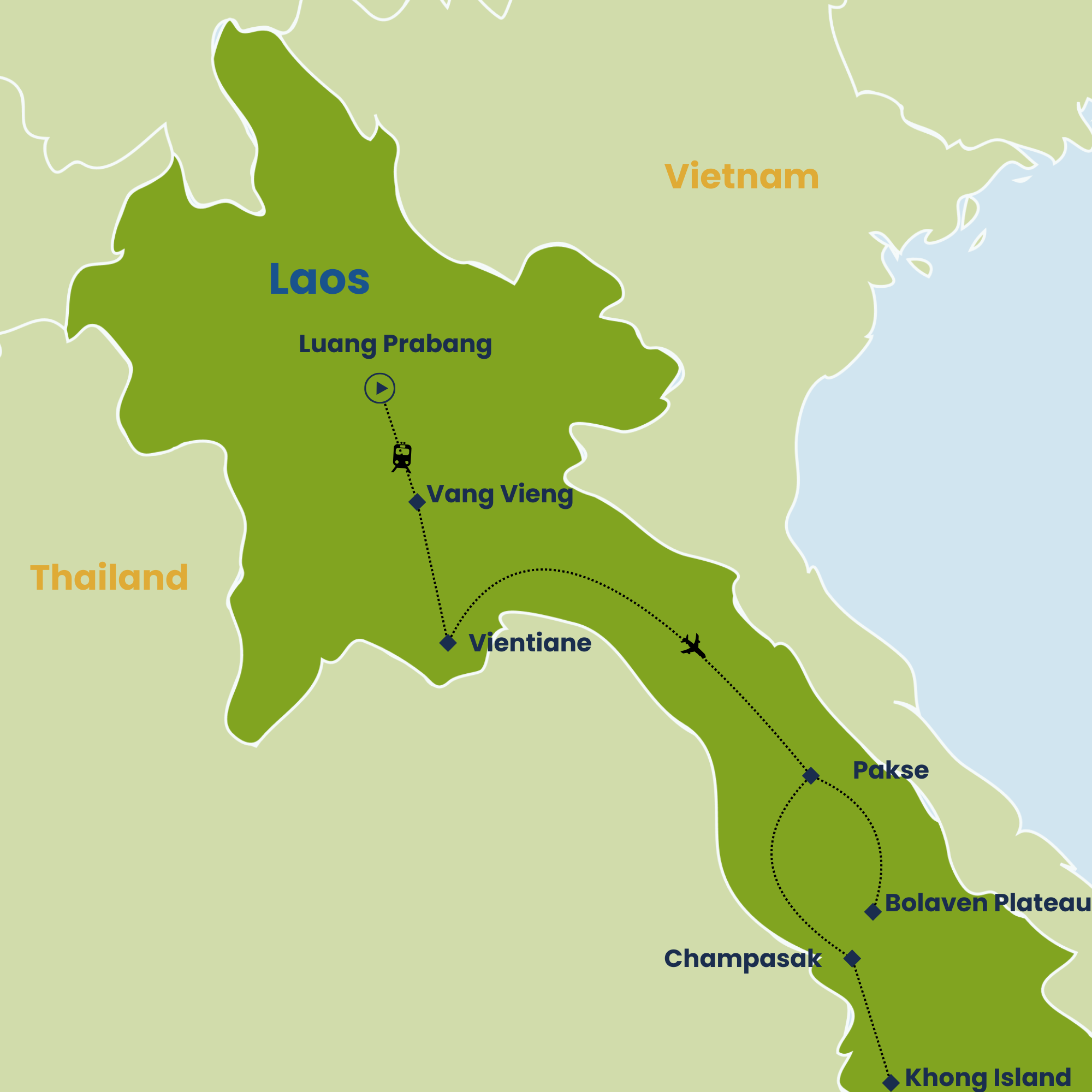
Luang Prabang to Vang Vieng
Approx. 180 km / Approx. 4 hours by train.
Vang Vieng to Vientiane
Approx. 160 km / Approx. 3 hours by road.
Vientiane to Pakse
Approx. 450 km / Approx. 1 hour by flight.
Bolaven Plateau to Champasak
Approx. 70 km / Approx. 2 hours by road.
Champasak to 4000 Islands (Ban Hatsaikhone)
Approx. 90 km by road plus boat transfer / Approx. 2.5 hours plus boat time by road and boat.
Don Khone to Pakse Airport
Approx. 70 km combined / Approx. 3 hours total by boat and road.
Travel between cities in Laos involves a mix of modes including train, road, flight, and boat transfers. Roads outside main cities and high-season periods may experience slower travel times due to variable conditions. Flights between northern and southern Laos are recommended to save time and improve comfort. Boat transfers in the southern 4000 Islands region require flexible scheduling due to weather and water levels. Accommodation varies and some areas are remote, so ensure clear local transfer arrangements. Travel agents should prepare clients for moderate travel comfort and occasional basic facilities.
All travel distances and times are indicative only and may vary depending on traffic, weather, routing and local conditions.
Destination Information
Champasak
Champasak is a town set along the banks of the Mekong River, where the flow of water shapes both the landscape and daily life. Its streets reveal a blend of colonial-era buildings constructed from local materials, reflecting a period when regional influences merged with traditional Lao architecture. The town’s proximity to the ancient Wat Phu temple complex adds a profound historical dimension, with stone ruins that rise gently from the surrounding greenery, offering a tangible link to the region’s past. Beyond the urban area, the nearby Bolaven Plateau introduces a contrasting environment of elevated terrain and cooler climate, influencing local agriculture and settlement patterns. The presence of diverse ethnic minority communities contributes to the cultural texture, visible in markets, crafts, and customary practices. Throughout Champasak, the rhythm of everyday activities unfolds against a backdrop of river vistas and historic sites, creating a setting where heritage and contemporary life coexist. This combination of natural features, architectural heritage, and cultural diversity defines the town’s distinctive character within southern Laos.
Luang Prabang
Luang Prabang is a city where the flow of the Mekong and Nam Khan rivers shapes both its physical layout and daily life, creating a tranquil environment marked by traditional wooden houses and French colonial architecture. This former royal capital retains a quiet pace, with narrow streets lined by Buddhist temples and markets that reflect its blend of spiritual and cultural heritage. The city’s compact scale encourages exploration on foot, revealing layers of history visible in its well-preserved temples and the Royal Palace Museum, which offers insight into its monarchical past. The surrounding landscape, including nearby waterfalls and forested hills, provides a natural contrast to the urban calm. Early mornings bring a unique local rhythm as monks participate in the alms ceremony, a practice deeply woven into community life. Luang Prabang’s appeal lies in this combination of serene river settings, historical architecture, and ongoing religious traditions, offering a setting where visitors can observe the coexistence of everyday activity and enduring cultural practices.
Pakse
Pakse is a city where the Mekong River shapes both the landscape and daily life, its broad waters offering expansive views that define the surrounding environment. The city’s streets reveal layers of history through their mix of traditional Lao structures and French colonial buildings, reflecting a period of architectural influence that remains visible in the urban fabric. Beyond the urban centre, the nearby Bolaven Plateau introduces a contrasting highland terrain known for its cooler climate and agricultural activity. Within Pakse itself, the Wat Phou temple complex stands as a significant historical site, its ancient ruins providing insight into the region’s cultural and religious heritage. Local markets contribute to the city’s rhythm, where vendors and residents engage in everyday commerce, offering a tangible connection to the community’s lifestyle. The combination of river views, historical architecture, and access to varied landscapes gives Pakse a distinctive character, balancing its role as a place of cultural significance with the practical realities of contemporary urban life.
Vientiane
Vientiane unfolds along the banks of the Mekong River, where low-rise buildings and wide boulevards create a calm urban environment distinct from the busier capitals of Southeast Asia. The city’s scale and pace reflect a blend of French colonial architecture and traditional Lao design, with quiet streets that invite exploration on foot. Central to Vientiane’s character is its integration of spiritual and civic life, visible in the golden Pha That Luang stupa, which dominates the skyline and serves as a national symbol. Nearby, Wat Si Saket offers a glimpse into the city’s religious heritage through its preserved cloistered galleries and Buddha images. The riverfront promenade provides a public space where locals gather, balancing the city’s historical sites with everyday activity. Markets like Talat Sao bring a practical vibrancy, showcasing local crafts and commerce amid the city’s measured rhythm. Institutions such as the Lao National Museum further anchor Vientiane’s role in preserving and presenting the country’s cultural and historical narratives within a setting defined by openness and understated urban charm.
Vang Vieng
Vang Vieng is a town set amid a striking landscape of limestone karst mountains that rise sharply from the surrounding plains, creating a distinctive and rugged backdrop. The Nam Song River threads through the area, shaping both the natural environment and local life with its calm waters and occasional rapids. This setting fosters a blend of outdoor activity and quiet rural rhythms, where agricultural fields stretch along the riverbanks and small villages maintain traditional farming practices. The town’s local markets offer a glimpse into everyday commerce, where fresh produce and handcrafted goods reflect the agricultural lifestyle of the region. Nearby, Tham Phu Kham Cave provides a notable natural feature, its interior contrasting with the open landscape outside. Vang Vieng’s appeal lies in this combination of dramatic natural formations, a slow-paced rural atmosphere, and the visible integration of natural and human elements, offering visitors a chance to observe how the environment shapes both the physical and cultural fabric of the community.
Bolaven
Bolaven is a highland region distinguished by its cool climate and fertile volcanic soil, which shapes both its landscape and local livelihoods. The area’s rolling plateaus are punctuated by dense forests, dramatic cliffs, and deep river gorges, creating a varied terrain that contrasts with the lowland plains typical of the surrounding region. This environment supports extensive agricultural activity, with coffee plantations spread across the plateau forming a defining feature of the local economy and landscape. The presence of ethnic minority villages adds a layer of cultural diversity, where traditional practices and crafts continue alongside farming. Natural formations such as limestone caves and cascading waterfalls contribute to the rugged character of the area, offering tangible examples of the region’s geological complexity. Everyday life here unfolds at a measured pace, closely tied to the rhythms of cultivation and the natural environment. The combination of agricultural richness, distinctive topography, and cultural variety makes Bolaven a place where the landscape and local traditions are deeply interconnected and readily experienced.
Hotel Information
Maison Dalabua is a boutique hotel situated in Luang Prabang, Laos, positioned near the city’s historic center and UNESCO World Heritage-listed lotus ponds. This property blends traditional Lao craftsmanship—evident in its carved wood, silk textiles, and natural materials—with contemporary comforts. Rooms and suites feature terraces overlooking tranquil lotus ponds, offering an environment for relaxation immersed in local culture.
Set within lush gardens, the hotel provides a serene atmosphere that balances heritage with modernity. Its location places guests within walking distance of key cultural attractions, including Buddhist temples, the night market, and the Mekong River, making it a practical base for exploring the city. The on-site spa specializes in traditional Lao massages and treatments using local essential oils, reflecting ancestral wellness practices in a peaceful setting.
The hotel’s sister restaurant, Manda de Laos, located beside the lotus ponds, offers refined interpretations of Laotian cuisine, contributing to an authentic culinary experience. Maison Dalabua is suited for travellers seeking an intimate cultural encounter combined with thoughtfully designed accommodation and convenient access to Luang Prabang’s principal sites.
Riverside Boutique Resort is a four-star property located on the banks of the Nam Song River in Vang Vieng, Laos, approximately 90 minutes from Vientiane. The resort offers a blend of contemporary design and traditional Lao craftsmanship, featuring furniture and artefacts created by local artisans that reflect the region’s ethnic diversity. Its 34 guestrooms and suites are arranged around an inviting swimming pool, with many rooms offering views of the surrounding limestone mountains.
Positioned midway between Vientiane and Luang Prabang, the resort provides a peaceful setting that embraces the natural environment and local culture, making it a suitable base for exploring Vang Vieng’s dramatic landscapes, including mountains, caves, and lagoons. Riverside Boutique Resort emphasizes sustainability, with commitments to reducing energy and water consumption, minimizing waste, and supporting local communities and heritage.
The on-site Restaurant du Crabe d’Or serves dishes inspired by Laos’s rice-based cuisine, focusing on fresh local ingredients and a mix of local and international flavours. The resort also includes spa and meeting facilities to accommodate a variety of guest needs.
This property is well suited to travellers seeking a serene riverside retreat that combines cultural authenticity with comfortable accommodation and easy access to Vang Vieng’s outdoor activities and natural attractions. Its long-standing recognition, including featuring in the Michelin Guide Hotel Selection and holding a leading TripAdvisor ranking, underscores its appeal within the region.