Itinerary Details
On arrival in Hue, you will be transferred to your hotel.
Overnight in Pilgrimage Village Resort (3.5 Star) or similar.
Depart your hotel for a half-day tour of Hue, the former imperial capital of Vietnam. Begin with a visit to the tomb of Tu Duc, the fourth emperor of the Nguyen Dynasty, set beautifully amidst lakes and frangipani trees. Continue to Bunker Hill, which offers panoramic views overlooking the Perfume River and the plains stretching towards the western mountains. Next, make a brief stop at the Tiger Colosseum. Explore the vast imperial Citadel, home of the Nguyen Dynasty emperors, a UNESCO World Heritage site since 1993. Although much of the Citadel was damaged during the 1968 Tet Offensive, restoration efforts are ongoing. Conclude the tour with a short boat trip to the revered Thien Mu Pagoda, Hue’s oldest and most architecturally significant pagoda.
After lunch (own arrangement), depart Hue for Hoi An, traveling over the scenic Hai Van Pass. This mountain pass is known as the geographical and psychological boundary between northern and southern Vietnam, often shrouded in clouds at its peak. Upon arrival in Hoi An, transfer to your hotel for check-in. The evening is free for independent exploration.
Overnight in Le Pavilion Luxury Resort (4 Star) or similar.
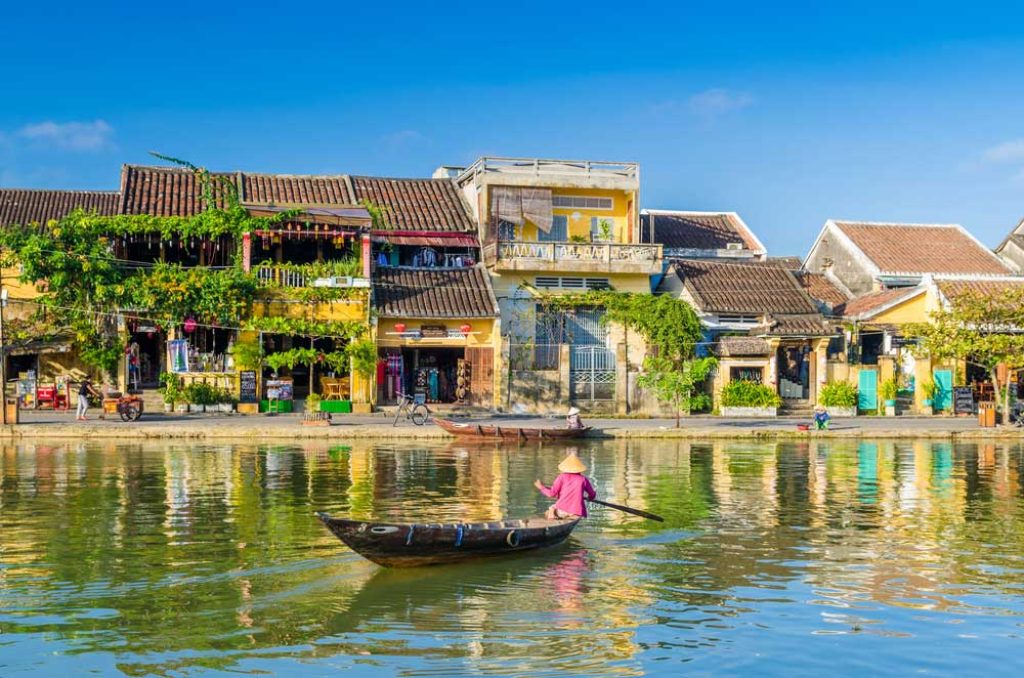
This morning you will embark on a walking tour of Hoi An, a UNESCO World Heritage site. Once Vietnam’s most active trading hub, Hoi An’s Old Town retains much of its historical architecture, reflecting Chinese, Japanese, Portuguese, French, and British influences accumulated over centuries. The town is also notable as the place where French missionary Alexandre de Rhodes introduced Catholicism to Vietnam and developed the Romanised Vietnamese script. On your guided walking tour, visit a traditional ancient house, the Hoi An Museum, a Chinese Assembly Hall, Chau Ong Pagoda, and the iconic Japanese Covered Bridge. The tour concludes in the Ancient Town where you may continue to explore at your leisure.
Overnight in Le Pavilion Luxury Resort (4 Star) or similar.
Day 4
Hoi An Departure (B)
After breakfast, you will be met for your transfer to Danang airport for your onward flight.
Travel Notes
Hue to Hoi An
Approx. 130 km / Approx. 3 to 4 hours by road.
Travel between Hue and Hoi An involves a scenic drive over the Hai Van Pass, which can be subject to fog and reduced visibility, particularly in cooler or rainy seasons. The road is generally in good condition but winding through mountainous terrain, so travel times may vary. Transfers typically use private or tourist buses. Hoi An is a compact town with mostly pedestrian zones, so local transfers on arrival often require walking or short taxis. Accommodation ranges from mid-range to higher-end hotels, with both cities offering convenient access to amenities.
All travel distances and times are indicative only and may vary depending on traffic, weather, routing and local conditions.
Destination Information
Hoi An
Hoi An is a compact town set along the gentle curves of the Thu Bon River in Vietnam’s central coastal region, where narrow streets and low-rise buildings create an intimate urban fabric shaped by centuries of trade and cultural exchange. Its architecture reflects a blend of local and foreign influences, with wooden shop houses and tiled roofs lining quiet lanes that invite slow exploration. The town’s scale and layout encourage a pedestrian pace, fostering a close connection between everyday life and the preserved historic environment. Traditional crafts remain part of daily activity, visible in workshops where artisans shape lanterns that light the streets after dusk, adding a warm, tangible element to the town’s atmosphere. The Japanese Covered Bridge, a distinctive structure linking parts of the old quarter, exemplifies the layering of cultural influences and the integration of functional design with aesthetic detail. Beyond the built environment, the nearby river and coastal landscape contribute to Hoi An’s character, grounding it in a region known for its fertile plains and maritime heritage. This combination of architectural heritage, artisanal practice, and natural setting defines Hoi An’s appeal as a place where history and local life coexist closely.
Danang
Danang is a coastal city where urban development meets natural landscapes, offering a distinctive blend of modernity and tradition along Vietnam’s central coastline. Its broad sandy shores, exemplified by My Khe Beach, provide a relaxed environment that contrasts with the city’s growing skyline and bustling streets. The nearby Marble Mountains rise sharply from the flat coastal plain, their limestone peaks dotted with caves and pagodas that reflect centuries of spiritual and cultural activity. The Han River flows through the city, with the Han River Bridge serving as a functional and visual landmark that connects different parts of Danang while illuminating the cityscape after dark. The Cham Museum houses an extensive collection of sculptures and artifacts from the ancient Champa civilization, anchoring Danang’s historical significance amid its contemporary urban fabric. The city’s layout balances waterways, open spaces, and dense residential areas, creating a setting where everyday life unfolds alongside historical sites and natural features. Danang’s atmosphere is defined by this coexistence of coastal leisure, cultural heritage, and ongoing urban growth, making it a place where visitors can engage with both Vietnam’s past and present.
Hue
Hue occupies a distinctive place in Vietnam’s central region, where the slow flow of the Perfume River shapes both the city’s layout and its atmosphere. The city’s compact scale and calm streets contrast with the busier urban centres elsewhere in the country, offering a quieter environment shaped by centuries of imperial rule. Hue’s defining feature is its extensive complex of historic sites, including the Imperial City, which reveals the architectural and cultural imprint of the Nguyen dynasty. Surrounding this core are the royal tombs scattered along the riverbanks, blending natural landscapes with intricate stonework and gardens. Religious structures such as Thien Mu Pagoda add to the city’s layered heritage, standing amid green spaces beside the water. Beyond its monuments, Hue’s everyday life reflects traditional Vietnamese culture, especially through local markets and street food that highlight regional culinary specialties. The city’s combination of historical depth, riverside setting, and measured pace creates an environment where visitors can engage with Vietnam’s past while observing the rhythms of contemporary local life.
Hotel Information
Pilgrimage Village Resort & Spa is situated in the tranquil countryside near Hue, Vietnam, offering a rustic village setting surrounded by lush gardens while remaining close to the city’s renowned historical landmarks. This 5-star beach resort combines traditional Vietnamese architecture with modern comfort, featuring intricately carved woodwork, ceramic tiles, and luxurious textiles that reflect the country’s cultural heritage. Accommodations range from garden-view rooms to spacious family villas and pool villas, all designed with premium natural materials and traditional elements to create a serene and private atmosphere.
The resort emphasizes a connection to local culture and wellness, with a well-regarded spa that focuses on sustainable, health-conscious treatments. Guests can enjoy a range of activities including yoga, cooking classes showcasing Vietnamese cuisine, and guided local tours exploring Hue’s royal city, nearby beaches, and national parks. Pilgrimage Village also offers facilities for meetings and events in a peaceful setting, suitable for weddings and celebrations.
This property appeals to travelers seeking a culturally immersive and tranquil retreat near Hue’s heritage sites, blending rustic charm with refined comfort in a peaceful village environment. It is particularly suited for those interested in exploring Central Vietnam’s history while enjoying a garden-focused, traditional-style resort experience.
Saigon Prince Hotel is a 4-star property prominently located on Nguyen Hue Boulevard in central Ho Chi Minh City. Positioned within walking distance of key city landmarks—including Ben Thanh Market, the Opera House, museums, Notre Dame Cathedral, and the Saigon River—the hotel serves as a convenient base for both business and leisure travelers seeking to explore the vibrant city.
The hotel offers a variety of guest accommodations tailored to diverse needs, supported by amenities such as indoor and outdoor gymnasiums, a swimming pool, and an all-day dining restaurant. Business travelers benefit from a fully equipped business center and upscale meeting and event spaces, while the Club Lounge provides exclusive access and privileges. The design and facilities strive to balance comfort and practicality, catering to guests who value a well-rounded urban stay.
With its central location and comprehensive facilities, Saigon Prince Hotel appeals to travelers looking for easy access to Ho Chi Minh City’s cultural and commercial highlights alongside functional amenities for work or relaxation. The atmosphere is professional and accommodating, making it suitable for visitors seeking convenience and a comprehensive range of services in the heart of the city.
Inclusions & Exclusions
Included
✓Arrival and Departure Transfers
✓English-speaking Tour Guide
✓Entrance fees for locations specified
✓Internal Flights as specified in itinerary
✓Meals as stated (B = Breakfast; L = Lunch; D = Dinner)
Not Included
–Tipping for Guide and Driver
–Transport in Air-conditioned Vehicles
–Accommodation in Stated Hotels or similar
–Early Check-in and Late Check-out
–International Flights
–Meals not stated in itinerary
–Porters
–Travel Insurance
–Visa Fees
–Personal Expenses (Laundry, Mini-bar, Phones, Drinks, etc.)