Travel Notes
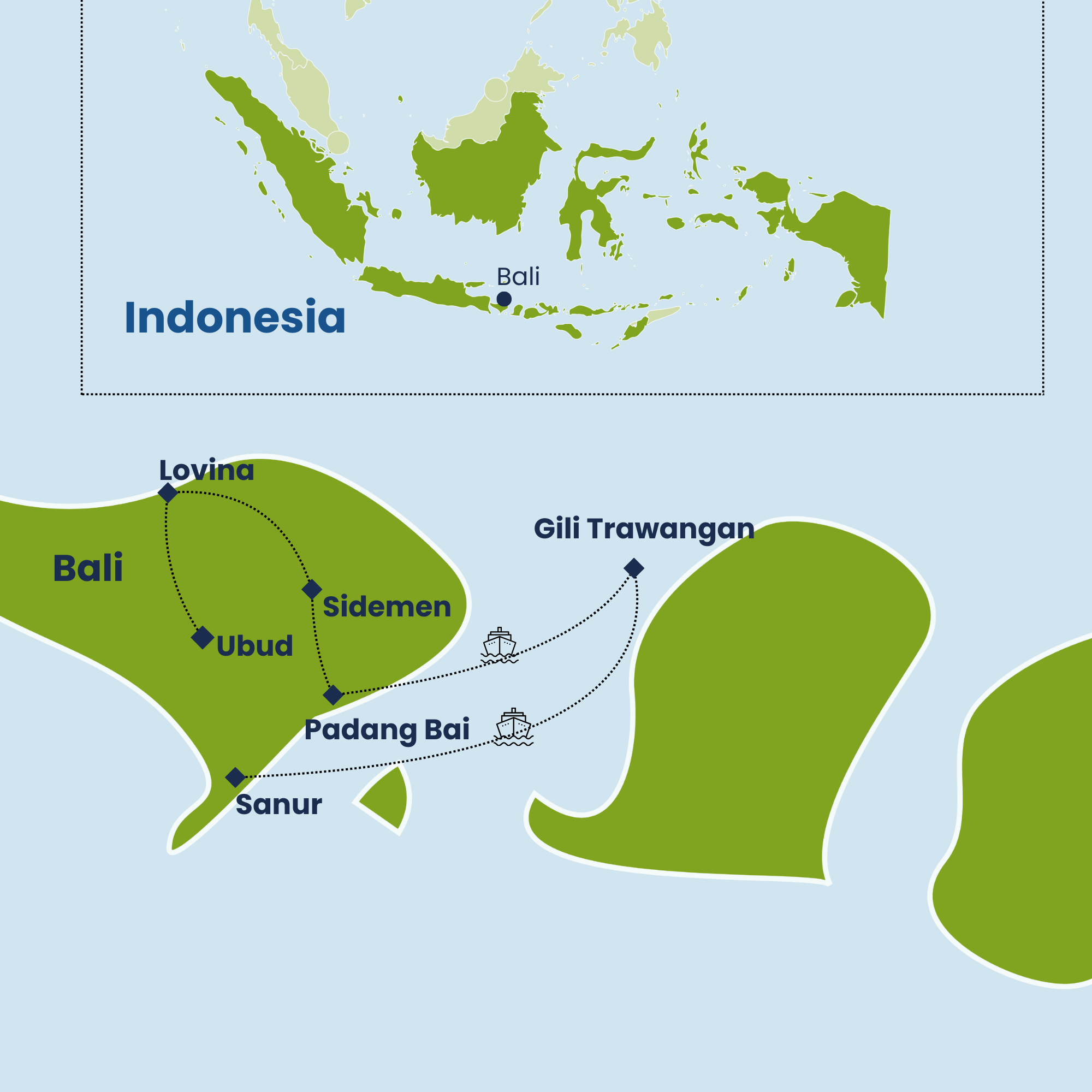
Ubud to Lovina
Approx. 90 km / Approx. 3 hours by road.
Lovina to Sidemen
Approx. 80 km / Approx. 3 hours by road.
Sidemen to Gili Trawangan
Approx. 60 km by road to Padangbai Harbor + 20 km by boat / Approx. 2 hours by road + 1 hour by boat by road and boat.
Gili Trawangan to Sanur
Approx. 20 km by boat + 30 km by road / Approx. 1 hour by boat + 1 hour by road by boat and road.
Road conditions in Bali can vary from well-paved highways to narrower rural roads, especially when traveling toward northern and eastern parts like Lovina and Sidemen. Travel durations may be longer during peak traffic or rainy season. Transfers to and from the Gili Islands involve coordinated boat schedules and short local transfers by horse cart (cidomo), which may require flexible timing. Accommodation outside main towns tends to be basic but comfortable, and remote areas like Sidemen offer a quieter rural experience. It is advisable to plan buffer times for intercity travel to accommodate these factors.
All travel distances and times are indicative only and may vary depending on traffic, weather, routing and local conditions.
Destination Information
Bali
Bali presents a diverse landscape where coastal cliffs meet lush inland valleys, offering a distinct blend of natural beauty and cultural depth within Indonesia. The island’s terrain varies from terraced rice fields sculpted into hillsides to the imposing silhouette of Mount Agung, an active volcano that shapes both the environment and local spiritual practices. Along the southern coast, the Uluwatu Temple perches dramatically on a limestone promontory, its traditional architecture and ocean views reflecting Bali’s enduring religious heritage. Cultural expression remains integral to daily life, with traditional Balinese dance performances illustrating stories passed through generations. In contrast, areas like Seminyak reveal a more contemporary side of Bali, where a concentrated business district reflects the island’s evolving economic landscape amid its natural surroundings. The combination of rural landscapes, volcanic landmarks, and pockets of urban development creates a multifaceted atmosphere where visitors can engage with both the island’s longstanding traditions and its modern rhythms. This interplay between environment, culture, and commerce defines Bali’s unique character as a place of ongoing cultural vitality and striking physical presence.
Ubud
Ubud is a town set amid the lush, undulating landscape of central Bali, where dense tropical forests and terraced rice paddies shape the surrounding environment. Its compact streets reveal a blend of traditional Balinese architecture and artisan workshops, reflecting a community deeply engaged with its cultural heritage. The presence of sacred sites, such as intricately carved temples with lotus ponds, integrates spiritual practice into daily life, while markets offer a glimpse into local crafts and produce. The nearby rice terraces exemplify the region’s agricultural rhythms, carved into the hillsides in patterns that have sustained generations. Wildlife, including the long-tailed macaques inhabiting the forested sanctuary, adds a natural dimension to the town’s atmosphere. Ubud’s scale and pace encourage exploration on foot, where visitors encounter a balance of artistic expression, religious tradition, and rural landscape, creating a setting that is both serene and culturally rich. This combination of natural beauty, cultural depth, and everyday activity distinguishes Ubud within Bali’s diverse island environment.
Lovina
Lovina is a coastal area distinguished by its calm black-sand beaches and a slower pace of life that contrasts with Bali’s more frequented southern resorts. The shoreline stretches gently along the northern coast, where small fishing boats dot the water and local communities maintain traditional livelihoods. The surrounding landscape combines lush tropical vegetation with volcanic hills, creating a serene backdrop that shapes the everyday rhythm of the village. Visitors here can observe the steady activity of fishermen preparing their nets or unloading their catch, reflecting a connection to the sea that defines the local economy and culture. Beyond the beach, natural hot springs offer a quiet retreat, while nearby Buddhist monasteries introduce a spiritual dimension to the area’s character. The marine environment supports dolphin watching excursions, allowing travellers to engage with the region’s wildlife in an unobtrusive way. Lovina’s appeal lies in its blend of natural features and authentic village life, providing a setting where the environment and community coexist with a relaxed, unhurried atmosphere.
Sidemen
Sidemen is a rural area set within the lush eastern foothills of Bali, where expansive rice terraces carve the landscape into a patchwork of vibrant green fields. The village and its surroundings maintain a quiet agricultural rhythm, with farmers tending to their paddies and traditional crops, reflecting a lifestyle deeply connected to the land. The presence of Balinese Hindu temples scattered throughout the area underscores the enduring spiritual practices that shape daily life here. Nearby, small weaving communities preserve age-old textile crafts, their looms producing intricate fabrics that echo local heritage. Views of Mount Agung rise prominently beyond the terraces, providing a dramatic natural backdrop that anchors the region’s visual identity. Sidemen’s combination of cultivated landscapes, artisanal villages, and religious sites offers insight into a part of Bali where tradition and environment remain closely intertwined, creating a setting that is both serene and culturally rich. The area’s scale is intimate, with narrow paths winding through fields and settlements, inviting a slower pace that contrasts with Bali’s more developed coastal zones.
Gili Trawangan
Gili Trawangan is a small island set against the clear waters of the Indonesian archipelago, distinguished by its tranquil pace and absence of motorized vehicles. The island’s layout features sandy paths lined with modest shops, cafes, and local homes, creating an intimate environment where daily life unfolds at a relaxed rhythm. Its surrounding coral reefs support diverse marine ecosystems, inviting visitors to engage directly with vibrant underwater habitats. The island’s cultural fabric is shaped by the nearby Sasak community, whose traditions remain visible in local crafts and ceremonies. Elevated points around the island offer unobstructed views of the horizon, where the sun’s descent paints the sky with shifting colors, contributing to the island’s contemplative atmosphere. Situated close to Lombok, Gili Trawangan’s natural setting combines a sense of isolation with access to broader regional influences, resulting in a place where environmental preservation and cultural continuity coexist alongside a simple, pedestrian lifestyle. This balance defines the island’s appeal, offering a distinctive experience grounded in its marine environment, cultural roots, and unhurried daily rhythms.
Sanur
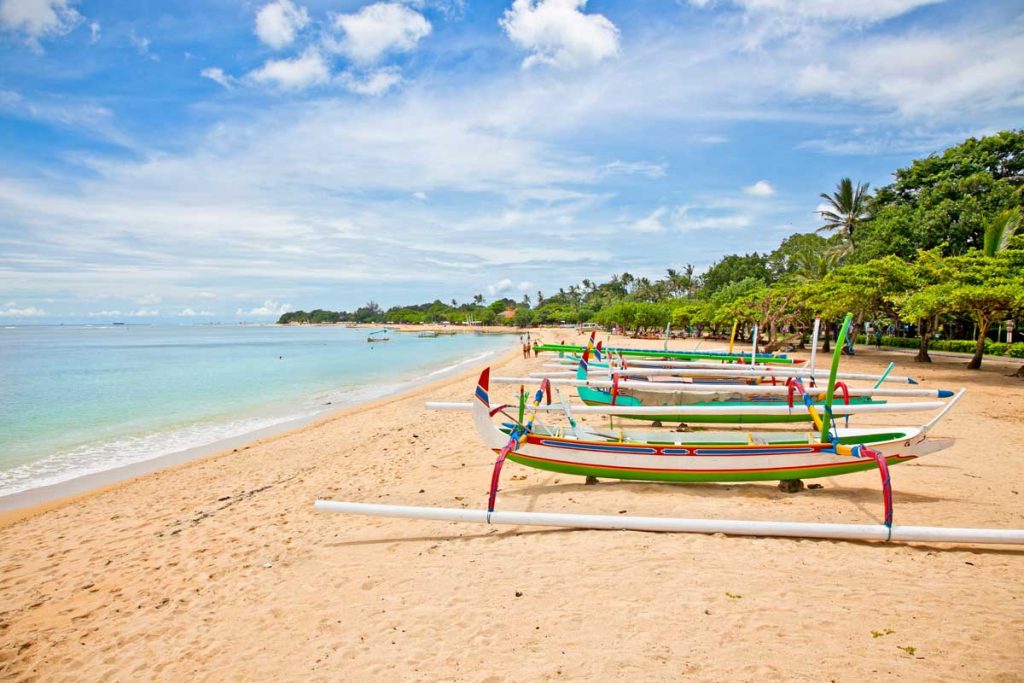
Sanur is a coastal town on Bali’s southeastern shore, distinguished by its calm waters and a relaxed atmosphere that contrasts with the island’s busier southern areas. Its gently sloping beach, lined with traditional fishing boats, reflects a community where daily life remains closely tied to the sea. The town’s streets reveal a blend of modest local homes and small-scale businesses, offering a quieter, more grounded experience. Along the shoreline, the presence of the Le Mayeur Museum provides insight into the artistic heritage embedded in the area, while nearby green spaces like the Bali Orchid Garden highlight the region’s tropical flora. The proximity of Serangan Island adds a natural extension to the coastal environment, known for its marine life and quieter beaches. Sanur’s appeal lies in this balance between a lived-in fishing village character and accessible cultural and natural attractions, creating a setting where visitors can observe traditional livelihoods alongside curated historical and botanical sites. The overall pace is unhurried, inviting a thoughtful exploration of both the sea and the community it sustains.
Gili Air
Gili Air is a small island distinguished by its tranquil pace and natural surroundings, offering a contrast to more developed areas nearby. Its compact size and absence of motorized vehicles create a calm environment where bicycles and horse-drawn carts navigate sandy paths lined with modest local homes and beachfront cafés. The island’s coastline is framed by clear waters and coral reefs that invite exploration beneath the surface, revealing vibrant marine life. Inland, patches of mangrove forests provide a quiet refuge and contribute to the island’s ecological diversity. The local community maintains strong ties to Sasak culture, visible in traditional crafts and village life that continue alongside the modest tourism infrastructure. Gili Air’s proximity to Lombok situates it within a broader regional context, yet its distinct atmosphere—marked by a slower rhythm and close relationship between residents and natural surroundings—sets it apart. This blend of marine environment, cultural heritage, and unhurried daily life defines the island’s appeal for those seeking a more intimate and grounded experience.
Gili Islands
The Gili Islands offer a distinctive blend of natural beauty and a relaxed pace of life, set against the backdrop of clear turquoise waters and white sandy beaches. Unlike the busier parts of nearby Lombok, these small islands maintain a tranquil atmosphere shaped by the absence of motorized vehicles, with bicycles and horse-drawn carts defining the slow rhythm of daily movement. The islands’ coral reefs attract visitors interested in underwater exploration, where vibrant marine life thrives alongside ongoing conservation efforts aimed at preserving this delicate ecosystem. Scattered settlements reflect the influence of the local Sasak culture, visible in traditional crafts and community practices that continue to shape everyday life. The islands’ compact scale and car-free environment foster a close connection between residents and the surrounding natural environment, creating a setting where the sea, reef, and village life coexist closely. This combination of ecological focus, cultural presence, and unhurried living distinguishes the Gili Islands within the Indonesian archipelago.
Hotel Information
Accommodation throughout this journey is carefully selected to complement the overall travel experience and typically consists of comfortable 3 to 4-star hotels, resorts, lodges, or boutique properties, depending on the destination, routing, and local infrastructure.
All properties are chosen with care based on location, comfort, service standards, atmosphere, and suitability for the itinerary. Exact hotel names may vary depending on departure date, seasonality, group size, and availability at the time of booking.
Final hotel details will be provided with the confirmed travel documentation. In some cases, accommodations may be replaced by properties of a similar standard should operational reasons or availability require a change.
For specific accommodation requests or further questions regarding the hotels used on this journey, please contact our reservations team at reservation@kavaya.travel.