Heritage Of Japan
From USD per person
based on two persons travelling
$4,806
History & Culture
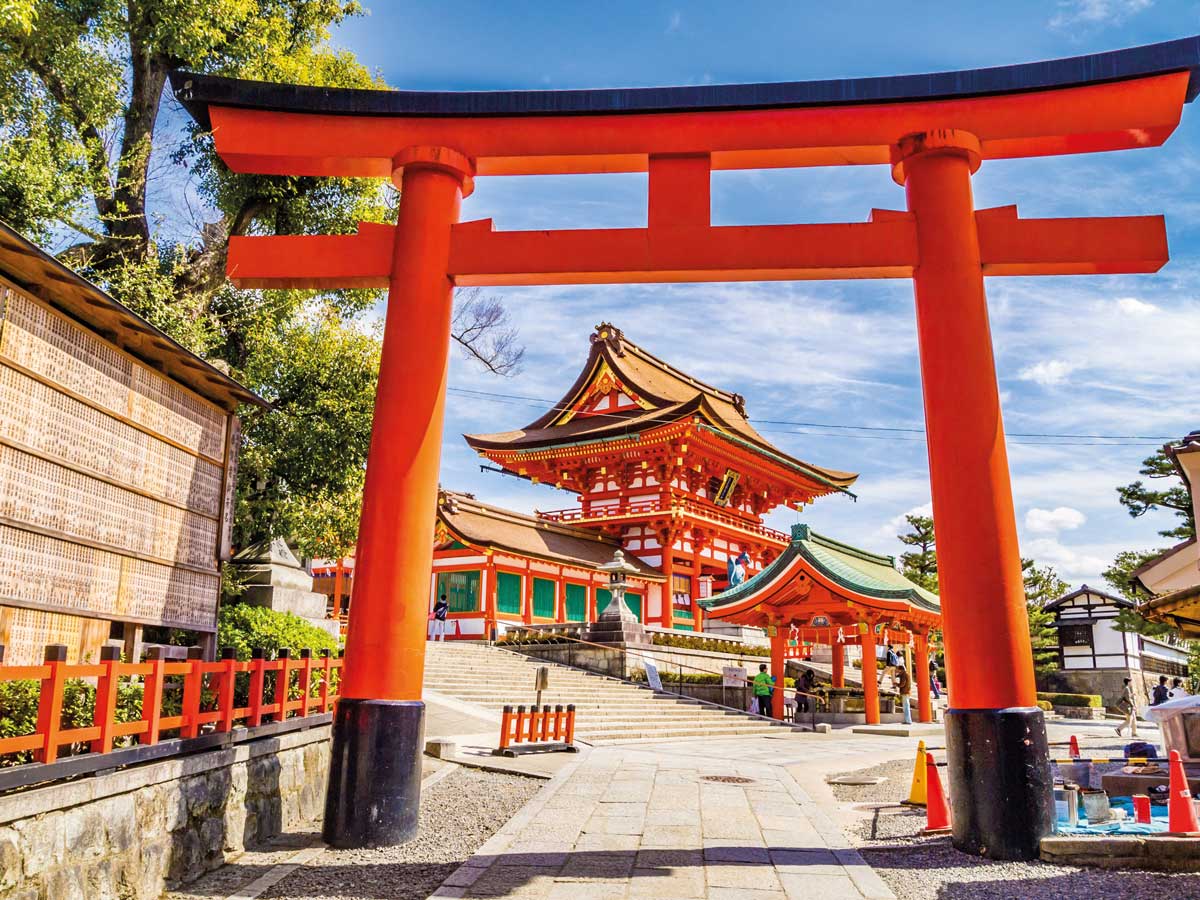
This comprehensive itinerary journeys through Japan’s rich cultural and natural heritage from the dynamic metropolis of Tokyo to the tranquil temples of Koyasan, concluding in Osaka. Travelers will explore iconic urban sights, traditional arts, and hands-on cultural experiences in Kyoto, while enjoying scenic excursions in Hakone’s volcanic landscapes. The tour blends guided and self-guided travel, incorporating seamless Shinkansen rides and immersive stays in a historic temple lodging. Carefully curated activities include culinary workshops, spiritual rituals, and contemplative hikes, all designed to offer insights into Japan’s history, craftsmanship, and spirituality. This program is ideal for discerning travelers seeking a well-rounded discovery of Japan’s diverse heritage within a structured yet flexible travel style.
Tour Highlights
- Experience the vibrant pulse of Tokyo through visits to bustling markets, serene gardens, and interactive museums that bring Japan’s samurai and ninja history vividly to life.
- Immerse in Hakone’s natural beauty aboard a pirate-themed lake cruise and explore awe-inspiring volcanic terrain framed by majestic mountain vistas and tranquil lakeside shrines.
- Delve into Kyoto’s cultural artistry with hands-on cooking and calligraphy classes, followed by visits to exquisite Zen gardens and iconic temples shimmering with golden hues.
- Discover the spiritual heart of Mt. Koya through meditative temple stays, sacred night tours among lantern-lit cemeteries, and peaceful hikes through ancient monastic forests.
Costing Summary
| Validity | From 2 Pax |
| 01/01/2026 - 31/12/2026 | 4806 |
Seasonal Surcharge 2026
Cherry Blossom Season (March 15 – April 28)
Golden Week Holiday (April 26 – May 6)
• Single traveler: JPY 371,250 per person
• 2 to 4 travelers: JPY 256,250 per person
Autumn Foliage Season (October 18 – December 14)
• Single traveler: JPY 371,250 per person
• 2 to 4 travelers: JPY 256,250 per person
New Year Holiday (December 22 – January 6)
• Single traveler: JPY 371,250 per person
• 2 to 4 travelers: JPY 256,250 per person
Other Japanese Public Holidays (not listed above)
• Additional JPY 15,000 per person
Itinerary Details
Upon arrival at Tokyo airport, meet your English-speaking guide and private driver who will assist with your transfer to the hotel. After checking in, spend the remainder of the day at your leisure to relax or begin independent exploration of the city. Your guide will provide you with pre-loaded IC cards, included in your package, for convenient use of local transportation during guided days.
Overnight in Tokyo - Hotel to be confirmed (3-4 Star) or similar.
Meet your guide at the hotel for a full day of sightseeing. Begin at Tsukiji Fish Market, where you may enjoy a breakfast in local style (not included). Stroll through the Hamarikyu Gardens, noted for its traditional landscaping. Board the Tokyo Water Bus at Hinode Pier for a scenic ride to Asakusa, then visit Sensoji Temple and the bustling Nakamise-dori shopping street. After a lunch break at a local restaurant (not included), explore the Samurai & Ninja Museum featuring interactive exhibits. Return to your hotel in the evening.
Overnight in Tokyo - Hotel to be confirmed (3-4 Star) or similar.
Embark on a self-guided trip to Mt. Takao where you can explore scenic hiking trails and appreciate panoramic views. Visit Yakuoin Temple nestled on the mountain and spend the day immersed in the natural surroundings at your own pace. Return to Tokyo for your overnight stay.
Overnight in Tokyo - Hotel to be confirmed (3-4 Star) or similar.
Travel independently to Shinjuku Station and board the Romance Car train to Hakone Yumoto Station. Upon arrival, check in to your hotel and enjoy an afternoon at leisure. You may choose to stroll around the onsen town or relax in the mountain environment.
Overnight in Hakone - Hotel to be confirmed (3-4 Star) or similar.
Meet your guide at the hotel for a day of exploration in Hakone. Visit Hakone Shrine located beside scenic Lake Ashi. Enjoy a cruise on the Pirate Ship from Hakone Machi Port to Togendai Port. Continue with a ride on the Hakone Ropeway to Owakudani Valley, where you can explore volcanic activity on short hikes along the Owakudani Mountain Climbing Course. Complete the ropeway journey to Sounzan Station and return to your hotel to relax.
Overnight in Hakone - Hotel to be confirmed (3-4 Star) or similar.
Travel from Hakone Yumoto Station to Odawara Station to board the Shinkansen to Nagoya, then continue on the Shinkansen to Kyoto. Upon arrival, check in to your hotel and enjoy the rest of the day at leisure. Note that Shinkansen tickets are included.
Overnight in Kyoto - Hotel to be confirmed (3-4 Star) or similar.
Meet your guide at the hotel for a day of cultural and culinary activities. Begin with a visit to Nishiki Market, followed by participation in a Japanese Washoku Bento Cooking Class where you will prepare your own traditional boxed meal. In the afternoon, attend a Private Japanese Calligraphy Class to practice brush and ink techniques under expert guidance. Return to your hotel with newly acquired skills.
Overnight in Kyoto - Hotel to be confirmed (3-4 Star) or similar.
Start the day with a visit to Nijo-jo Castle, then proceed to Kinkakuji, known as the Golden Pavilion. After lunch nearby, visit Ryoanji Temple to see its famous Zen rock garden. Conclude the day with a walk through the Arashiyama Bamboo Grove before returning to your hotel.
Overnight in Kyoto - Hotel to be confirmed (3-4 Star) or similar.
Explore the historic streets of Ninenzaka and Sannenzaka, then visit Kiyomizudera Temple. Enjoy lunch at a local restaurant before continuing to Sanjusangendo Temple. The day concludes with participation in a Green Tea Ceremony and a Kimono experience. Return to your hotel in Kyoto.
Overnight in Kyoto - Hotel to be confirmed (3-4 Star) or similar.
Travel from Kyoto Station to Koyasan Station by train. Upon arrival, check into Ekoin Temple, a respected shukubo (temple lodging) offering an immersive experience. Participate in Sutra Copying, a meditative spiritual practice, followed by a guided Okunoin Night Tour exploring one of Japan’s most sacred cemeteries illuminated by lantern light.
Overnight in Mt. Koya - Ekoin Temple or similar.
Begin with a Morning Prayer Ceremony alongside resident monks. Spend the remainder of the day at your leisure to hike through Koyasan’s forested paths, visit ancient temple complexes, or find quiet reflection in this spiritual environment.
Overnight in Mt. Koya - Ekoin Temple or similar.
After a morning prayer, visit key sacred sites on Koyasan including Okunoin Cemetery, Kongobuji Temple, and the Garan Temple Complex. Travel by train to Namba Station in Osaka and check in to your hotel. Enjoy the rest of the day at leisure in the city.
Overnight in Osaka - Hotel to be confirmed (3-4 Star) or similar.
After breakfast, meet your driver at the hotel for your transfer to the airport.
Travel Notes
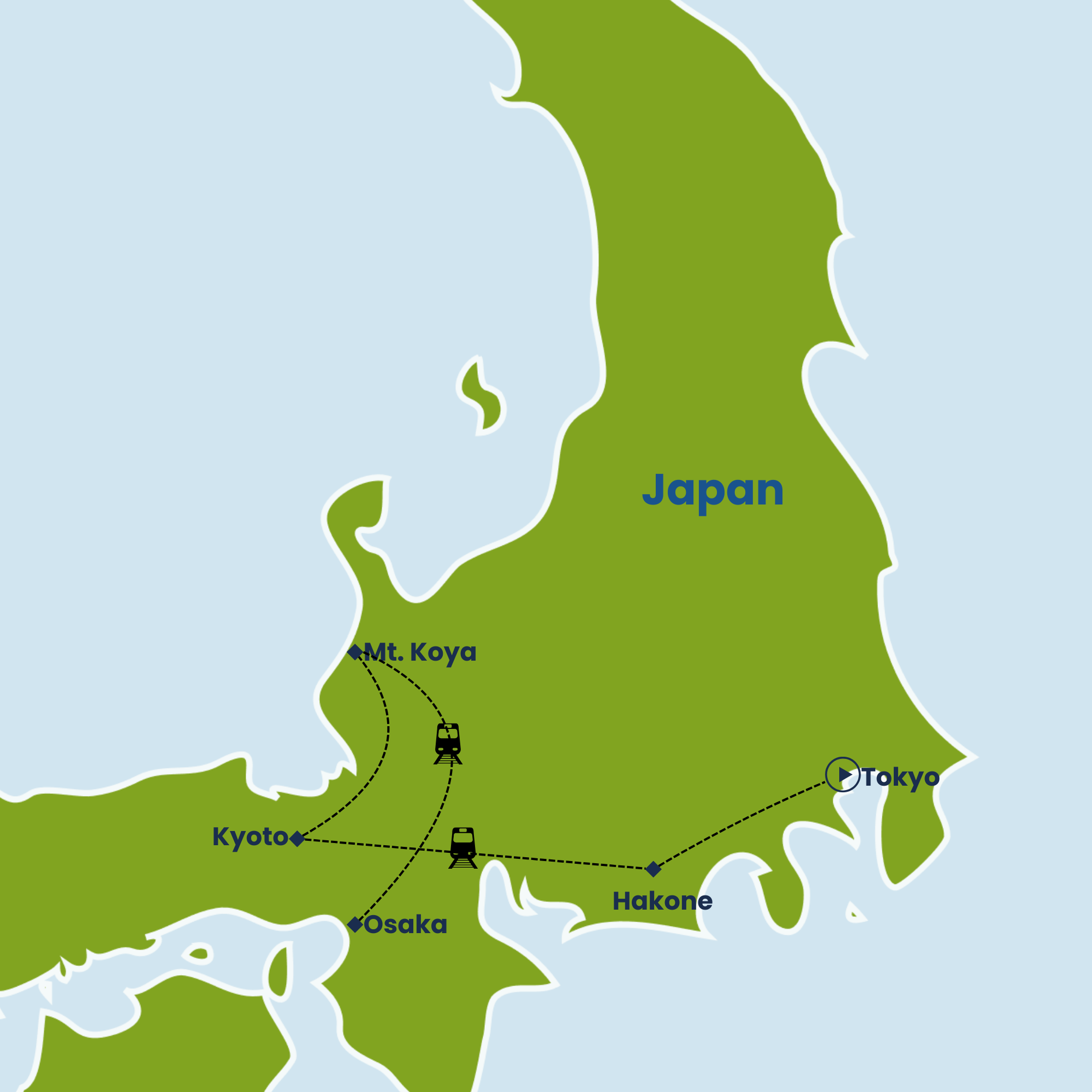
Tokyo to Hakone
Approx. 85 km / Approx. 1.5 hours by train.
Hakone to Kyoto
Approx. 370 km / Approx. 2.5 hours by train.
Kyoto to Mt. Koya
Approx. 130 km / Approx. 2.5 hours by train.
Mt. Koya to Osaka
Approx. 50 km / Approx. 1.5 hours by train.
Travel between major cities in Japan is typically efficient, with extensive rail networks and reliable Shinkansen services. Mountainous regions such as Hakone and Mt. Koya require some transfers via local or scenic trains, so allow additional time for connections. Roads near these areas can be narrower and busier in peak travel seasons. Accommodations in remote areas tend to be simpler, with traditional lodging options. Urban local transfers benefit from prepaid IC cards, enhancing smooth transitions between various transport modes.
All travel distances and times are indicative only and may vary depending on traffic, weather, routing and local conditions.
Destination Information
Tokyo
Tokyo presents a dense urban environment where towering modern structures coexist with pockets of traditional architecture and green spaces. The city’s sprawling layout is marked by a mix of commercial districts, residential neighborhoods, and cultural sites, reflecting its role as Japan’s political, economic, and cultural center. Visitors encounter a variety of experiences, from the orderly tranquility of the Imperial Palace Gardens to the bustling energy of busy intersections like Shibuya Crossing, where streams of pedestrians move in all directions. Tokyo’s streets reveal layers of history alongside contemporary life, with places such as Meiji Shrine offering a quiet retreat amid the city’s fast pace. Markets like Tsukiji Outer Market provide insight into local food culture and daily commerce, while landmarks such as Tokyo Tower punctuate the skyline with their distinctive presence. The city’s blend of glass, steel, and natural elements creates a complex urban fabric that supports both tradition and innovation, making Tokyo a place where the everyday and the extraordinary coexist seamlessly.
Osaka
Osaka presents a dense urban landscape where historical landmarks and modern city life coexist amid a network of waterways and bustling streets. The city’s architecture blends traditional wooden structures and stone shrines with contemporary commercial districts, reflecting its evolution from a feudal stronghold to a major economic centre. At its heart, Osaka Castle rises above expansive parklands, symbolizing the city’s historical depth and offering a contrast to the energetic atmosphere found in nearby neighbourhoods. Along the winding canals and neon-lit streets of the Dotonbori district, local life unfolds through a mix of street food vendors, shops, and entertainment venues, illustrating the city’s reputation for a rich culinary culture. The Sumiyoshi Taisha Shrine, with its distinctive straight-lined bridges and ancient design, provides a glimpse into spiritual traditions that persist alongside urban development. The coastal area around Osaka Bay adds a maritime dimension, where waterfront promenades and modern attractions meet the city’s industrial past. Together, these elements create a multifaceted environment where history, commerce, and everyday activity intersect in a uniquely Osaka setting.
Kyoto
Kyoto presents a distinctive blend of historical depth and natural beauty, nestled within a basin surrounded by forested hills in Japan’s Kansai region. The city’s layout reflects its ancient role as an imperial capital, with carefully preserved wooden structures and tranquil gardens interspersed among narrow streets and waterways. Kyoto’s atmosphere balances quiet reverence with everyday urban life, where traditional wooden machiya townhouses stand alongside modern shops and cafes. Visitors encounter a city where centuries-old temples and palaces coexist with neighbourhoods that maintain a slower, more contemplative pace compared to Japan’s larger metropolitan centres. The reflective waters and gold-leaf exterior of Kinkaku-ji Temple exemplify the city’s architectural elegance, while the winding lanes of the Gion district reveal a living connection to cultural practices such as geisha traditions and tea ceremonies. The Arashiyama Bamboo Grove offers a striking natural contrast to the city’s built environment, providing a serene setting that complements Kyoto’s emphasis on harmony between nature and human craftsmanship. The Kyoto Imperial Palace further anchors the city’s historical significance, embodying its enduring role in Japan’s cultural heritage.
Hakone
Nestled within the mountainous terrain of Japan’s Kanagawa Prefecture, Hakone offers a distinctive blend of natural beauty and cultural heritage shaped by its volcanic landscape. The area’s steaming hot springs have long drawn visitors seeking relaxation amid pine forests and rugged hillsides. Around Lake Ashi, the calm waters reflect the surrounding peaks, providing a serene backdrop that contrasts with the energetic flow of the nearby volcanic activity. The landscape is punctuated by open-air spaces where art and nature intersect, inviting exploration beyond traditional museum walls. Historic sites, such as the remnants of a former checkpoint, reveal Hakone’s role in regional travel and security during earlier periods, grounding the destination in a tangible past. Elevated viewpoints accessible by aerial cable cars afford expansive views of the lake and mountains, highlighting the varied topography. Throughout Hakone, the balance between natural elements, cultural landmarks, and everyday local life creates a setting where visitors can engage with both the environment and the enduring traditions of the region.
Mt. Koya
Nestled atop a forested plateau in Japan’s Kii Peninsula, Mt. Koya offers a distinctive blend of natural serenity and spiritual heritage. The area is defined by its dense cedar groves and tranquil mountain trails, which create a contemplative atmosphere uncommon in more urban settings. The settlement’s layout centers around a cluster of traditional temples and monastic buildings, constructed primarily from wood and stone, reflecting centuries of religious practice. Visitors encounter a living religious community where daily rituals continue alongside opportunities to stay in temple lodgings, providing insight into Buddhist monastic life. The expansive cemetery, shaded by towering trees, and the imposing temple complex with its historic gates and halls reveal layers of history embedded in the landscape. These elements combine to form a place where the natural environment and spiritual architecture coexist, inviting reflection and exploration beyond the typical tourist experience. The quiet paths through the surrounding forest emphasize the destination’s connection to nature, while the preserved temples and communal spaces illustrate a sustained cultural tradition unique within Japan’s mountainous regions.
Hotel Information
Accommodation throughout this journey is carefully selected to complement the overall travel experience and typically consists of comfortable 3 to 4-star hotels, resorts, lodges, or boutique properties, depending on the destination, routing, and local infrastructure.
All properties are chosen with care based on location, comfort, service standards, atmosphere, and suitability for the itinerary. Exact hotel names may vary depending on departure date, seasonality, group size, and availability at the time of booking.
Final hotel details will be provided with the confirmed travel documentation. In some cases, accommodations may be replaced by properties of a similar standard should operational reasons or availability require a change.
For specific accommodation requests or further questions regarding the hotels used on this journey, please contact our reservations team at reservation@kavaya.travel.
Inclusions & Exclusions
Included
Not Included
No widgets added. You can disable footer widget area in theme options - footer options